• 2026.09.05 (Sat)
  • All articles
  • LOGIN
  • JOIN
Global Economic Times
[등록] 2026-09-01 15:48:31
  • Synthesis
  • World
  • Business
  • Industry
  • ICT
  • Distribution Economy
  • Well+Being
  • Travel
  • Eco-News
  • Education
  • Korean Wave News
  • Opinion
  • Arts&Culture
  • Sports
  • People & Life
    • International Student Report
    • With Ambassador
  • Column
    • Cho Kijo Column
    • Cherry Garden Story
    • Ko Yong-chul Column
    • Kim Seul-Ong Column
    • Lee Yeon-sil Column
  • Photo News
  • New Book Guide
MENU
 
Home > Distribution Economy

Bottom End of Fixed Mortgage Rates Tops 5%… Homeowners Groan Under Heavy Interest Burden

Hwang Sujin Reporter / Updated : 2026-05-24 18:08:56
  • -
  • +
  • Print
Rates jump 0.12%p in two months, hitting a 3-year, 7-month high while top-end rates breach 7% Geopolitical risks in the Middle East stoke inflation and spark rate hike forecasts; minus account balances surge by 1.5 trillion won


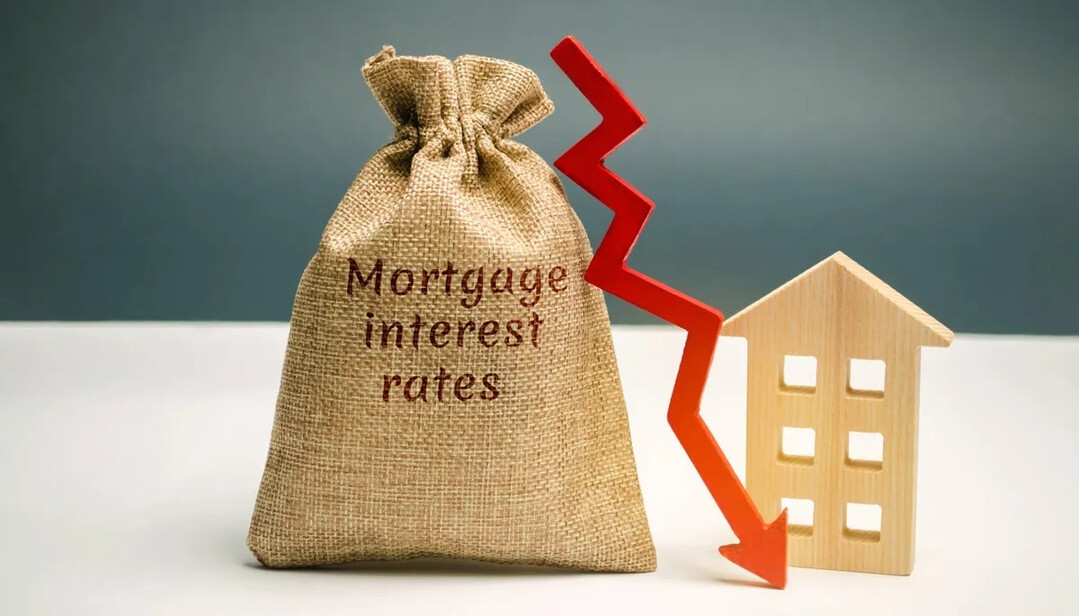
The lower limit (bottom end) of fixed-rate mortgage loans at major commercial banks has breached the 5% annual threshold, pushing the interest repayment burden on financial consumers to a critical level. This surge comes as market interest rates—the benchmark for lending rates—have risen steadily, driven by prolonged geopolitical conflicts in the Middle East that have restoked inflationary pressures and fueled expectations of domestic and international policy rate hikes. Financial experts warn that the upward trajectory is unlikely to reverse anytime soon, issuing strong alarms against excessive debt-fueled housing purchases ("Young-Kkul") or leveraged stock trading ("Bit-Too").

According to financial industry sources on May 24, KB Kookmin Bank, the nation's largest commercial lender, decided to raise its periodic and hybrid mortgage loan rates by 0.10 percentage points (p) starting this week, directly reflecting the recent rise in the 5-year bank debenture yield. With this adjustment, the lower limit of its hybrid (fixed) mortgage rate will rise to 5.07% per annum. This marks the first time in three years and months, since late October 2022, that the bank's minimum fixed mortgage rate has crossed the 5% line.

Back in October 2022, the financial market suffered from an extreme credit crunch following consecutive "big steps" (0.50%p hikes) by the Bank of Korea to tame surging inflation and foreign exchange volatility. Interestingly, the central bank’s base rate at that time stood at 3.00% per annum, which is 0.50%p higher than the current base rate of 2.50%. This discrepancy demonstrates that current market interest rates are aggressively pricing in future monetary tightening and potential rate hikes ahead of actual central bank action.

As a result, while the upper band of lending rates has already broken through the 7% barrier, the lower band is steadily crawling upward, effectively erasing the benefits of the low-interest-rate era. As of May 22, the hybrid fixed-rate mortgages offered by the five major commercial banks (KB Kookmin, Shinhan, Hana, Woori, and NH Nonghyup) stood at 4.53% to 7.13% per annum. Compared to March 27, when uncertainty surrounding the Middle East crisis reached its peak, both the lower and upper limits gained an additional 0.12%p in a span of just two months. This shift reflects the sharp increase in the 5-year bank debenture interest rate, which climbed from 4.12% to 4.24% over the same period.

A commercial bank official stated, "With bond yields skyrocketing daily to new highs, we vividly feel the extreme market volatility every single day when calculating loan interest rates."

Unsecured credit loans and variable-rate products have also faced significant upward pressure. Unsecured credit loan rates (for top-tier borrowers with a 1-year maturity) settled between 4.10% and 5.74% per annum, with the bottom end climbing 0.25%p over the past two months. Variable-rate mortgages indexed to the Cost of Funds Index (COFIX) also edged up by 0.02%p on both ends, ranging from 3.63% to 6.03% per annum, following a 0.07%p increase in the COFIX benchmark.

Despite the snowballing interest costs across all lending categories, credit line accounts—commonly referred to as "minus accounts"—are seeing an anomalous explosion in demand. The outstanding balance of individual minus accounts at the five major banks reached 41.28 trillion won as of May 21, surging by approximately 1.5 trillion won from the end of last month.

Bank officials note that some retail investors appear willing to bear high borrowing costs to ride the perceived market upswing, betting that potential stock market returns will outpace loan interest rates. However, wealth managers caution that deploying high leverage during periods of maximized global volatility can trigger catastrophic capital losses and default risks, advising investors to exercise strict financial restraint.

[Copyright (c) Global Economic Times. All Rights Reserved.]

  • #Hormuz Impasse
  • #globaleconomictimes
  • #micorea
  • #mykorea
  • #nammidonganews
  • #singaporenewsk
  • #Samsung
  • #Daewoo
  • #Hyos
Hwang Sujin Reporter

Popular articles

  • Goldman Sachs Maintains KOSPI Target at 12,000, Citing "Excessive Market Fear"

  • South Korea to Revive Pro-Japanese Asset Recovery: New Law Targets "Disposed" Property

  • Riot Games Hosts Largest-Ever TFT Festival at The Hyundai Seoul to Launch 'Sylvan Secrets' Set

I like it
Share
  • Facebook
  • X
  • Kakaotalk
  • LINE
  • BAND
  • NAVER
  • https://globaleconomictimes.kr/article/1065604053270550 Copy URL copied.
Comments >

Comments 0

Weekly Hot Issue

  • “Korea to Surpass Japan, Becoming the World’s Oldest Nation by 2060… 4 out of 10 to Be Aged 65 or Older”
  • "To Dedicate Myself to Korean Football Will Be Proved on the Pitch"
  • "AAPI Voter Wave Shakes Georgia": Michelle Kang Wins Landslide Victory in State House District 99 Democratic Primary
  • Consulate General Announces Employment Support Program for Korean-Brazilian Youth: “From Korean Language to Certifications and Employment” 
  • Korean Cultural Centers Worldwide Move Beyond 'K-Lifestyle' Experiences to Become Export Hubs
  • Gangwon Special Self-Governing Province Adopts '5 Key Articles of the Joint Declaration on Sustainable International Tourism Cooperation' with EATOF Member Countries

Most Viewed

1
Bridging Nations, Building Futures: Reflections of Ethiopia's Ambassador to the Republic of Korea
2
Hyundai Motor Faces First Full-Scale Strike in a Decade Over Wage Impasse 
3
President Lee Declares Geoje and Tongyeong 'Special Disaster Zones' Amid Heavy Rain Damage
4
MegazoneSoft Completes Google Workspace-Based AI Transformation for Nongshim Group 
5
Japan Carries Out First Execution in 14 Months Under Prime Minister Takaichi, Stoking Debate on Capital Punishment
광고문의
임시1
임시3
임시2

Hot Issue

“Thank you for staying alive”… Miracle survival of 2 people 9 days after Nepal's massive flood

NAND Market Surges 70%... 'Samsung and Hynix' Sweep Global 1st and 2nd Places

Jensen Huang Donates 13.5 Billion Won to Flood-Stricken Nepal

K-Next-Generation Reactor Breaks Through to Denmark Export

Fashion Runway Show 2026

Global Economic Times
korocamia@naver.com
CEO : LEE YEON-SIL
Publisher : KO YONG-CHUL
Registration number : Seoul, A55681
Registration Date : 2024-10-24
Youth Protection Manager: KO YONG-CHUL
Singapore Headquarters
5A Woodlands Road #11-34 The Tennery. S'677728
Korean Branch
Phone : +82(0)10 4724 5264
#304, 6 Nonhyeon-ro 111-gil, Gangnam-gu, Seoul
Copyright © Global Economic Times All Rights Reserved
  • 향기네무료급식
  • BCB부천방송
  • 반달곰 프로젝트
Search
Category
  • All articles
  • Synthesis
  • World
  • Business
  • Industry
  • ICT
  • Distribution Economy
  • Well+Being
  • Travel
  • Eco-News
  • Education
  • Korean Wave News
  • Opinion
  • Arts&Culture
  • Sports
  • People & Life 
    • 전체
    • International Student Report
    • With Ambassador
  • Column 
    • 전체
    • Cho Kijo Column
    • Cherry Garden Story
    • Ko Yong-chul Column
    • Kim Seul-Ong Column
    • Lee Yeon-sil Column
  • Photo News
  • New Book Guide
  • Overseas Koreans
  • Multicultural News