![[등록] 2026-09-01 15:48:31](/support/_updata/banner2/tl181982910_6749.png)


Another significant milestone has been established in the Korean-American political community in Georgia. Michelle Kang, a first-generation Korean immigrant, secured an overwhelming victory in the Democratic primary for the Georgia House of Representatives District 99, confirming her advance to the general election this November. Observers note that this demonstrates the rapidly growing consolidation and political influence of Asian voters in Gwinnett County.
According to the Democratic primary election results on May 19 (with 99% of precincts reporting), Michelle Kang secured 3,813 out of a total 5,333 votes, taking first place with a 71.5% vote share. Her rival, Shelly Abraham, finished with 1,520 votes (28.5%).
With this victory, Kang has bounced back from her defeat in the general election last year, successfully making a comeback to secure the Democratic nomination. In 2024, she ran in the same district against Republican incumbent Matt Reeves, narrowly falling short. However, returning to face voters just one year later, she is evaluated as having laid the foundation for a political resurgence.
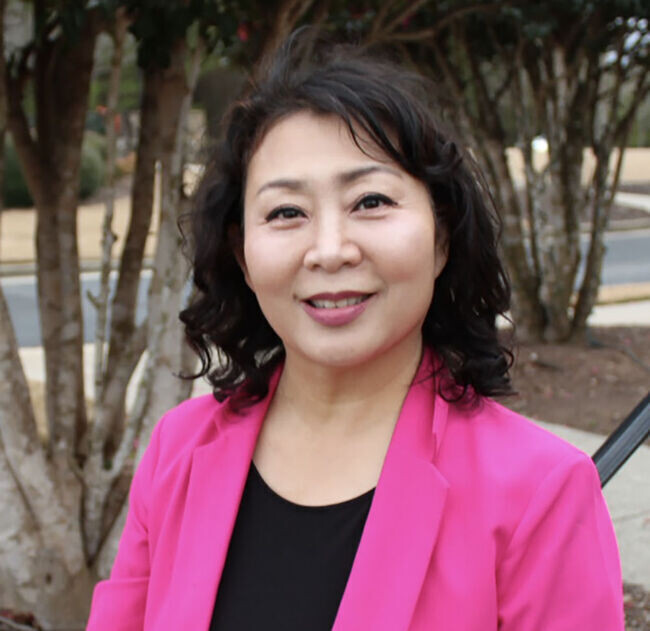
▲ Michelle Kang, Democratic candidate for Georgia State House District 99
Incheon-Born First-Generation Immigrant… "A Ground-Level Community Politician"
Michelle Kang is a first-generation Korean immigrant born in Incheon who moved to Georgia, USA, in 1992. In Korea, she worked as an intellectual property (IP) paralegal at a large law firm in Seoul, and later earned a Master of Public Administration (MPA) from the University of Georgia (UGA).
Since then, she has focused on supporting the Asian American and Pacific Islander (API) community. She founded API Outreach & Engagement LLC to run immigrant support programs and worked at the Gwinnett Asian American Resource Center, managing HUD (U.S. Department of Housing and Urban Development) related cases and providing immigration counseling. She also served as a Korean community advisor for Senator Raphael Warnock’s federal senatorial campaign, bridging the gap between the political sphere and the community.
Local political circles describe Kang as a "field-focused politician." She has continuously expanded her voter reach by participating in town halls and community events centered around Suwanee, Sugar Hill, and Duluth.
Education, Cost of Living, Public Safety, Minority Rights… Practical, Life-Centric Pledges Resonate
In this primary, Kang highlighted core pledges including ▲ expanding educational investments, ▲ easing the cost of living, ▲ strengthening local public safety, ▲ restoring reproductive rights, ▲ protecting minority community rights, and ▲ expanding educational opportunities for children.
Analysts suggest that her messaging focusing on practical solutions to everyday problems—particularly amid rising inflation and housing costs—successfully resonated with voters. Furthermore, strong voter turnout among the rapidly growing Asian and young demographic groups centered in Gwinnett County drove Kang’s landslide victory.
Immediately following her victory, Kang stated, "I accept this result as a mandate to properly deliver the voices of our residents to the state legislature. I will run to the finish line to build a community where every family can live more safely and securely."
"A Core Battleground That Can Flip": All Eyes on the November General Election
Georgia State House District 99 encompasses parts of Suwanee, Sugar Hill, and Duluth within Gwinnett County, representing an area that has experienced a sharp influx of Asian populations and young professionals over recent years.
Political analysts classify the district as a prime swing district where Republicans and Democrats fiercely compete. In fact, The Atlanta Journal-Constitution (AJC) previously named House District 99 as one of the "top 5 competitive districts likely to flip from Republican to Democrat."
Consequently, the rematch this November between Michelle Kang and Republican incumbent Representative Matt Reeves is expected to be a highly watched showdown not only within the Georgia Korean-American community but across the state’s entire political landscape.
Expanding Korean Political Power: Sam Park and Soo Hong Advance to General Election
Korean-American politicians also showed strong progress in this Georgia primary.
Democratic State Representative Sam Park ran unopposed in the District 107 primary, confirming his advance to the general election. Rep. Park is well-known as the first Korean-American and openly gay state legislator in the United States, continuing active legislative work in public health, welfare, and minority policy fields.
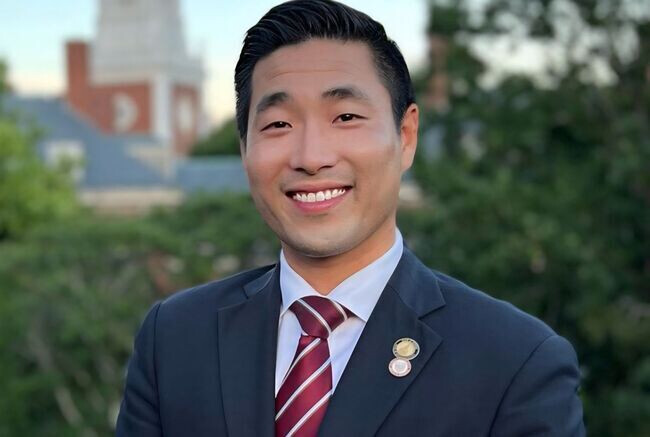
▲ Democratic State Representative Sam Park
Republican Representative Soo Hong also secured her spot for the general election in District 103. Born in Seoul, Rep. Hong is an attorney who graduated from Georgia Tech and Mercer University School of Law, and is evaluated as a leading figure in Georgia’s Korean-American conservative politics.
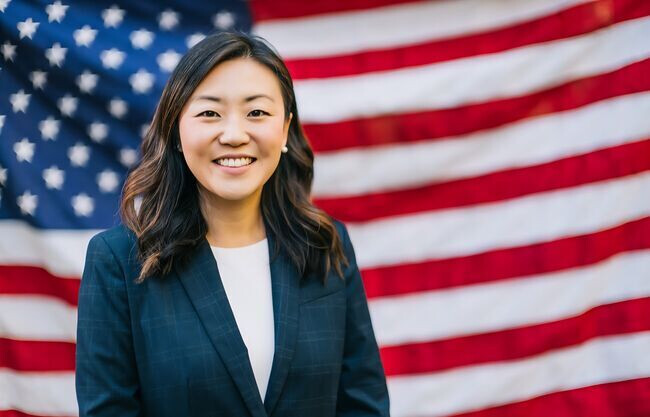
▲ Republican Representative Soo Hong
On the other hand, Eugene Chun, who ran in the Republican primary for U.S. House District 1, received 3,082 votes (4.36%) and placed fifth, failing to secure the nomination. Georgia’s 1st District is a Republican stronghold centered around Savannah, where incumbent Buddy Carter maintains a strong organizational base.
"Korean-American Son-in-Law" Garabadu Advances to Runoff
In the Democratic primary for Georgia State Senate District 7, Rahul Garabadu—known as the son-in-law of Dr. Kang Chang-seok, an internal medicine physician who has treated Korean patients in Johns Creek for over 30 years—secured 5,959 votes (33.21%) to place second and advance to a runoff against Ruwa Romman, scheduled for June 16.
Dr. Kang, a graduate of Seoul National University College of Medicine, is a prominent figure in the Gwinnett County Korean medical community, having long contributed to the health and welfare of the local Korean-American community.
Local Korean-American community circles note that "Garabadu has also closely interacted with diverse immigrant communities, striving to understand the voices of a multicultural society." As a result, analyses suggest that the votes of Korean and Asian voters could play a critical role as a swing factor in the upcoming runoff.
"The Era of Asian Voters Takes Full Effect": Gwinnett County's Political Landscape Shifts
Michelle Kang's primary victory is evaluated as a symbolic event showcasing the political growth potential of the Korean and Asian communities in Georgia, extending far beyond the achievement of a single politician.
In particular, Gwinnett County has emerged over the past decade as the epicenter of Georgia’s changing political landscape amid a rapid rise in Asian populations, including Korean, Chinese, and Indian communities. As historically conservative areas gradually restructure into multi-racial and youth-centric demographics, election outcomes are shifting rapidly.
Political insiders note that "this primary result demonstrates that Asian voters are no longer peripheral players, but have grown into a core electorate capable of swaying election outcomes across Georgia." If Michelle Kang wins the general election in November, it is expected to mark yet another turning point in the political history of Korean-Americans in Georgia.
[UN피스코 타임즈 발췌] https://unpeacekor.org/news/856
[Copyright (c) Global Economic Times. All Rights Reserved.]