![[등록] 2026-09-01 15:48:31](/support/_updata/banner2/tl181982910_6749.png)


A khaki-colored bolero, inspired by the traditional Korean jacket called the jeogori, paired with straight-leg black jeans. A norigae (a traditional ornamental pendant) dangles from a belt loop, and on her feet, Mary Jane shoes with pointed toes reminiscent of beoseon (traditional socks). This is how Seo Yurang, a 23-year-old art student on a leave of absence, appeared for our interview. Effortlessly blending the traditional with the modern, she is a hanbok influencer, or “Ambassador of Daily Hanbok,” on social media under the handle @rainbow_sprout.
Yurang, the youngest of three siblings, was raised with an abundance of family love. "When I was little, I was a bit of a brat who thought my things were the most precious," she recalls. "But that personality is what led me to hanbok." On family trips abroad, she found herself captivated by magnificent cultural artifacts, yet simultaneously, a part of her felt a sense of slight annoyance. As beautiful as they were, they weren't her own.
"When someone would talk about the scale of the Forbidden City, I would mutter, 'Our Gyeongbokgung was just as big; it's just that it was damaged during the Japanese colonial period and hasn't been fully restored,'" she says. "Since I thought my own culture was the most beautiful and precious, I wanted to spread the beauty of hanbok far and wide."
In high school, wearing borrowed 5,000-won hanbok to stroll through ancient palaces and being photographed by tourists became a fun activity for her and her friends. In college, fast fashion disappeared from her closet, replaced by daily hanbok, which now accounts for 60% of her wardrobe.
For her, a crucial part of preparing for an international trip is sketching out her "hanbok coordinates." She plans and packs her outfits in advance. "It's a huge thrill when locals pass by and give me a thumbs-up, saying, 'I love your outfit!'" she says. During a language study trip to the U.S. last year, she packed a suitcase full of hanbok. At global events, she would gather her Korean friends for an impromptu "Yurang's Closet" hanbok fashion show.
Yurang believes that the git, or collar, is one of the key reasons foreigners find hanbok so beautiful. "The clean, straight line of the hanbok collar makes a person look neat and put-together," she explains. "In the U.S., I would get asked at least once a day, 'Where did you get that outfit?' I think it's a unique design that stands out from any other clothing."
For hanbok beginners, Yurang suggests starting with a basic white, shirt-style jeogori. "It's a versatile basic item that goes with everything, just like a white shirt. You can pair it with jeans, skirts, or overalls," she advises. "The collar and ribbons give it a subtle hanbok vibe."
Her experience has taught her that starting with loud colors or patterns can lead to quickly losing interest. She recommends a gradual approach: start with a white jeogori, then move to black, then colors, and finally, after you’re comfortable, patterns. "Before you know it, you'll be a hanbok fashionista," she promises. If you're still hesitant, she suggests starting with accessories like norigae, daenggi (a ribbon for hair), or shoes.
The Rise of Hanbok and the Breaking of Stereotypes
Kim Sookyung, the CEO of the hanbok brand Danipick Korea, views the hanbok craze among Gen Z as a positive sign for the future of Korean traditional clothing. "Not long ago, hanbok only accounted for 2% of the domestic fashion market," she says. "But with Gen Z's perception of hanbok as 'hip,' the industry is growing very fast."
However, there are still barriers. Hanbok can be difficult to find and is often more expensive since it's centered around designer brands. The misconception that traditional hanbok materials are hard to wash and maintain is another common hurdle.
Kim suggests using hanbok rental services as a way to try it out. Many platforms now offer daily rentals, not just for weddings. She also recommends flea markets where you can find new designers' work at reasonable prices and stay on top of trends.
Modern hanbok materials have also evolved beyond silk and ramie. There's a growing development of eco-friendly fabrics like easy-to-wash polyester blends, recycled materials, and plant-based fibers. "Most daily hanbok can be washed in a machine in a laundry bag and air-dried, so it's not difficult to maintain," Kim says. Yurang, for her part, spends about 100,000 won (about $75) a month on hanbok, often finding items on crowdfunding platforms like Wadiz and Tumblbug.
"A basic short-sleeve T-shirt from a well-marketed new brand can cost 60,000 to 70,000 won these days," Yurang notes. "In comparison, a hanbok that's not restricted by trends or age can be worn for a very long time, so it's not expensive in the long run. There's also a steady demand for secondhand hanbok on resale platforms, which makes the market very active."
Hanbok Is for Everyone
There's a persistent stereotype that hanbok only looks good on a specific body type—narrow shoulders and a small chest. But Kim and Yurang debunk this. "The idea that there's an ideal body type for hanbok is just an old beauty standard," Kim says. "These days, we find ways to style it to highlight each person's strengths." For example, someone with broad shoulders can opt for a narrow git, while a person with a larger bust can wear a longer goreum (the ribbons that tie the jeogori) to draw the eye away. The key is focusing on proportion and line, not body shape.
Yurang adds, "Hanbok is basically made with a flat pattern, so it's not tight. Like an oversized shirt, it's very forgiving and fits most body types well."
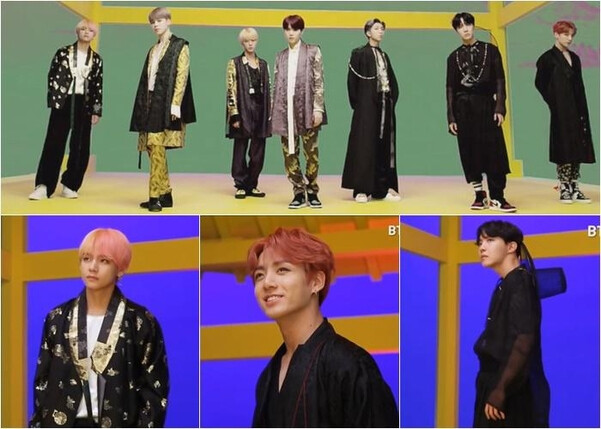
The article concludes with a powerful message from both Yurang and Kim: we need to be more flexible in our views on hanbok. The image we have of hanbok is often limited to the late Joseon Dynasty's short jeogori and wide skirt. But hanbok has continuously evolved throughout the Three Kingdoms, Goryeo, and Joseon periods. Yurang challenges purists who say, "That's not hanbok," arguing that those who draw such rigid lines rarely wear hanbok themselves.
"If hanbok is always expected to be formal and elegant, it becomes another barrier," Kim says. "When clothing becomes a source of stress, people won't reach for it." The simple, white shirt-style jeogori is a perfect starting point. When hanbok blends with our daily lives and individual tastes, it truly becomes our own.
[Copyright (c) Global Economic Times. All Rights Reserved.]