• 2026.05.24 (Sun)
  • All articles
  • LOGIN
  • JOIN
Global Economic Times
fashionrunwayshow2026
  • Synthesis
  • World
  • Business
  • Industry
  • ICT
  • Distribution Economy
  • Well+Being
  • Travel
  • Eco-News
  • Education
  • Korean Wave News
  • Opinion
  • Arts&Culture
  • Sports
  • People & Life
    • International Student Report
    • With Ambassador
  • Column
    • Cho Kijo Column
    • Cherry Garden Story
    • Ko Yong-chul Column
    • Kim Seul-Ong Column
    • Lee Yeon-sil Column
  • Photo News
  • New Book Guide
MENU
 
Home > Distribution Economy

K-Semiconductor Shackled by Tens of Trillions in Bonuses, Facing Crisis of Extinction Amid 'Hundred-Trillion' Expansion by Micron and TSMC

Kim Sungmoon Reporter / Updated : 2026-05-24 17:54:59
  • -
  • +
  • Print


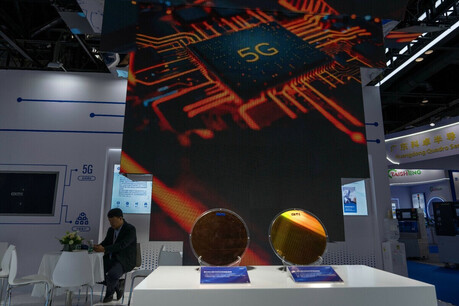
The South Korean semiconductor industry, the backbone of the nation's economy, has run into an unprecedented storm of internal and external crises. Although Samsung Electronics management and its labor union narrowly averted a catastrophic strike by reaching a tentative wage agreement, alarms are sounding from all corners. The newly institutionalized bonus system tied strictly to a fixed percentage of operating profit threatens to dry up the astronomical capital resources required for the industry's long-term survival. Critics warn that blind obsession with immediate bonus payouts, without considering the cyclical nature of the semiconductor business, could swiftly demolish the hard-earned "super-gap" technology lead against global competitors.

The semiconductor business is a prime example of a capital-intensive industry where massive pre-emptive capital expenditure (CAPEX) dictates ultimate survival. Companies must hoard vast amounts of cash during market booms to withstand brutal "chicken games" during downturns and to continuously fund the development of next-generation manufacturing nodes. However, South Korea's leading chipmakers are moving in the opposite direction. The semiconductor bonuses distributed by SK Hynix earlier this year alone reached approximately 4.7 trillion KRW. If market forecasts hold true for the next two years, the total bonus payout to employees is projected to skyrocket to nearly 65 trillion KRW. This enormous sum, capable of building more than three state-of-the-art fabrication plants (fabs), is dissolving entirely into fixed labor costs.

While South Korean chipmakers are bogged down in exhausting internal feuds over profit distribution, global rivals in the US and Taiwan are aggressively pouring cash into the ground to widen the gap. Micron, which has caught up to Korea's heels in the memory sector, expanded its capital expenditure budget for this year to $25 billion (approx. 38 trillion KRW), constructing massive production bases centered in New York and Singapore. TSMC, the undisputed leader in the foundry market, has also raised its annual CAPEX up to $56 billion (approx. 85 trillion KRW), completing an absolute global supply chain that seamlessly connects Taiwan, the United States, and Europe.

Beyond merely escalating corporate costs, the agreement to fix bonus ratios has triggered fierce legal and institutional backlash for undermining corporate governance and violating fiduciary duties to shareholders. Strong concerns have emerged even from government leadership regarding a mechanism that extracts fixed portions of operating profits before corporate taxes can even be levied. Under basic capitalistic principles, corporate earnings must first be allocated to national taxes, reinvestment for future growth, and shareholder returns. Shareholder advocacy groups are fiercely protesting, arguing that performance compensation is not an arbitrary labor condition for management and unions to decide in secret, and are preparing lawsuits to nullify agreements made without shareholder approval.

The past Economic Value Added (EVA) metric used by South Korean conglomerates undeniably fueled internal distrust due to its opaque calculation formulas, and it certainly required reform. However, the alternative should never be an "operating-profit-linked bonus" that completely paralyzes a corporation's capital flexibility. Global tech titans like Apple and Nvidia design their executive and employee rewards based not on raw profit volumes, but on a sophisticated matrix including Relative Total Shareholder Return (TSR) against competitors, as well as revenue and operating profit growth rates. It is high time for South Korean enterprises to break free from short-term union pressures, diversify performance metrics, and introduce macro-level structural overhauls—such as deferred compensation via Restricted Stock Units (RSUs)—to align employee incentives with the long-term growth and corporate value of the firm.

[Copyright (c) Global Economic Times. All Rights Reserved.]
  • #Hormuz Impasse
  • #globaleconomictimes
  • #micorea
  • #mykorea
  • #nammidonganews
  • #singaporenewsk
  • #Samsung
  • #Daewoo
  • #Hyos
Kim Sungmoon Reporter

Popular articles

  • Lim Tae-hee Pledges to Ease School Uniform Costs, Proposing 400,000 Won Support for Casual Wear

  • The Unstoppable Semiconductor Rally: Why This 'Crazy' Surge Might Last Longer Than Expected Despite Overheating Fears

  • "Chasing Samsung & SK Hynix": Semiconductor ETFs Soar While Inverse Products Plunge

I like it
Share
  • Facebook
  • X
  • Kakaotalk
  • LINE
  • BAND
  • NAVER
  • https://globaleconomictimes.kr/article/1065603251374363 Copy URL copied.
Comments >

Comments 0

Weekly Hot Issue

  • Government Allows Private Practitioners to Work at Public Health Centers to Resolve Medical Vacuum Caused by Shrinking Number of Public Health Doctors
  • 'Sold Out in One Day' National Growth Fund Sparks Frenzy… Authorities Consider Additional Sales in H2 as Ordinary Citizens Rush In
  • Secrets of the 13m Underground Revealed: Seoul Plaza’s 335-Meter Hidden Tunnel Reborn as a 'K-Content Platform' After 40 Years 
  • US and Iran Near Dramatic Breakthrough on '60-Day Truce Extension and Opening of Strait of Hormuz'… A Watershed for Middle East Peace
  • The Danger of a 36-Trillion-Won 'Debt-Driven Investment' Era… Will a 7-Trillion-Won Concentration in Samsung and Hynix Trigger a Market Crash?
  • "Countdown to Renewed Strikes on Iran?" At Least 50 U.S. Aerial Refueling Tankers Massed at Israeli Airport

Most Viewed

1
NATO Invites IP4 Nations, Including South Korea and Japan, to Join "Starlift" Space Initiative
2
SK hynix CEO Kwak Noh-jung Meets Bill Gates and Satya Nadella to Solidify AI Memory Alliance
3
Alleged Marital Rift Between Macrons Tied to Iranian Actress: New Claims Emerge
4
IRANIAN STATE MEDIA DEMONSTRATES ASSAULT RIFLES ON-AIR, TARGETING UAE FLAG AMID RISING REGIONAL PRESSURES
5
The Unstoppable Semiconductor Rally: Why This 'Crazy' Surge Might Last Longer Than Expected Despite Overheating Fears
광고문의
임시1
임시3
임시2

Hot Issue

White House Shooter Identified as 21-Year-Old Nasir Best with History of Mental Illness Claiming to be "Jesus"

Bomb Attack Targets Moving Train in Pakistan: At Least 29 Dead, 102 Injured

US and Iran Near Dramatic Breakthrough on '60-Day Truce Extension and Opening of Strait of Hormuz'… A Watershed for Middle East Peace

The Onslaught of 'AI Disinformation' Scarier Than Hacking… Human Response Pushed to Its Limits

Fashion Runway Show 2026

Global Economic Times
korocamia@naver.com
CEO : LEE YEON-SIL
Publisher : KO YONG-CHUL
Registration number : Seoul, A55681
Registration Date : 2024-10-24
Youth Protection Manager: KO YONG-CHUL
Singapore Headquarters
5A Woodlands Road #11-34 The Tennery. S'677728
Korean Branch
Phone : +82(0)10 4724 5264
#304, 6 Nonhyeon-ro 111-gil, Gangnam-gu, Seoul
Copyright © Global Economic Times All Rights Reserved
  • 에이펙2025
  • APEC2025가이드북TV
  • 반달곰 프로젝트
Search
Category
  • All articles
  • Synthesis
  • World
  • Business
  • Industry
  • ICT
  • Distribution Economy
  • Well+Being
  • Travel
  • Eco-News
  • Education
  • Korean Wave News
  • Opinion
  • Arts&Culture
  • Sports
  • People & Life 
    • 전체
    • International Student Report
    • With Ambassador
  • Column 
    • 전체
    • Cho Kijo Column
    • Cherry Garden Story
    • Ko Yong-chul Column
    • Kim Seul-Ong Column
    • Lee Yeon-sil Column
  • Photo News
  • New Book Guide
  • Multicultural News
  • Jobs & Workers