• 2025.12.14 (Sun)
  • All articles
  • LOGIN
  • JOIN
Global Economic Times
APEC2025KOREA가이드북
  • Synthesis
  • World
  • Business
  • Industry
  • ICT
  • Distribution Economy
  • Well+Being
  • Travel
  • Eco-News
  • Education
  • Korean Wave News
  • Opinion
  • Arts&Culture
  • Sports
  • People & Life
  • Column
    • Cho Kijo Column
    • Lee Yeon-sil Column
    • Ko Yong-chul Column
    • Cherry Garden Story
  • Photo News
  • New Book Guide
MENU
 
Home > World

Mayan civilization's 'lost city' discovered by chance in Mexican jungle

Desk / Updated : 2024-10-29 17:37:43
  • -
  • +
  • Print


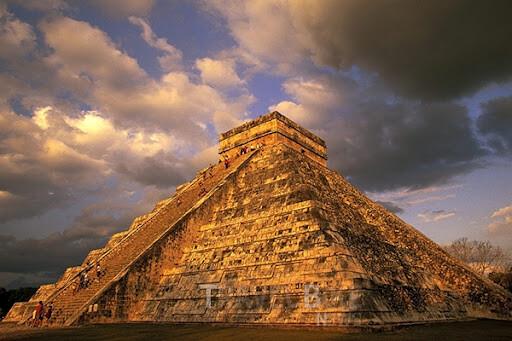
[GLOBAL ECONOMIC TIMES]  The discovery of a huge city from the Mayan civilization deep in the jungle of southeastern Mexico is causing great shock to the academic world. According to a BBC report on the 29th (local time), an international research team discovered surprising ruins in a tropical rainforest near Campeche Province using lidar, a radar technology.

This city, named Valeriana, is a complex city with various facilities such as a pyramid, stadium, theater, causeway, and residential areas, and is estimated to be close in size to Edinburgh, the capital of Scotland. It is the second largest Maya city discovered to date after Calakmul, and appears to have flourished between 750 and 850 AD. The research team estimates that about 30,000 to 50,000 people lived in this city.

Interestingly, these ruins were discovered through LiDAR research data from an environmental group discovered accidentally during a Google search. The research team confirmed the existence of Valeriana by reinterpreting this data using archaeological methods. In particular, this discovery is expected to serve as evidence to overturn the existing theory that the Mayans regarded the rainforest as a land of death and avoided it. The research team emphasized that the tropical rainforest was an important base that led to the prosperity of the Mayan civilization.

The Mayan civilization flourished around present-day southeastern Mexico, Guatemala, and El Salvador from around 2500 BC, but suddenly declined around the 10th century. Environmental destruction due to excessive population growth is known to be the main cause.

LiDAR technology specialized for forest terrain is excellent for finding Mayan ruins hidden in dense jungle. The discovery of Valeriana is considered an example of new possibilities in the study of Mayan civilization using LiDAR technology. It is expected that more Mayan ruins will be discovered through LiDAR technology in the future, and the mysteries of the Mayan civilization will be revealed one after another.

[Copyright (c) Global Economic Times. All Rights Reserved.]

Desk
Desk

Popular articles

  • Korean Fashion Brands Set Sights on China: Dunst Opens Pop-up in Shanghai

  • Alliance in a Dilemma: The Fallout of Trump's Advice to Takaichi Not to 'Provoke Taiwan' 

  • South Korea Lauded as 'Model Ally' After Committing to 3.5% GDP Defense Spending

I like it
Share
  • Facebook
  • X
  • Kakaotalk
  • LINE
  • BAND
  • NAVER
  • https://globaleconomictimes.kr/article/1065602181079631 Copy URL copied.
Comments >

Comments 0

Weekly Hot Issue

  • Lotte Biologics Hosts 'Future Innovative Technology Development Forum'
  • CJ OnStyle Launches Major Year-End Living Event: 'Jibchak Festa'
  • CJ CheilJedang Launches 'Yummy' Content Service on CJ The Market App
  • Yamaha Music Korea Launches 'Hybrid Piano Music Festa' Special Promotion
  • Lotte Wellfood Dominates 2025 Korea Digital Advertising Awards with Six Wins
  • South Korean Business Undergoes Major Generational Shift: A Move Towards Tech-Driven Leadership

Most Viewed

1
A Garden Where the City's Rhythm Stops: Dongdaemun's 'Cherry Garden', Cooking Consideration and Diversity
2
Choi Bun-do, Chairman of PTV Group, Assumes Presidency of the Korean Chamber of Commerce and Industry in South Central Vietnam
3
From Court to Content: French Tennis Star Océane Dodin Trades Racquet for OnlyFans, Eyes $5M in a Year
4
Lee Dismisses Vice Minister Amid Allegations of Misconduct and Vetting Gaps
5
Daejeon to Host 3rd Annual International Korea Beauty Festival, Paving the Way for K-Beauty Hub Status
광고문의
임시1
임시3
임시2

Hot Issue

South Korean President Lee and Japanese PM Takaichi to Meet in Nara, Signifying a Shift to 'Regional Shuttle Diplomacy'

[Deep Report] The Black Hand Behind the Mask of Disguise: The Reality of Cult Corporate Entities' Encroachment on Power Across Korean Society

Samsung Launches 'Galaxy Z TriFold,' Draws Crowds Despite $2,750 Price Tag

South Korea’s National Assembly Passes Banking Act Amendment Regulating Loan Interest Rates

Let’s recycle the old blankets in Jeju Island’s closet instead of incinerating them.

Global Economic Times
korocamia@naver.com
CEO : LEE YEON-SIL
Publisher : KO YONG-CHUL
Registration number : Seoul, A55681
Registration Date : 2024-10-24
Youth Protection Manager: KO YONG-CHUL
Singapore Headquarters
5A Woodlands Road #11-34 The Tennery. S'677728
Korean Branch
Phone : +82(0)10 4724 5264
#304, 6 Nonhyeon-ro 111-gil, Gangnam-gu, Seoul
Copyright © Global Economic Times All Rights Reserved
  • 에이펙2025
  • APEC2025가이드북TV
  • 독도는우리땅
Search
Category
  • All articles
  • Synthesis
  • World
  • Business
  • Industry
  • ICT
  • Distribution Economy
  • Well+Being
  • Travel
  • Eco-News
  • Education
  • Korean Wave News
  • Opinion
  • Arts&Culture
  • Sports
  • People & Life
  • Column 
    • 전체
    • Cho Kijo Column
    • Lee Yeon-sil Column
    • Ko Yong-chul Column
    • Cherry Garden Story
  • Photo News
  • New Book Guide
  • Multicultural News
  • Jobs & Workers