![[등록] 2026-09-01 15:48:31](/support/_updata/banner2/tl181982910_6749.png)


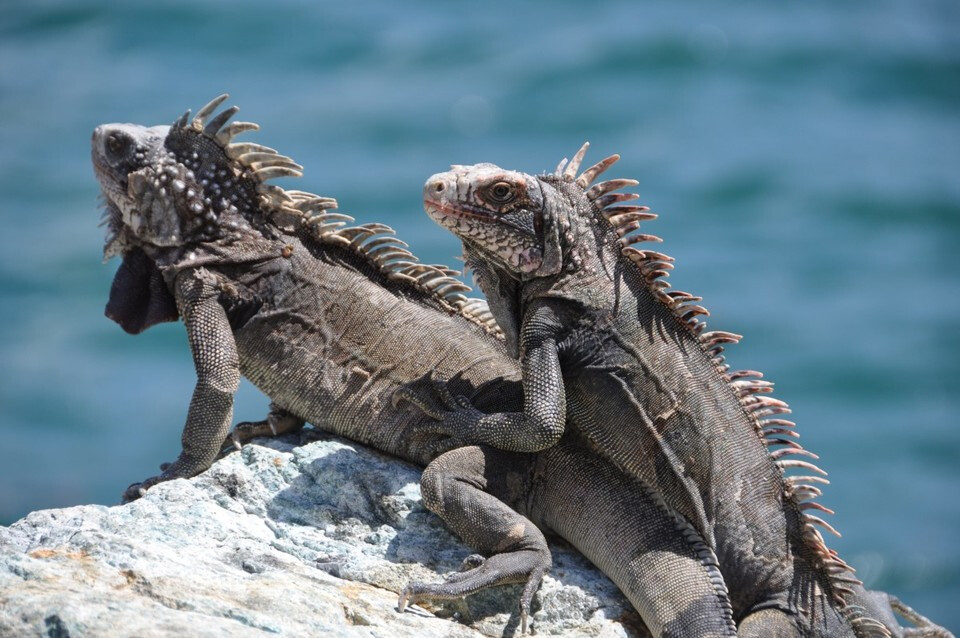
SANTIAGO ISLAND, GALÁPAGOS – The Galápagos Islands, a crucible of biodiversity and the inspiration for Charles Darwin's theory of evolution, have marked a significant milestone in their ecological restoration efforts with the release of 1,500 Galápagos land iguanas (Conolophus subcristatus) onto Santiago Island. This ambitious conservation program, spearheaded by the Galápagos National Park Directorate (DPNG) and the Charles Darwin Foundation, aims to re-establish native species populations and restore the archipelago’s delicate natural equilibrium.
The reintroduction, which occurred between August and October 2025, forms a crucial part of a wider, multi-year strategy to bring the species back to an island from which it vanished nearly two centuries ago. The iguanas were last officially recorded on Santiago by Darwin himself during his 1835 visit, with the population subsequently decimated by introduced invasive species—feral pigs, rats, and goats—that destroyed habitats and outcompeted the native reptiles for food.
Ecological Engineers Return
Land iguanas are recognized as 'ecological engineers' within the archipelago's ecosystem. They play an indispensable role as seed dispersers, consuming native flora and depositing seeds across the landscape, which aids in the regeneration of plant life and influences the structure and dynamics of the arid zone vegetation. Their re-establishment on Santiago is therefore vital to the island's long-term ecological health, following the successful eradication of invasive mammals like pigs and goats years prior.
The recent operation involved the translocation of 1,500 iguanas, sourced from North Seymour Island, where a flourishing population—estimated at around 5,000—was beginning to face resource limitations due to its smaller surface area. The transfer thus serves the dual purpose of alleviating overpopulation pressure on North Seymour and accelerating the restoration of Santiago.
Minister of Environment and Energy, Inés Manzano, underscored the significance of the release: "This action ensures the species has better conditions for development, as North Seymour's limited resources posed a challenge for their future survival." Carlos Ortega, Director of the Galápagos National Park, added that the reintroduction "not only returns an essential herbivore to its habitat but also contributes to alleviating overpopulation in North Seymour."
A Rigorous Three-Phase Protocol
The reintroduction was meticulously executed across three phases, with the final batch released on October 8th. The process adhered to strict conservation parameters:
Selection and Capture: Healthy iguanas with appropriate body condition were carefully selected and captured on North Seymour Island.
Quarantine and Preparation: The animals underwent a rigorous 15-to-20-day quarantine period at the DPNG's facilities on Santa Cruz Island. During this time, they received health evaluations, had morphometric data recorded, were fitted with microchips for future monitoring, and were ensured to have eliminated any ingested seeds. This protocol guarantees that they arrived on Santiago in optimal health and without introducing biological risks to the local ecosystem.
Translocation and Release: The iguanas were transported to Santiago Island by sea during the cooler morning hours to mitigate thermal stress. Upon arrival and following a careful liberation process, they are expected to forage for themselves without supplementary feeding, promoting natural adaptation.
The Galápagos Archipelago, a UNESCO World Natural Heritage site since 1978, remains a unique natural laboratory. The successful reintroduction of these land iguanas reinforces Ecuador's commitment to the conservation of the islands' unique biological integrity. Early reintroductions of land iguanas to Santiago in 2019 have already shown success, with monitoring teams confirming the presence of naturally reproducing juveniles in the years following, indicating a strong positive trajectory for the species' recovery on the island. This latest release consolidates a model for sustainable management, ensuring the long-term survival of this emblematic species and the overall health of the island's ecosystem.
[Copyright (c) Global Economic Times. All Rights Reserved.]