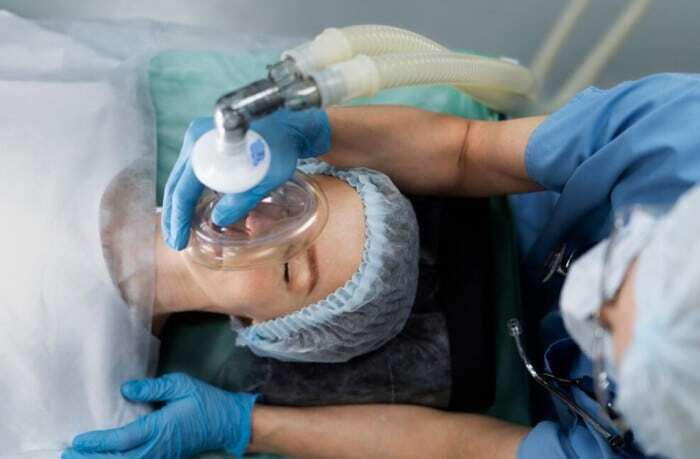
Legislation is being pursued to require all medical institutions performing general anesthesia or sedation anesthesia (sleep anesthesia) to be equipped with emergency medical devices such as ventilators and automated external defibrillators (AEDs).
Rep. So Byung-hoon (Democratic Party of Korea), a member of the National Assembly's Health and Welfare Committee, announced on the 25th that he has sponsored a partial amendment to the Medical Service Act containing these provisions.
Recently, cosmetic and plastic surgery procedures as well as endoscopic examinations using sedation drugs such as propofol, midazolam, and ketamine have surged, particularly among clinic-level medical institutions.
According to data submitted by the Health Insurance Review and Assessment Service (HIRA) to Rep. So during the parliamentary audit, anesthesia fee claims at clinic-level medical institutions increased by 43.6% over four years, from 298,375 cases in 2021 to 428,425 cases last year. In the first half of this year alone, 236,043 cases have already been claimed.
While sedation anesthesia carries a high risk of rapid patient deterioration, such as respiratory depression or cardiac arrest, the emergency resuscitation infrastructure at frontline medical sites has been found to be largely defenseless.
A comprehensive survey of 440 clinic-level medical institutions that prescribed sedation and anesthetic drugs more than 600 times in the first half of this year revealed that only 2 clinics (0.5%) possessed and reported having a ventilator. Furthermore, 85% (374 clinics) lacked a defibrillator, which is critical for securing the "golden time" during cardiac arrest.
Analysts point out that this shortage of emergency equipment stems from a legislative blind spot in current laws.
Under the current Medical Service Act, the mandate to equip ventilators and defibrillators is limited to operating rooms and intensive care units (ICUs). Consequently, the vast majority of clinic-level institutions performing sedation anesthesia in general treatment rooms or endoscopy rooms face no legal penalties for not having emergency equipment.
In fact, over the past eight months, two patients died consecutively after receiving sedation anesthesia at a dental clinic in Gangnam, Seoul.
From 2021 to August of this year, emergency 119 ambulance dispatches to medical facilities included frequent critical transport cases—such as 15,509 cases of cardiac arrest, 29,382 cases of impaired consciousness, and 58,768 cases of dyspnea (difficulty breathing)—prompting calls for urgent systemic reform.
Accordingly, the proposed amendment stipulates that founders of medical institutions performing treatments, procedures, or surgeries under general or sedation anesthesia must equip the locations where such procedures take place with emergency airway management and cardiopulmonary resuscitation (CPR) equipment, including ventilators and AEDs, as prescribed by the Ordinance of the Ministry of Health and Welfare.
Additionally, the bill includes a grace period allowing medical institutions already in operation at the time of the law's enforcement up to one year to acquire the equipment, ensuring stable implementation in the field.
Rep. So Byung-hoon stated, "While sedation procedures are surging, a perilous situation where 85% of clinic-level medical institutions anesthetize patients without even a defibrillator has been left neglected in a legal blind spot." He added, "I hope the revision to the Medical Service Act passes swiftly to establish a safe medical environment capable of immediate response to emergencies that may arise during anesthesia."
[Copyright (c) Global Economic Times. All Rights Reserved.]