![[등록] 2026-09-01 15:48:31](/support/_updata/banner2/tl181982910_6749.png)


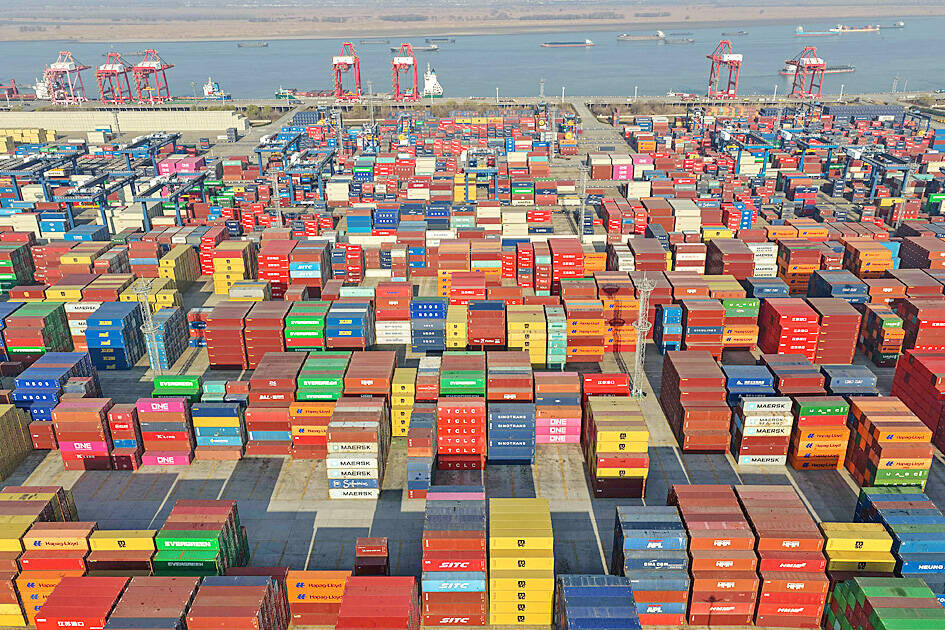
HONG KONG — China’s trade surplus reached a historic milestone of nearly US$1.2 trillion last year, a 20 percent surge driven by a strategic pivot toward emerging markets. This record-breaking performance comes despite an intensified trade onslaught from the United States, where higher tariffs under President Donald Trump’s administration have significantly hampered trans-Pacific shipments.
According to customs data released yesterday, China’s total exports for the year rose 5.5 percent to US$3.77 trillion. This growth was fueled by the aggressive expansion of Chinese automakers and manufacturers into global territories, successfully offsetting a sharp 20 percent decline in exports to the U.S. market. Meanwhile, imports remained largely stagnant at US$2.58 trillion, reflecting a cooling domestic economy.
The year concluded on a strong note, with December exports climbing 6.6 percent year-on-year in dollar terms, surpassing economists' expectations and November’s 5.9 percent increase. Imports in December also saw a 5.7 percent uptick, showing a recovery from the 1.9 percent growth recorded in the previous month.
The geographical breakdown of China's trade underscores a major realignment in global commerce. While the trade war with Washington escalated, Beijing found robust demand elsewhere. Exports to Africa surged by 26 percent, while shipments to Southeast Asian nations jumped 13 percent. The European Union and Latin America also saw increases of 8 percent and 7 percent, respectively.
Sectoral data revealed that electronics and electrical equipment remained China’s dominant export category, growing 8.4 percent due to strong global demand for semiconductors and related components. The automotive sector also posted remarkable gains, with vehicle exports surging 21 percent to over 7 million units. This boom was primarily driven by the rising global appetite for electric vehicles (EVs) and plug-in hybrids.
"We continue to expect exports to act as a big growth driver in 2026," stated Jacqueline Rong, chief China economist at BNP Paribas SA. She noted that while trade friction and geopolitical tensions persist, the diversification of China's export destinations has provided a critical buffer.
However, this export-led success has triggered international concern. The influx of competitively priced Chinese goods has prompted fears of industrial displacement in several countries. IMF Managing Director Kristalina Georgieva recently urged Beijing to address its economic imbalances, suggesting a shift away from export reliance toward boosting domestic demand and investment.
Domestically, China faces significant hurdles. A prolonged downturn in the property sector continues to weigh heavily on consumer confidence. Although the government introduced trade-in subsidies for appliances and vehicles to stimulate spending, the impact has been limited. "The policy boost to domestic demand looks weaker than last year," Rong observed, noting that domestic auto sales slowed toward the end of the year as subsidies were phased out.
Looking ahead, Gary Ng, senior economist at Natixis SA, projects more moderate export growth of approximately 3 percent for the coming year. Nevertheless, with import growth expected to remain sluggish, analysts predict that China’s annual trade surplus will comfortably maintain its position above the US$1 trillion mark.
[Copyright (c) Global Economic Times. All Rights Reserved.]