![[등록] 2026-09-01 15:48:31](/support/_updata/banner2/tl181982910_6749.png)


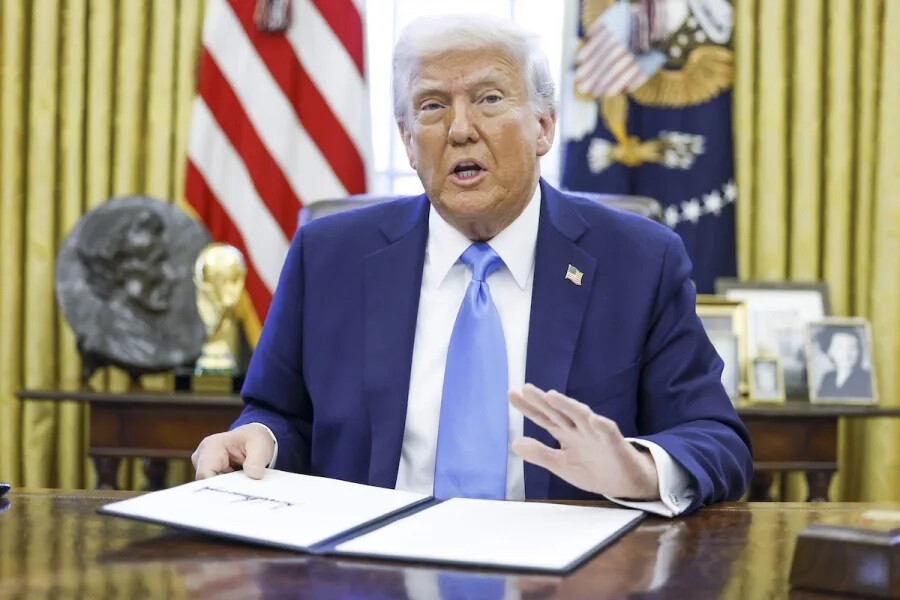
SEOUL - In a whirlwind of trade policy, U.S. President Donald Trump has spent his first 70-plus days in office aggressively reshaping the landscape of international commerce through a series of significant tariff actions.
On April 2nd (local time), President Trump unveiled his "reciprocal tariff" policy, threatening to impose duties ranging from 10% to a staggering 49% on major exporting nations to the United States, including South Korea.
South Korea, despite having a Free Trade Agreement (FTA) with the U.S., faces the highest reciprocal tariff rate among FTA partners at 26%. This places South Korea at a disadvantage compared to key export competitors like Japan and the European Union (EU), which do not have FTAs with the U.S., raising concerns about a substantial blow to the Korean economy.
Tariffs were a cornerstone of Trump's campaign promises, and his administration has moved swiftly to implement them. Shortly after taking office, he announced a 25% tariff on imports from Canada and Mexico, signaling the start of his assertive trade agenda. This was followed by an executive order imposing an additional 10% tariff on Chinese goods, effectively igniting a "tariff war" with major trading partners.
The February 1st announcement of tariffs on Canada (25%), Mexico (25%), and China (additional 10%) triggered immediate backlash from these nations. Canada and Mexico, long-standing allies and neighbors, share deep economic ties with the U.S. through the North American Free Trade Agreement (NAFTA), now succeeded by the United States-Mexico-Canada Agreement (USMCA). Recognizing the potential negative impact on the U.S. economy, President Trump announced a one-month reprieve on tariffs for Canada and Mexico just two days later. On March 6th, he further issued an executive order exempting tariffs on automobiles and other USMCA-related items until April 2nd.
Adding to the trade tensions, President Trump on February 10th declared that a 25% tariff would be levied on all steel and aluminum imports starting March 12th. This measure expanded to include 259 related products made of steel and aluminum, eliminating previous exemptions and waivers based on agreements with individual countries. This development put South Korea's steel industry, which relies on the U.S. for approximately 13% of its exports, on high alert.
The subsequent announcement of reciprocal tariffs, effective April 2nd, sent shockwaves through the international community. The concept of reciprocal tariffs, where the U.S. mirrors the tariff rates imposed by other countries on American goods, poses a significant challenge for export-driven economies like South Korea. The imposition of such tariffs effectively undermines the benefits of the existing FTA, pushing the nation into an economic emergency.
The EU also became a target on February 26th when President Trump announced a 25% tariff on European goods. While the EU promptly threatened retaliatory tariffs, both sides appeared to hold off on implementation, hinting at potential negotiations.
Most recently, on March 26th, the South Korean automotive industry faced a direct hit as President Trump foreshadowed a 25% tariff on imported vehicles. Despite Hyundai Motor Group's recent pledge of a significant $31 billion investment in the U.S. on March 24th, the company did not receive a specific exemption from the looming tariffs.
As of today, April 3rd, President Trump has officially enacted the 25% tariff on foreign-made automobiles. He further stated that a 25% tariff on key auto parts will take effect within the next 30 days, escalating concerns within the global automotive sector.
These rapid and wide-ranging tariff actions by the Trump administration in its initial 70-plus days have injected considerable uncertainty into the global trade system, raising fears of escalating trade disputes and potential economic repercussions worldwide. Businesses and governments are now scrambling to assess the full impact and formulate strategies to navigate this evolving trade landscape.
[Copyright (c) Global Economic Times. All Rights Reserved.]