• 2026.11.23 (Mon)
  • All articles
  • LOGIN
  • JOIN
Global Economic Times
한인동포뉴스(상단)
  • Synthesis
  • World
  • Business
  • Industry
  • ICT
  • Distribution Economy
  • Well+Being
    • Pet Life
    • Halal Horizon
  • Travel
  • Eco-News
  • Education
  • Korean Wave News
  • Opinion
  • Arts&Culture
  • Sports
  • People & Life
    • International Student Report
    • With Ambassador
  • Column
    • Cho Kijo Column
    • Cherry Garden Story
    • Ko Yong-chul Column
    • Kim Bong-seon's Photo Column
    • Kim Seul-Ong Column
    • Lee Yeon-sil Column
    • Professor Lee Soo-young’s Life Essays
  • Photo News
  • New Book Guide
MENU
 
Home > Eco-News

South Korean State Lenders Ramp Up Fossil Fuel Ship Financing Ahead of Crucial IMO Carbon Levy Vote

Kim Sungmoon Reporter / Updated : 2026-11-23 16:12:39
  • -
  • +
  • Print

SEOUL — As global maritime regulators prepare to vote next month on a landmark carbon levy for shipping, South Korea’s state-backed financial institutions are moving in the opposite direction—dramatically scaling back funding for green vessels while pouring billions into fossil-fuel-powered ships.

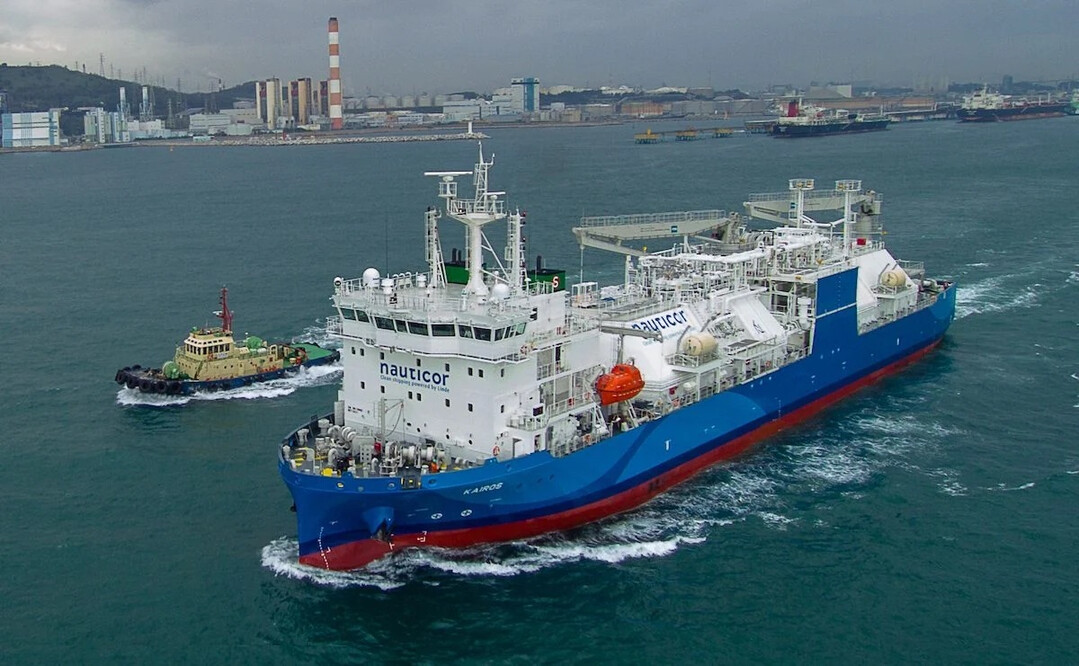
New research released on the 23rd by the Seoul-based nonprofit Solutions for Our Climate (SFOC) reveals a sharp divergence in how South Korea’s five major policy lenders allocate capital. Between 2024 and 2025, financing for zero- or near-zero-emission (ZNZ) vessels—ships capable of running on green ammonia or green methanol—plunged by 71%, falling from $2.24 billion to $660 million. During the exact same timeframe, state-backed funding for vessels reliant on heavy fuel oil or liquefied natural gas (LNG) jumped 49%, reaching $5.32 billion.

The report, "Capital at the Helm: How Financial Decisions Shape the Future of Shipping," examined lending portfolios across the Export-Import Bank of Korea, Korea Development Bank, Korea Trade Insurance Corporation, Korea Ocean Business Corporation, and Korea Asset Management Corporation. Notably, researchers classified "ammonia-ready" or "methanol-ready" ships under the fossil fuel category, arguing that vessels merely built with future retrofitting space still operate exclusively on conventional fuels today.

Since 2024, roughly four-fifths of the $15.13 billion in newbuilding finance deployed by these five institutions—or 254 out of 318 funded vessels—has backed fossil-fuel propulsion, despite the International Maritime Organization’s (IMO) 2023 pledge to reach net-zero emissions by 2050.

This capital allocation stands at odds with impending global regulations. At its upcoming December assembly, the IMO is expected to finalize its "Net-Zero Framework," which centers on a global carbon levy tied to a vessel's Greenhouse Gas Fuel Intensity (GFI). Originally slated for a 2027 rollout for ships over 5,000 tons before facing a one-year delay amid pushback from the U.S. and major oil-producing nations, the measure now holds stronger prospects for passage following the Democratic Party's sweeping victory in the U.S. midterm elections.

Analysts anticipate that formalizing the levy will trigger a massive wave of orders for green vessels—a market where South Korean shipyards already hold a dominant foothold. Data from maritime consultancy Clarksons shows that South Korean builders delivered 26 of the 59 ammonia- or methanol-capable ships handed over globally in 2025, capturing a 44% market share just behind China's 28 vessels.

SFOC warns that continuing to bankroll conventional ships exposes South Korean lenders to significant stranded-asset risks as stricter carbon pricing erodes the market value of fossil-fuel fleets.

"Domestic shipbuilders are already proving their competitive edge in the zero-carbon vessel market, yet tying policy finance to fossil-fuel ships risks squandering the chance to expand that lead," said Joo Hyo-kyung, an SFOC shipping researcher and author of the report. She urged state lenders to factor fuel types and climate risks directly into their underwriting criteria to safeguard both global shipping decarbonization and the long-term viability of South Korea's shipbuilding sector.

[Copyright (c) Global Economic Times. All Rights Reserved.]

  • #Cherry Garden
  • #HalalFood
  • #Halal
  • #Petlife
  • #Halalhorizone
  • #Hormuz Impasse
  • #Joseon
  • #globaleconomictimes
  • #micore
Kim Sungmoon Reporter

Popular articles

  • Hanmi Pharmaceutical Confirms 'Zantrutide' as Official Name for Next-Generation Obesity Treatment

  • 30-Year Senior-Junior Duos to In-House Couples: Building AI Services All Night Without Knowing How to Code

  • NICE Acquires Additional Shares of Subsidiary NICE Property Worth 51.4 Billion Won

I like it
Share
  • Facebook
  • X
  • Kakaotalk
  • LINE
  • BAND
  • NAVER
  • https://globaleconomictimes.kr/article/1065597097585510 Copy URL copied.
Comments >

Comments 0

Weekly Hot Issue

  • Kuching to Host First-Ever Halal Heritage Food Festival Celebrating Sarawak’s Cultural Diversity
  • Vietnam and Indonesia Deepen Ties with Push for Halal Pact as Investment Surges
  • Local Nonprofit Distributes Free Pet Food to Over 300 Animals Ahead of Thanksgiving
  • National Audit Ensures Fair Weight and Accurate Labeling for Australian Pet Owners and Farmers
  • Bracing for Super El Niño: Essential Summer Safety Guide to Protect Your Pets from Extreme Heat
  • Putri Ariani, a world-famous female singer 

Most Viewed

1
South Korea and Ethiopia Sign Trilateral MOU to Introduce Liquid-Based Cytology (LBC) Technology for Cervical Cancer Diagnosis
2
South Korean Burger Chain Lotteria Expands Singapore Footprint with Halal Certification and New Teriyaki Lineup
3
AI Semiconductor Stocks Plummet: Philadelphia Index Drops 5.28% and Micron Plunges 7.59% Amid Executive Shakeup and Export Restrictions
4
"Stay Out, Get Paid, or Have Police Stay With You": Shenzhen Imposes Strict Security Ahead of APEC Summit
5
AI Music Tops Melon Chart: Is the K-Pop Production Formula Changing?
체리가든 스토리
nutri huevos
로타리
동포저널

Hot Issue

US-China Trade Truce Teeters as Tech and Telecom Crackdowns Escalate

AI Bots Scrape 140,000 Articles in an Hour, Threatening Journalism’s Survival

Surge in Chinese-Built EVs Pushes South Korea’s Auto Trade Deficit with China to Record $4.23 Billion

Fashion Runway Show 2026

Let’s recycle the old blankets in Jeju Island’s closet instead of incinerating them.

Global Economic Times
korocamia@naver.com
CEO : LEE YEON-SIL
Publisher & Editor : KO YONG-CHUL
Registration number : Seoul, A55681
Registration Date : 2024-10-24
Youth Protection Manager: KO YONG-CHUL
Singapore Headquarters
5A Woodlands Road #11-34 The Tennery. S'677728
Korean Branch
Phone : +82(0)10 4724 5264
#304, 6 Nonhyeon-ro 111-gil, Gangnam-gu, Seoul
Copyright © Global Economic Times All Rights Reserved
  • News K
  • 반달곰 프로젝트
  • 광고문의
Search
Category
  • All articles
  • Synthesis
  • World
  • Business
  • Industry
  • ICT
  • Distribution Economy
  • Well+Being 
    • 전체
    • Pet Life
    • Halal Horizon
  • Travel
  • Eco-News
  • Education
  • Korean Wave News
  • Opinion
  • Arts&Culture
  • Sports
  • People & Life 
    • 전체
    • International Student Report
    • With Ambassador
  • Column 
    • 전체
    • Cho Kijo Column
    • Cherry Garden Story
    • Ko Yong-chul Column
    • Kim Bong-seon's Photo Column
    • Kim Seul-Ong Column
    • Lee Yeon-sil Column
    • Professor Lee Soo-young’s Life Essays
  • Photo News
  • New Book Guide
  • Overseas Koreans
  • Multicultural News