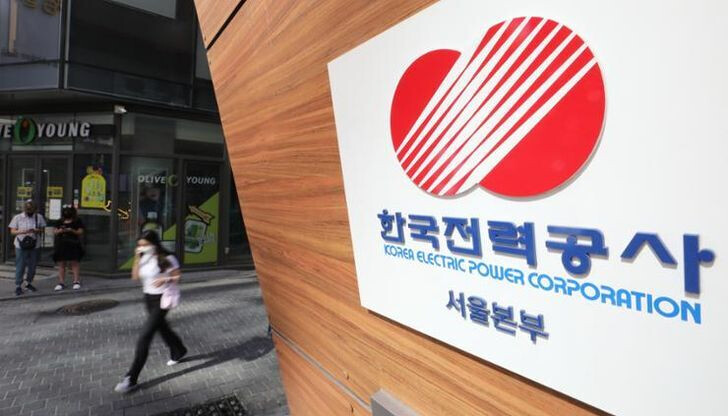
If Korea Electric Power Corporation's (KEPCO) special exemption on bond issuance limits expires at the end of next year as scheduled, its outstanding bond balance is projected to exceed the legal limit by approximately 19.2 trillion won.
With self-rescue measures proving insufficient to resolve the issue, KEPCO CEO Kim Dong-cheol fueled the debate over raising electricity rates by stating, "A minimum electricity rate hike will be necessary after the end of next year."
According to KEPCO and the National Assembly Budget Office on the 24th, the government's special exemption—which temporarily raised KEPCO's bond issuance limit up to five times the sum of its capital and reserves—is set to expire at the end of next year, reducing the limit back to two times starting in 2028.
The government introduced the temporary exemption by revising the KEPCO Act in 2022, when surging international energy prices caused by the Russia-Ukraine war led to mounting deficits for the utility.
The core issue is that instead of recovering costs through electricity rate hikes at the time, the government prioritized expanding the bond issuance limit, causing KEPCO's outstanding bond balance to swell to an unmanageable level.
Amid prolonged freezes on residential and general electricity rates—excluding industrial rates—due to inflation burdens, KEPCO’s outstanding bond balance reached 71.5 trillion won as of the first half of this year.
Having failed to clear this snowballing debt, KEPCO now faces the imminent expiration of its bond issuance limit exemption.
Based on KEPCO's "2026–2030 Mid-to-Long-Term Financial Management Plan," the National Assembly Budget Office estimates the sum of KEPCO's capital and reserves at the end of next year to be 28.4177 trillion won. Based on the 2-times multiplier, the statutory limit would be 56.8354 trillion won.
Conversely, the projected outstanding bond balance for the same period reaches 76.0489 trillion won, meaning KEPCO's bonds will exceed the legal limit by 19.2135 trillion won upon the expiration of the exemption.
Resolving the over 19 trillion won surplus requires generating massive profits to build up reserves. However, a recent surge in liquefied natural gas (LNG) prices triggered by the Middle East conflict earlier this year raises the likelihood that KEPCO's earnings recovery momentum will hit a roadblock.
According to a tally of brokerage earnings consensus reports published over the past month by Yonhap Infomax, KEPCO's operating profit for the third quarter of this year is projected at 2.6966 trillion won, down 52.29% compared to the same period last year. Revenue is estimated to edge up just 0.12% to 27.6057 trillion won.
Profitability is expected to deteriorate further in the fourth quarter. Operating profit is forecasted to plunge 95.78% year-on-year to 82.3 billion won, with the company posting a net loss of 493 billion won. This means that even if KEPCO generates an operating profit, heavy interest expenses could drag its bottom line back into the red.
This downward trend could potentially persist into next year, posing an even greater challenge. In particular, the regional differential industrial electricity pricing system currently pursued by the government is cited as a new variable. If industrial electricity rates are lowered in certain regions outside the Seoul metropolitan area, KEPCO's power sales revenue could decline.
Securing additional funding is also facing headwinds. In preparation for the shrinking bond issuance limit, KEPCO recently requested Samsung Electronics and SK Hynix to pre-pay 25 trillion won in electricity bills covering five years, but the two companies declined, causing the plan to fall through.
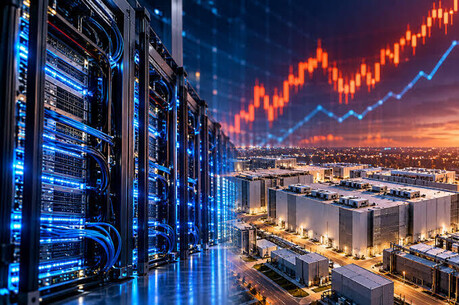
KEPCO's financial crunch could hinder the timely establishment of power grids required to foster cutting-edge industries such as semiconductors, physical artificial intelligence (AI), and AI data centers.
According to KEPCO's 11th Long-Term Transmission and Transformation Facility Plan, investment through 2038 stands at 72.8 trillion won, an increase of 16.3 trillion won compared to two years ago. Factoring in demand from mega-clusters and AI data centers, the scale of investment is bound to grow even further.
With funding capacity hitting rock bottom while investment demand for power grid expansion surges, KEPCO CEO Kim Dong-cheol ultimately raised the necessity of electricity rate hikes in public.
"Because the fundamentally required power grid investment continues to increase rapidly, I believe we need to discuss a minimum electricity rate hike with the government," CEO Kim said during a parliamentary audit held by the Trade, Industry, Energy, SMEs, and Startups Committee on the 19th.
Some suggest that given the reality of the government prioritizing price stability, the timing of the normalization of the bond issuance limit should be postponed once again.
"Out of KEPCO's projected 76 trillion won in bonds for the end of next year, 19.2 trillion won needs to be repaid or matched by capital expansion, but there are no viable measures in place," said Shinhan Securities researchers Kim Sang-in and Cha Ju-hee. "For now, deferring the normalization of the bond issuance limit is the most realistic option."
[Copyright (c) Global Economic Times. All Rights Reserved.]