• 2026.10.24 (Sat)
  • All articles
  • LOGIN
  • JOIN
Global Economic Times
[등록] 2026-09-01 15:48:31
  • Synthesis
  • World
  • Business
  • Industry
  • ICT
  • Distribution Economy
  • Well+Being
    • Pet Life
    • Halal Horizon
  • Travel
  • Eco-News
  • Education
  • Korean Wave News
  • Opinion
  • Arts&Culture
  • Sports
  • People & Life
    • International Student Report
    • With Ambassador
  • Column
    • Cho Kijo Column
    • Cherry Garden Story
    • Ko Yong-chul Column
    • Kim Seul-Ong Column
    • Lee Yeon-sil Column
  • Photo News
  • New Book Guide
MENU
 
Home > Distribution Economy

Investor Deposits Plummet by 51 Trillion Won in Four Months, Dropping to Lowest Level This Year

Kim Young Min Reporter / Updated : 2026-10-24 14:52:24
  • -
  • +
  • Print


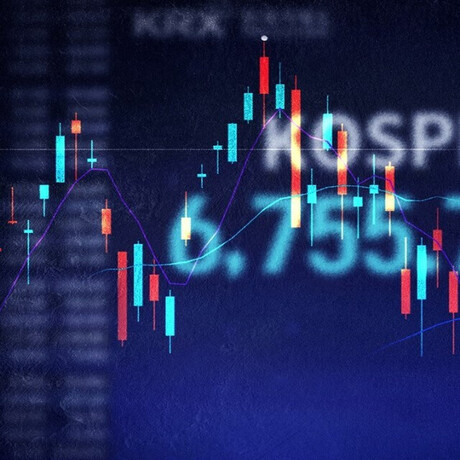
Investor deposits, which surged steeply alongside the rise of the KOSPI in the first half of the year, have decreased by more than 50 trillion won in about four months. Having recorded an all-time high last June, the figures have now regressed to early-year levels.

According to the Korea Financial Investment Association on the 24th, investor deposits stood at 88.6841 trillion won as of the 22nd, dropping to the lowest level since January 13 of this year (88.0489 trillion won), which had been the lowest point of the year.

Following the breach of the 90-trillion-won threshold on the 21st for the first time in about nine months, the funds shrank further, reaching their lowest level this year.

Compared to June 4th (139.6947 trillion won), when deposits approached 140 trillion won, a staggering 51 trillion won—more than one-third (36.5%) of the total—has vanished in roughly four months.

Investor deposits refer to funds deposited by individual investors into securities accounts to purchase stocks that have not yet been deployed into investments. They act as "waiting funds" for stock investments.

For instance, if an investor deposits 10 million won into a securities account, purchases 7 million won worth of Samsung Electronics [005930] shares, and has 3 million won remaining, that remaining 3 million won becomes an investor deposit.

These deposits increase when individuals transfer funds from banks or other sources for investment purposes, or when they sell previously acquired stocks. Conversely, they decrease when stocks are purchased or funds are transferred back to banks and other institutions.

Reviewing the net trading status of individual investors in the stock market from June 4th, when deposits peaked, through the 23rd, individuals net-purchased over 44 trillion won (44.1661 trillion won) worth of shares on the KOSPI market.

The scale of net purchases in KOSDAQ stocks also reached 3.1456 trillion won, alongside massive acquisitions of exchange-traded funds (ETFs).

Since June 4th, the scale of ETF net purchases has hit 28.2538 trillion won. While this includes net purchases through Individual Retirement Pension (IRP) and pension savings accounts, it is estimated that trillions of won were also purchased through standard stock accounts.

Considering the scale of net purchases by individuals across these markets, the reduced deposit amount of "51 trillion won" appears to have been largely deployed into the domestic stock market, including the KOSPI.

An industry insider noted, "This implies that stock funds have not massively migrated back to banks or other institutions. A significant portion of the deposits likely went toward purchasing stocks and may currently be tied up in the recent bearish market."

During the first half of the year, despite individuals purchasing stocks on a large scale, investor deposits actually increased. This was because the volume of funds flowing into stock accounts exceeded the volume used for stock purchases during the bull market.

However, since deposits peaked, the continued net buying by individuals—combined with an unstable downward market—appears to have drastically reduced any additional capital flowing into the stock market.

Unlike the first half of the year, when massive capital was poured in to absorb foreign selling pressure, the decline in deposits could expose the stock market to downward pressure due to a lack of supply and demand.

The KOSPI index on January 13, when deposits were at their lowest point for the year, stood at 4,692.64, showing a difference of more than 800 points compared to 5,533.77 on the 22nd.

[Copyright (c) Global Economic Times. All Rights Reserved.]

  • #Cherry Garden
  • #HalalFood
  • #Halal
  • #Petlife
  • #Halalhorizone
  • #Hormuz Impasse
  • #globaleconomictimes
  • #micorea
  • #mykor
Kim Young Min Reporter

Popular articles

  • Offshore Wind Orders Gaining Momentum: LS Marine Solution Responds with Major Wins and Fleet Investments

  • Deploying Drones to Inspect Sites and Support Administrative Tasks

  • Redrawing the Logistics Map of Gunsan Port! Gunsan Port–Busan Port Feeder Route Sets Sail for the First Time

I like it
Share
  • Facebook
  • X
  • Kakaotalk
  • LINE
  • BAND
  • NAVER
  • https://globaleconomictimes.kr/article/1065592298824875 Copy URL copied.
Comments >

Comments 0

Weekly Hot Issue

  • Heavy Rain Batters Hallasan Mountain with Up to 139mm; Flights Normal, Some Ferry Services Canceled
  • Heavy Rain and Strong Winds in Southern Regions and Jeju Due to Typhoon "Champi"; Nationwide Mostly Cloudy
  • Itaewon Disaster 4th Anniversary Citizens' Memorial Prayer Meeting... "Must Deeply Engrave the Victims in Our Hearts"
  • North Korean Hacking Group Lazarus Spotted Preparing Attacks Exploiting PHP Vulnerabilities
  • Korea Secures Successive Leadership Positions in APEC Telecommunications and Information Working Group
  • AI Fairytale & Webtoon Creation Contest Held for Children Nationwide

Most Viewed

1
US Pushes to Deploy Special Task Force to the Korean Peninsula—Is It Also Targeting China?
2
Samsung Electronics Enters the 100 Trillion Won Quarterly Operating Profit Era
3
McDonald's Korea Expands and Relocates Headquarters to Booyoung Taepyeong Building in Taepyeong-ro
4
HMM Relocates Headquarters to Busan: A New Era for South Korea's Flagship Carrier
5
AI Companies Rush to Go Public, But Face Sudden Brakes Amid Cooling Investor Sentiment
체리가든 스토리
nutri huevos
로타리
동포저널

Hot Issue

Wall Street Falls as Middle East Escalation Fears and Surging Oil Prices Send Dow Down 1.2%

Global Credit Spreads Widened to 17-Month High Amid AI Investment Concerns

Investor Deposits Plummet by 51 Trillion Won in Four Months, Dropping to Lowest Level This Year

Fashion Runway Show 2026

Let’s recycle the old blankets in Jeju Island’s closet instead of incinerating them.

Global Economic Times
korocamia@naver.com
CEO : LEE YEON-SIL
Publisher : KO YONG-CHUL
Registration number : Seoul, A55681
Registration Date : 2024-10-24
Youth Protection Manager: KO YONG-CHUL
Singapore Headquarters
5A Woodlands Road #11-34 The Tennery. S'677728
Korean Branch
Phone : +82(0)10 4724 5264
#304, 6 Nonhyeon-ro 111-gil, Gangnam-gu, Seoul
Copyright © Global Economic Times All Rights Reserved
  • 향기네무료급식
  • APEC2025
  • 반달곰 프로젝트
Search
Category
  • All articles
  • Synthesis
  • World
  • Business
  • Industry
  • ICT
  • Distribution Economy
  • Well+Being 
    • 전체
    • Pet Life
    • Halal Horizon
  • Travel
  • Eco-News
  • Education
  • Korean Wave News
  • Opinion
  • Arts&Culture
  • Sports
  • People & Life 
    • 전체
    • International Student Report
    • With Ambassador
  • Column 
    • 전체
    • Cho Kijo Column
    • Cherry Garden Story
    • Ko Yong-chul Column
    • Kim Seul-Ong Column
    • Lee Yeon-sil Column
  • Photo News
  • New Book Guide
  • Overseas Koreans
  • Multicultural News