• 2026.11.29 (Sun)
  • All articles
  • LOGIN
  • JOIN
Global Economic Times
한인동포뉴스(상단)
  • Synthesis
  • World
  • Business
  • Industry
  • ICT
  • Distribution Economy
  • Well+Being
    • Pet Life
    • Halal Horizon
  • Travel
  • Eco-News
  • Education
  • Korean Wave News
  • Opinion
  • Arts&Culture
  • Sports
  • People & Life
    • International Student Report
    • With Ambassador
  • Column
    • Cho Kijo Column
    • Cherry Garden Story
    • Ko Yong-chul Column
    • Kim Bong-seon's Photo Column
    • Kim Seul-Ong Column
    • Lee Yeon-sil Column
    • Professor Lee Soo-young’s Life Essays
  • Photo News
  • New Book Guide
MENU
 
Home > Industry

South Korea Enters the $700 Billion Nuclear Decommissioning Race with Kori-1 Dismantling

Yim Kwangsoo Correspondent / Updated : 2026-11-29 14:26:05
  • -
  • +
  • Print

SEOUL — As South Korea begins stripping down its oldest commercial nuclear reactor, the nation is positioning itself to capture a lucrative share of the burgeoning global nuclear decommissioning sector—a market now valued at roughly 1,000 trillion won ($720 billion).

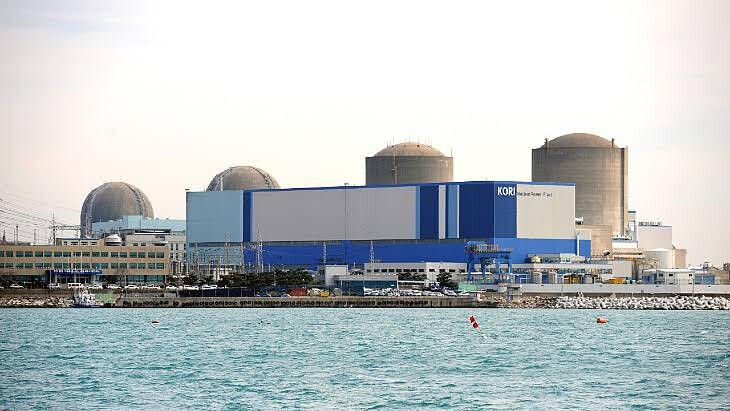
Last month, state-run utility Korea Hydro & Nuclear Power (KHNP) initiated the removal of major mechanical components, including turbines and generators, at the permanently closed Kori Unit 1 pressurized water reactor. Following the clearance of hazardous materials like asbestos earlier this year, the project has officially transitioned into heavy dismantling. Meanwhile, regulators are reviewing plans to dismantle Wolsong Unit 1, which would become the world’s first commercial heavy-water reactor to undergo full decommissioning.

A Nascent Global Market

Industry analysts note that domestic execution is critical for winning overseas contracts. With 215 reactors already permanently offline globally and another 500 projected to retire by 2050, consulting firm Samil PwC estimates the cumulative global decommissioning market has more than doubled since 2019.

Despite the surging demand, very few nations possess end-to-end dismantling experience. Data from the International Atomic Energy Agency (IAEA) shows that only 23 power reactors have been fully decommissioned worldwide—17 in the United States, four in Germany, and one each in Japan and Spain. Even nuclear giant France has yet to complete a commercial reactor teardown. Successfully executing both the Kori and Wolsong projects would give South Korean firms a rare, dual-reactor track record.

Engineering Hurdles and Waste Economics

While local firms have achieved over 80% self-sufficiency across 1,175 decommissioning technologies, experts emphasize that dismantling a reactor is far more complex than reversing construction. High radiation levels inside reactor cores require remote-operated robotics and underwater laser-cutting tools that still need rigorous field validation.

Financially, project viability hinges on waste minimization. Roughly a quarter of Kori Unit 1’s 1.09 trillion won decommissioning budget is earmarked for disposing of low- and intermediate-level radioactive waste (LILW), which costs about 17 million won per 200-liter drum to bury at the national repository in Gyeongju. Researchers are focusing on thermal melting and concrete crushing technologies to shrink an estimated 80,000 drums of waste down to fewer than 14,500 drums.

Simultaneously, authorities are modernizing how wet radioactive waste—such as spent filtration resins—is contained. Rather than mixing waste with cement, which adds bulk and exposure risks, KHNP and the Korea Radioactive Waste Agency recently secured regulatory clearance to test-bury a domestically manufactured High Integrity Container (HIC), engineered to isolate radiation for over three centuries.

From Retired Reactors to AI Power Hubs

Looking beyond demolition, energy strategists are urging regulatory reforms to unlock the real estate value of retired nuclear sites. Because multi-unit nuclear complexes retain heavy-duty transmission grids and switchyards, decommissioned plots are prime locations for energy-intensive infrastructure.

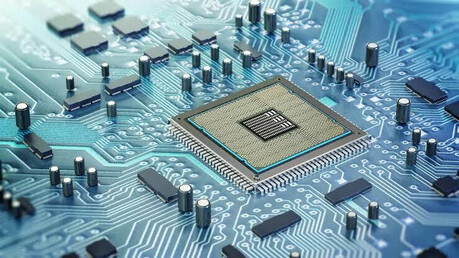
In the United States, retired sites like Indian Point in New York and Oyster Creek in New Jersey are being repurposed into hubs for artificial intelligence (AI) data centers and Small Modular Reactors (SMRs), utilizing Power Purchase Agreements (PPAs) to draw electricity directly from adjacent operating reactors. Industry observers note that if South Korea adopts similar direct power-trading rules, its dismantled nuclear plants could soon serve as vital power bases for the nation's expanding AI and semiconductor industries.

[Copyright (c) Global Economic Times. All Rights Reserved.]
  • #Cherry Garden
  • #HalalFood
  • #Halal
  • #Petlife
  • #Cats
  • #Dogs
  • #Halalhorizone
  • #Hormuz Impasse
  • #Joseon
  • #globaleconomicti
Yim Kwangsoo Correspondent
Yim Kwangsoo Correspondent 前 재파라과이한인회장, 前 남미동아뉴스 발행인, 평통자문위원, 현 남미동아뉴스 편집인

Popular articles

  • Digital Detour: Why MZ Generation is Trading Smartphones for "Diginori" and Analog Diaries

  • 16 Gyeongsangbuk-do Carbon Material Enterprises Showcase Cutting-Edge Technologies at 'Carbon Korea 2026'

  • Autumn Harmony in Chuncheon: Gangwon State Wraps Up "2026 Gangwon Music Festival"

I like it
Share
  • Facebook
  • X
  • Kakaotalk
  • LINE
  • BAND
  • NAVER
  • https://globaleconomictimes.kr/article/1065590700299596 Copy URL copied.
Comments >

Comments 0

Weekly Hot Issue

  • Hyundai Glovis Bets Big on Mega-Car Carriers, Reaping Rewards Amid Global Vessel Crunch
  • South Korea’s Chip Windfall Piles Up in Financial Assets Rather Than Household Wallets, Central Bank Says
  • South Korea’s Major Telecoms Complete Nationwide Shift to True 5G Standalone Networks
  • Amazon Launches 36 Satellites Just Nine Days After Mishap, Intensifying Race Against Starlink
  • South Korean Gaming Giants Eye China Return Following Landmark FTA Breakthrough
  • South Korea Urged to Pivot Physical AI Strategy Toward Humanoids and Service Robotics

Most Viewed

1
Memory Chip Rout Deepens as Wall Street Questions AI Spending and DRAM Pricing
2
Exercise Beats Diet in Extending Lifespan, Major Review Finds
3
South Korean Burger Chain Lotteria Expands Singapore Footprint with Halal Certification and New Teriyaki Lineup
4
AI Semiconductor Stocks Plummet: Philadelphia Index Drops 5.28% and Micron Plunges 7.59% Amid Executive Shakeup and Export Restrictions
5
"Stay Out, Get Paid, or Have Police Stay With You": Shenzhen Imposes Strict Security Ahead of APEC Summit
체리가든 스토리
nutri huevos
로타리
동포저널

Hot Issue

Magnitude 5.0 Quake Rattles Los Angeles, Disrupting LAX Flights and Damaging Infrastructure

IDF Faces Backlash Over Allegations of Using Gaza Civilians to Clear Booby-Trapped Sites

South Korea’s Chip-Fueled 4% Growth Masks Deepening Domestic Divide

Fashion Runway Show 2026

Let’s recycle the old blankets in Jeju Island’s closet instead of incinerating them.

Global Economic Times
korocamia@naver.com
CEO : LEE YEON-SIL
Publisher & Editor : KO YONG-CHUL
Registration number : Seoul, A55681
Registration Date : 2024-10-24
Youth Protection Manager: KO YONG-CHUL
Singapore Headquarters
5A Woodlands Road #11-34 The Tennery. S'677728
Korean Branch
Phone : +82(0)10 4724 5264
#304, 6 Nonhyeon-ro 111-gil, Gangnam-gu, Seoul
Copyright © Global Economic Times All Rights Reserved
  • News K
  • 반달곰 프로젝트
  • 광고문의
Search
Category
  • All articles
  • Synthesis
  • World
  • Business
  • Industry
  • ICT
  • Distribution Economy
  • Well+Being 
    • 전체
    • Pet Life
    • Halal Horizon
  • Travel
  • Eco-News
  • Education
  • Korean Wave News
  • Opinion
  • Arts&Culture
  • Sports
  • People & Life 
    • 전체
    • International Student Report
    • With Ambassador
  • Column 
    • 전체
    • Cho Kijo Column
    • Cherry Garden Story
    • Ko Yong-chul Column
    • Kim Bong-seon's Photo Column
    • Kim Seul-Ong Column
    • Lee Yeon-sil Column
    • Professor Lee Soo-young’s Life Essays
  • Photo News
  • New Book Guide
  • Overseas Koreans
  • Multicultural News