• 2026.11.29 (Sun)
  • All articles
  • LOGIN
  • JOIN
Global Economic Times
한인동포뉴스(상단)
  • Synthesis
  • World
  • Business
  • Industry
  • ICT
  • Distribution Economy
  • Well+Being
    • Pet Life
    • Halal Horizon
  • Travel
  • Eco-News
  • Education
  • Korean Wave News
  • Opinion
  • Arts&Culture
  • Sports
  • People & Life
    • International Student Report
    • With Ambassador
  • Column
    • Cho Kijo Column
    • Cherry Garden Story
    • Ko Yong-chul Column
    • Kim Bong-seon's Photo Column
    • Kim Seul-Ong Column
    • Lee Yeon-sil Column
    • Professor Lee Soo-young’s Life Essays
  • Photo News
  • New Book Guide
MENU
 
Home > ICT

South Korea Urged to Pivot Physical AI Strategy Toward Humanoids and Service Robotics

Kim Young Min Reporter / Updated : 2026-11-29 14:17:55
  • -
  • +
  • Print

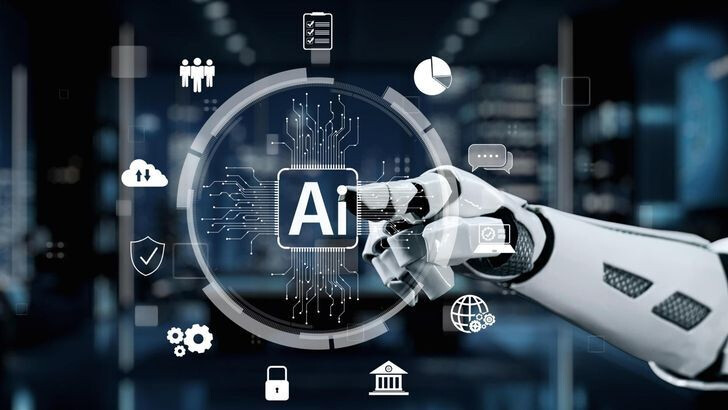
Despite holding the world’s highest density of factory robots, South Korea risks falling behind in the next wave of artificial intelligence unless it broadens its state-backed robotics initiatives to include humanoids and human-centric service machines, according to a new industry assessment.

A recent study by the Korea Institute for Industrial Economics & Trade (KIET) highlights a growing structural divide in the global robotics market. While South Korea leads the world with 1,220 industrial robots per 10,000 manufacturing workers—far outpacing Singapore, Germany, and Japan, per International Federation of Robotics figures—that dominance has yet to carry over into "physical AI," where machines perceive and navigate real-world environments autonomously.

Global market dynamics underscore the urgency of a strategic shift. Industry data from Omdia indicates that Chinese manufacturers, led by AgiBot and Unitree, captured over 70 percent of the roughly 13,000 humanoid robots shipped worldwide in 2025. Furthermore, global sales of professional service robots surged 24 percent to 250,000 units last year, growing more than twice as fast as traditional industrial robot installations.

Analysts note that the competitive rules are fundamentally changing. Traditional factory automation relies heavily on precision hardware such as motors, reducers, and assembly-line engineering. By contrast, commercializing humanoids and service robots depends on AI foundation models, real-world behavioral data, and aggressive cost reductions via mass production.

While Seoul recently doubled its AI and mega-project budget to 21.3 trillion won for 2027—centering its physical AI roadmap on manufacturing applications, component localization, and production clusters—researchers warn this approach leans too heavily on legacy strengths.

To stay competitive against rivals like the U.S., China, and Japan, KIET researchers recommend channeling public procurement and pilot programs into shared human-robot environments, including logistics, healthcare, and public services. Gathering operational data from these sectors and aligning domestic safety certifications with international standards will be critical for South Korea to translate its factory-floor success into the next generation of commercial robotics.

[Copyright (c) Global Economic Times. All Rights Reserved.]
  • #Cherry Garden
  • #HalalFood
  • #Halal
  • #Petlife
  • #Cats
  • #Dogs
  • #Halalhorizone
  • #Hormuz Impasse
  • #Joseon
  • #globaleconomicti
Kim Young Min Reporter
Kim Young Min Reporter 前 환경데일리 발행인, mkTaiwan 편집인.

Popular articles

  • Stepping into the Shoes of a Joseon Scholar: Daejeon Museum Launches Immersive 'Life Game' Exhibition

  • Gyeongbuk Beauty Talent of 110 to Compete in 10 Categories

  • Bitcoin Slumps for a Second Day Amid Record Binance Hack, Tech Sell-Off, and Rising Oil Prices

I like it
Share
  • Facebook
  • X
  • Kakaotalk
  • LINE
  • BAND
  • NAVER
  • https://globaleconomictimes.kr/article/1065590232231986 Copy URL copied.
Comments >

Comments 0

Weekly Hot Issue

  • Hyundai Glovis Bets Big on Mega-Car Carriers, Reaping Rewards Amid Global Vessel Crunch
  • South Korea’s Chip Windfall Piles Up in Financial Assets Rather Than Household Wallets, Central Bank Says
  • South Korea Enters the $700 Billion Nuclear Decommissioning Race with Kori-1 Dismantling
  • South Korea’s Major Telecoms Complete Nationwide Shift to True 5G Standalone Networks
  • Amazon Launches 36 Satellites Just Nine Days After Mishap, Intensifying Race Against Starlink
  • South Korean Gaming Giants Eye China Return Following Landmark FTA Breakthrough

Most Viewed

1
Memory Chip Rout Deepens as Wall Street Questions AI Spending and DRAM Pricing
2
Exercise Beats Diet in Extending Lifespan, Major Review Finds
3
South Korean Burger Chain Lotteria Expands Singapore Footprint with Halal Certification and New Teriyaki Lineup
4
AI Semiconductor Stocks Plummet: Philadelphia Index Drops 5.28% and Micron Plunges 7.59% Amid Executive Shakeup and Export Restrictions
5
"Stay Out, Get Paid, or Have Police Stay With You": Shenzhen Imposes Strict Security Ahead of APEC Summit
체리가든 스토리
nutri huevos
로타리
동포저널

Hot Issue

Magnitude 5.0 Quake Rattles Los Angeles, Disrupting LAX Flights and Damaging Infrastructure

IDF Faces Backlash Over Allegations of Using Gaza Civilians to Clear Booby-Trapped Sites

South Korea’s Chip-Fueled 4% Growth Masks Deepening Domestic Divide

Fashion Runway Show 2026

Let’s recycle the old blankets in Jeju Island’s closet instead of incinerating them.

Global Economic Times
korocamia@naver.com
CEO : LEE YEON-SIL
Publisher & Editor : KO YONG-CHUL
Registration number : Seoul, A55681
Registration Date : 2024-10-24
Youth Protection Manager: KO YONG-CHUL
Singapore Headquarters
5A Woodlands Road #11-34 The Tennery. S'677728
Korean Branch
Phone : +82(0)10 4724 5264
#304, 6 Nonhyeon-ro 111-gil, Gangnam-gu, Seoul
Copyright © Global Economic Times All Rights Reserved
  • News K
  • 반달곰 프로젝트
  • 광고문의
Search
Category
  • All articles
  • Synthesis
  • World
  • Business
  • Industry
  • ICT
  • Distribution Economy
  • Well+Being 
    • 전체
    • Pet Life
    • Halal Horizon
  • Travel
  • Eco-News
  • Education
  • Korean Wave News
  • Opinion
  • Arts&Culture
  • Sports
  • People & Life 
    • 전체
    • International Student Report
    • With Ambassador
  • Column 
    • 전체
    • Cho Kijo Column
    • Cherry Garden Story
    • Ko Yong-chul Column
    • Kim Bong-seon's Photo Column
    • Kim Seul-Ong Column
    • Lee Yeon-sil Column
    • Professor Lee Soo-young’s Life Essays
  • Photo News
  • New Book Guide
  • Overseas Koreans
  • Multicultural News