![[등록] 2026-09-01 15:48:31](/support/_updata/banner2/tl181982910_6749.png)


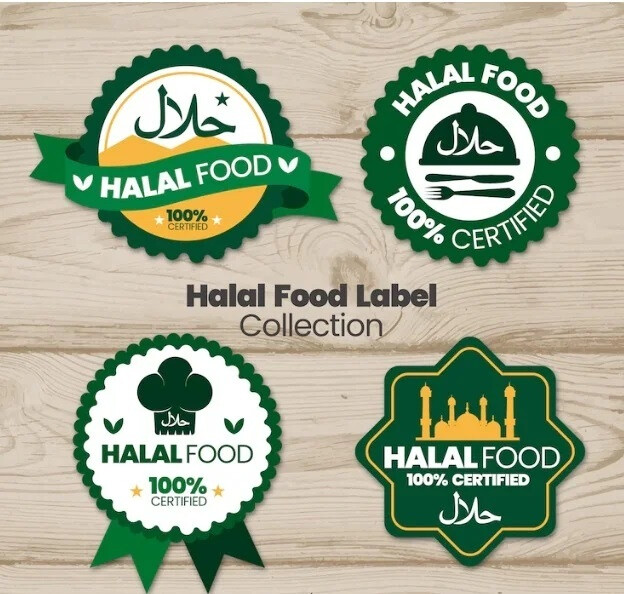
Halal certification offers U.S. bakeries a valuable opportunity to reach expanding Muslim consumer markets domestically while meeting mandatory legal requirements in key international trade regions, such as Indonesia's import regulations taking effect on October 18, 2026. While most standard bread and cookie recipes require minimal modification, success depends on carefully managing a specific set of ingredients—including gelatin, L-cysteine, animal-derived emulsifiers, enzymes, shortening, and alcohol-based flavorings.
The Business Case
The global market for halal food is exceptionally large and continuing to scale. According to DinarStandard's State of the Global Islamic Economy Report 2025/26, global Muslim spending on food reached $1.53 trillion in 2024 and is projected to hit $2.06 trillion by 2029, supported by a global Muslim population of approximately 2 billion.
Domestically, the Pew Research Center estimated the U.S. Muslim population at 3.45 million in 2017, projecting growth to 8.1 million by 2050. Beyond direct consumer demand, retailers, schools, and food-service chains increasingly seek versatile products capable of serving every customer group.
Exports represent an even greater horizon of growth. U.S. baked goods exports reached $4.35 billion in 2024, with top destinations led by Canada ($2.69 billion) and Mexico ($608.7 million), followed by Japan, South Korea, and the European Union. Notably, no Muslim-majority nation currently appears in the top ten export markets, highlighting a significant opening in Southeast Asia and the Gulf, where halal certification is frequently a prerequisite for entry. Overall, the U.S. baking industry maintains a massive economic footprint, generating a direct economic impact of $186.83 billion in 2023 and supporting 789,054 jobs according to American Bakers Association data.
Problematic Bakery Ingredients and Alternatives
While many standard baked goods are inherently compliant, certain common ingredients originate from pigs, animals processed outside of Islamic guidelines, or alcoholic beverages. Certifiers like the American Halal Foundation carefully evaluate these high-risk components:
Gelatin (used in fillings, glazes, and marshmallows): Frequently sourced from pork or non-halal beef. Common compliant alternatives include halal-certified bovine or fish gelatin, pectin, and agar.
L-Cysteine (used as a dough conditioner / E920): Often sourced from human hair, duck feathers, or hog hair, making microbial fermentation or synthesis the necessary halal route.
Mono- and Diglycerides (E471): Can be derived from animal fats like tallow, requiring plant-derived or certified E471 alternatives.
Shortening and Lard: Lard strictly consists of pork fat, which must be replaced with vegetable shortening.
Enzymes and Rennet (in dairy inputs): May involve animal rennet and lipase; microbial enzymes require verification of their growth medium.
Release Agents: May incorporate animal fats or stearates, necessitating vegetable-based release options.
Flavorings and Vanilla Extract: May involve wine or rum flavors, or ethanol acting as a carrier. Solutions include alcohol-free alternatives or certified flavors maintained within permissible regulatory limits.
L-cysteine is frequently overlooked by bakers. A 2024 review published in Halalsphere highlights human hair, duck feathers, and hog hair as primary traditional sources, while Islamic Services of America notes that the ingredient is frequently sourced from duck feathers or human hair.
Alcohol in Flavorings: Regulatory Limits by Authority
Vanilla extract presents a clear regulatory challenge because U.S. federal guidelines under 21 CFR 169.175 require vanilla extract to contain at least 35 percent ethyl alcohol by volume. Because global halal authorities enforce different limits regarding alcohol used as a flavor carrier, commercial bakers must align with the specific regulations of their target destination market:
MUIS (Singapore): Permits ethanol not derived from the alcoholic-drinks industry to be used as a flavoring solvent, up to 0.5 percent in the flavoring and 0.1 percent in the final product.
Malaysia National Fatwa Committee (2011): Allows alcohol used as a stabilizer in flavor or color provided it does not originate from liquor production and the final product contains 0.5 percent or less.
Indonesian Ulema Council (Fatwa No. 10, 2018): Prohibits ethanol sourced from alcoholic drinks while requiring final beverages to contain less than 0.5 percent ethanol, with no fixed numeric cap established for foods if medically harmless.
Key Export Market Requirements
Indonesia: Under Government Regulation 42 of 2024, imported food and beverages must possess halal certification starting October 18, 2026, as enforced by BPJPH. Certificates must originate from a foreign halal body officially recognized by BPJPH, and shipments since September 9, 2026, must include a corresponding halal product assurance report.
Saudi Arabia: The Saudi Food and Drug Authority mandates a halal certificate for any imported food item containing animal-origin components—such as gelatin, rennet, and animal fats—as well as any items explicitly labeled as halal. Certificates must be issued by a body included on the SFDA approved list.
Malaysia: Malaysia exclusively accepts certifiers recognized by JAKIM. Government leadership has confirmed that U.S. halal certificates do not receive automatic acceptance, making prior alignment with recognized bodies essential.
Step-by-Step Certification Process
U.S. certifiers generally follow structured pathways to verify compliance. Islamic Services of America outlines a seven-step process taking up to 90 days with annual renewals, while the American Halal Foundation implements a two-stage audit model granting three-year certificates paired with annual surveillance audits, requiring ingredient lists, production flowcharts, and food safety systems like HACCP.
Select a certifier explicitly recognized within your intended target export markets.
Compile technical specifications and supplier certificates for every single ingredient and processing aid.
Replace high-risk ingredients, prioritizing L-cysteine, E471, gelatin, and alcohol-based flavorings.
Review shared production lines, cleaning protocols, and storage facilities to eliminate cross-contamination risks.
Successfully pass the facility audit and the certifier’s comprehensive technical review.
Label final products exclusively with the certifier's approved trademark and maintain up-to-date supplier documentation for annual or periodic renewals.
A successful real-world precedent is demonstrated by major mass-market products like Girl Scout Cookies, where certifiers like IFANCA have certified specific popular varieties—such as Thin Mints and Samoas—proving that halal certification can integrate smoothly into large-scale production without altering how products are marketed to the general public.
[Copyright (c) Global Economic Times. All Rights Reserved.]