![[등록] 2026-09-01 15:48:31](/support/_updata/banner2/tl181982910_6749.png)


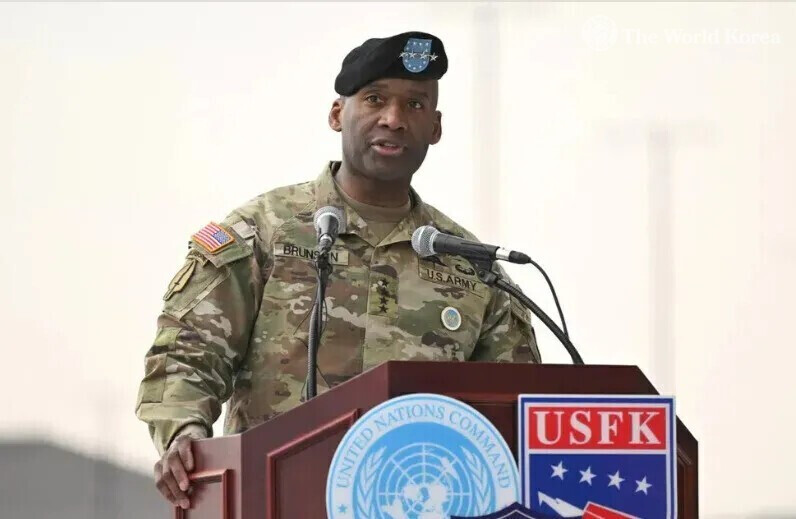
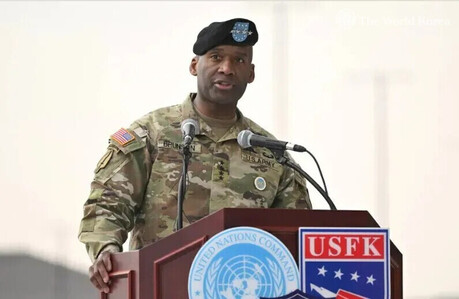
During this year's bilateral consultations on the transfer of Wartime Operational Control (OPCON) between South Korea and the United States, Washington reportedly demanded additional conditions, including the strengthening of counter-fire capabilities such as the South Korean military's core strike asset, the Chunmoo multiple rocket launcher, and enhanced surveillance and reconnaissance assets. General Xavier Brunson, Commander of US Forces Korea (USFK), hinted at a potential change in the conditions for the OPCON transfer, stating, "The conditions for the OPCON transfer have clearly changed, and there are new standards." In response, South Korea's Ministry of National Defense pushed back, arguing that the US is "moving the goalposts" regarding the transfer.
According to news coverage compiled on the 15th, the US is reported to have requested additional military capabilities—including specific weapon systems—from the South Korea military during this year's OPCON transfer talks, citing the advancement of North Korea's missile capabilities.
In particular, the US side reportedly demanded measures to boost counter-fire capabilities, such as increasing the deployment of the Chunmoo multiple rocket launcher, a key South Korean strike asset. Depending on the type of ammunition, the Chunmoo can be divided into two pods and carry anywhere from a minimum of 2 to a maximum of 12 missiles.
The US side also reportedly cited the expanded operation of surveillance and reconnaissance assets, such as the Medium-Altitude Unmanned Aerial Vehicle (MUAV) operated by the South Korean military, as an additional condition. The MUAV is a domestically produced unmanned aerial vehicle whose first unit entered production in April of this year. It is capable of acquiring and transmitting high-resolution images from long distances, with an operational radius of 500 kilometers. It can also be armed with missiles.
These demands from the US align with recent remarks made by Commander Brunson regarding the conditions for the OPCON transfer. Speaking during a keynote address at a seminar hosted by the US think tank, the Gold Standard Strategy Institute, in Washington on the 14th (local time), Brunson cited North Korea's missile threat and stated, "The conditions for the OPCON transfer have clearly changed." He added, "Because the plans have also changed, there are new standards we must meet." This is interpreted as a stance that, given changes in the regional security environment—including North Korean threats—the criteria required of the South Korean military for the OPCON transfer should also be raised.
US Demands Additional Strengthening of Weapon Systems
The South Korean government has maintained the position that both countries must adhere to the previously agreed-upon "Conditions-Based Wartime Operational Control Transition Plan (COTP)," and that any additional force enhancement necessitated by changes in the regional security environment can be pursued through bilateral consultations even after the OPCON transfer.
The South Korean government expressed concern that the US is shifting the evaluation criteria under the pretext of changes in the regional security environment, a phenomenon known as "moving the goalposts," regarding the existing OPCON agreement conditions. During a regular briefing, when asked by a reporter whether a change in conditions for the OPCON transfer is necessary given ongoing North Korean missile threats, Ministry of National Defense Spokesperson Jung Bit-na stated, speaking on a personal note, "If the goalposts keep moving, I think the OPCON transfer can never be achieved."
In response to a query from Progressive Party lawmaker Sohn Sol during a National Assembly Legislation and Judiciary Committee session asking whether he agreed with Commander Brunson's assertion that conditions have changed, Minister of National Defense Kang Shin-chul replied that the conditions for the OPCON transfer "remain unchanged." However, Minister Kang noted that the assessment of whether the conditions for the OPCON transfer have been met "can vary depending on perspective." Kang stated, "The OPCON transfer is carried out with mutual trust guaranteed and within the framework of the South Korea-US alliance," adding, "Even if the OPCON transfer were to take place right now, there would be no problems whatsoever."
One government source remarked, "It seems to be a situation where conditions breed further conditions." The source added, "If changes in the regional security environment continue to be brought up, the evaluation criteria required for the exact same conditions could rise endlessly." The source further suggested, "The issue of the OPCON transfer should not be resolved merely at the level of military authorities, but through political resolve, including discussions between the leaders of both countries."
[Copyright (c) Global Economic Times. All Rights Reserved.]