• 2026.11.23 (Mon)
  • All articles
  • LOGIN
  • JOIN
Global Economic Times
한인동포뉴스(상단)
  • Synthesis
  • World
  • Business
  • Industry
  • ICT
  • Distribution Economy
  • Well+Being
    • Pet Life
    • Halal Horizon
  • Travel
  • Eco-News
  • Education
  • Korean Wave News
  • Opinion
  • Arts&Culture
  • Sports
  • People & Life
    • International Student Report
    • With Ambassador
  • Column
    • Cho Kijo Column
    • Cherry Garden Story
    • Ko Yong-chul Column
    • Kim Bong-seon's Photo Column
    • Kim Seul-Ong Column
    • Lee Yeon-sil Column
    • Professor Lee Soo-young’s Life Essays
  • Photo News
  • New Book Guide
MENU
 
Home > Distribution Economy

Asian Regulators Diverge on Market Defense as Volatility Grips Regional Equities

Global Economic Times Reporter / Updated : 2026-11-23 13:57:20
  • -
  • +
  • Print


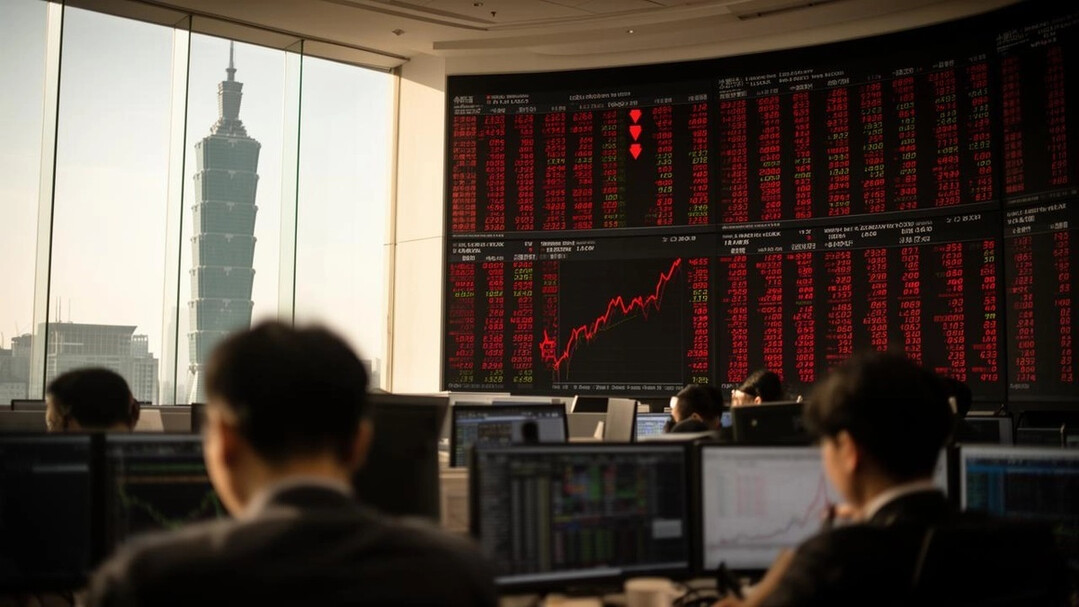
SEOUL / TAIPEI — Sharp swings across Asian equity markets are prompting starkly different policy responses from regional financial regulators, pitting Taiwan’s aggressive market intervention against South Korea’s more measured, wait-and-see approach.

In Taipei, the Financial Supervisory Commission (FSC) unveiled a sweeping five-point package on November 23 aimed at curbing downward momentum following a steep sell-off. Under the new directives, retail investors are barred from executing short sales below the previous session's closing price, while minimum margin requirements for shorting listed and over-the-counter equities have been raised from 130% to 150%. Regulators also halted put warrant applications by brokerages, urged institutional lenders to suspend or recall loaned shares, and encouraged public companies to accelerate stock buybacks.

The aggressive rollout followed two earlier rounds of tightening on November 6 and 19 that failed to prevent Taiwan’s benchmark Taiex index from tumbling 6.23% on November 20 to a seven-month low of 36,033.29. By November 23, however, the index showed signs of stabilization, trading roughly 0.1% lower intraday.

Meanwhile, authorities in Seoul are opting for institutional readiness and stricter enforcement over immediate regulatory overhaul. Speaking at a press briefing in Sejong on November 23, South Korean Deputy Prime Minister and Finance Minister Lee Hyeong-il confirmed that the government is preparing to reactivate its Stock Market Stabilization Fund alongside existing contingency plans, though he declined to specify a timeline or deployment size.

Created by financial institutions to inject liquidity during severe market routs, the fund was last deployed 18 years ago during the 2008 global financial crisis—having been mobilized on paper at 10.76 trillion won during the 2020 pandemic and briefly reconsidered during a 2022 credit crunch without actual capital outlay. With the benchmark KOSPI’s total market capitalization having expanded substantially in the first half of the year, market participants have questioned whether a historically sized fund would carry sufficient firepower. Lee noted that both the scale and timing would remain contingent on evolving market conditions.

Seoul has also ruled out mimicking Taipei’s latest short-selling curbs. Arguing that South Korea’s existing framework is already stricter than those of peer developed economies, Lee stated that regulators will instead launch a special intensive monitoring period to root out illegal short-selling and unfair trading practices.

Still, the cautious posture has drawn scrutiny from domestic market analysts, who warn that delayed action risks eroding investor confidence. Critics argue that rather than waiting for systemic distress to trigger capital deployment, policymakers should broaden the stabilization fund's base—potentially by incentivizing listed corporations to contribute—and pair defensive liquidity measures with structural shareholder-return initiatives, such as higher dividend payouts and share cancellations, to anchor long-term market stability.

[Copyright (c) Global Economic Times. All Rights Reserved.]

  • #Cherry Garden
  • #HalalFood
  • #Halal
  • #Petlife
  • #Halalhorizone
  • #Hormuz Impasse
  • #Joseon
  • #globaleconomictimes
  • #micore
Global Economic Times Reporter
Reporter Page

Popular articles

  • World Citizens are Flying Directly to Busan... The Era of 4 Million Foreigners is Just Around the Corner

  • Restoring Hearing with Genes, Cochlear Implants with Robots: Where Does Hearing Loss Treatment Stand Today?

  • Cold Wave and Autumn Chill Hit Korea on "Ipdong": Gangwon -6°C, Seoul Real-Feel -4°C… Rain and Snow Expected in Central Regions on Sunday

I like it
Share
  • Facebook
  • X
  • Kakaotalk
  • LINE
  • BAND
  • NAVER
  • https://globaleconomictimes.kr/article/1065588976777301 Copy URL copied.
Comments >

Comments 0

Weekly Hot Issue

  • Kuching to Host First-Ever Halal Heritage Food Festival Celebrating Sarawak’s Cultural Diversity
  • Vietnam and Indonesia Deepen Ties with Push for Halal Pact as Investment Surges
  • Local Nonprofit Distributes Free Pet Food to Over 300 Animals Ahead of Thanksgiving
  • National Audit Ensures Fair Weight and Accurate Labeling for Australian Pet Owners and Farmers
  • Bracing for Super El Niño: Essential Summer Safety Guide to Protect Your Pets from Extreme Heat
  • Putri Ariani, a world-famous female singer 

Most Viewed

1
South Korea and Ethiopia Sign Trilateral MOU to Introduce Liquid-Based Cytology (LBC) Technology for Cervical Cancer Diagnosis
2
South Korean Burger Chain Lotteria Expands Singapore Footprint with Halal Certification and New Teriyaki Lineup
3
AI Semiconductor Stocks Plummet: Philadelphia Index Drops 5.28% and Micron Plunges 7.59% Amid Executive Shakeup and Export Restrictions
4
"Stay Out, Get Paid, or Have Police Stay With You": Shenzhen Imposes Strict Security Ahead of APEC Summit
5
AI Music Tops Melon Chart: Is the K-Pop Production Formula Changing?
체리가든 스토리
nutri huevos
로타리
동포저널

Hot Issue

US-China Trade Truce Teeters as Tech and Telecom Crackdowns Escalate

AI Bots Scrape 140,000 Articles in an Hour, Threatening Journalism’s Survival

Surge in Chinese-Built EVs Pushes South Korea’s Auto Trade Deficit with China to Record $4.23 Billion

Fashion Runway Show 2026

Let’s recycle the old blankets in Jeju Island’s closet instead of incinerating them.

Global Economic Times
korocamia@naver.com
CEO : LEE YEON-SIL
Publisher & Editor : KO YONG-CHUL
Registration number : Seoul, A55681
Registration Date : 2024-10-24
Youth Protection Manager: KO YONG-CHUL
Singapore Headquarters
5A Woodlands Road #11-34 The Tennery. S'677728
Korean Branch
Phone : +82(0)10 4724 5264
#304, 6 Nonhyeon-ro 111-gil, Gangnam-gu, Seoul
Copyright © Global Economic Times All Rights Reserved
  • News K
  • 반달곰 프로젝트
  • 광고문의
Search
Category
  • All articles
  • Synthesis
  • World
  • Business
  • Industry
  • ICT
  • Distribution Economy
  • Well+Being 
    • 전체
    • Pet Life
    • Halal Horizon
  • Travel
  • Eco-News
  • Education
  • Korean Wave News
  • Opinion
  • Arts&Culture
  • Sports
  • People & Life 
    • 전체
    • International Student Report
    • With Ambassador
  • Column 
    • 전체
    • Cho Kijo Column
    • Cherry Garden Story
    • Ko Yong-chul Column
    • Kim Bong-seon's Photo Column
    • Kim Seul-Ong Column
    • Lee Yeon-sil Column
    • Professor Lee Soo-young’s Life Essays
  • Photo News
  • New Book Guide
  • Overseas Koreans
  • Multicultural News