![[등록] 2026-09-01 15:48:31](/support/_updata/banner2/tl181982910_6749.png)


(C) South China Morning Post
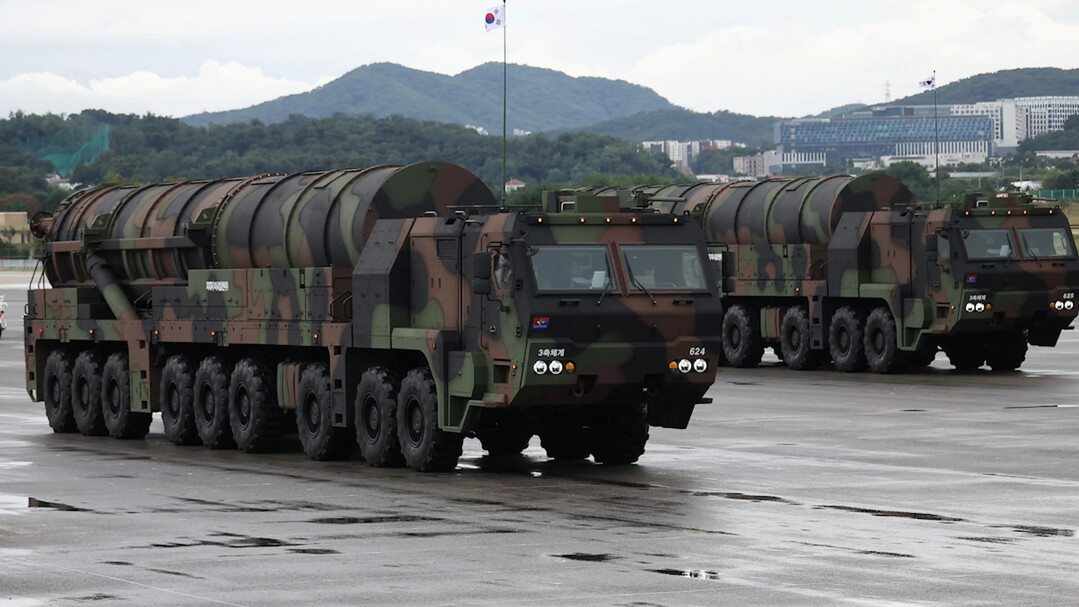
SEOUL – The South Korean military has reportedly begun the operational deployment of the "Hyunmoo-5," a powerful surface-to-surface ballistic missile dubbed the "Monster Missile" for its unprecedented destructive capabilities.
According to military sources on January 18, 2026, the Hyunmoo-5 began reaching field units late last year. The full operational deployment is expected to be completed within the current administration's term.
Tactical Nuclear-Level Power
While the Hyunmoo-5 is a conventional weapon, it boasts a massive warhead weighing up to 8 tons. This immense weight allows the missile to penetrate several hundred meters underground, making it capable of destroying deeply buried command bunkers. Experts evaluate its destructive force as being comparable to that of tactical nuclear weapons.
Minister of Defense Ahn Kyu-back officially used the designation "Hyunmoo-5" for the first time last October, stating that the missile had entered the "force integration phase" with plans for mass production.
Strategic Versatility and the 3-Axis System
The Hyunmoo-5 is classified as a short-range ballistic missile (SRBM) in its 8-ton configuration. However, by reducing the warhead weight, it is estimated that the missile could achieve a range of 3,000 to 5,500 kilometers, effectively functioning as an Intermediate-Range Ballistic Missile (IRBM).
The missile serves as a cornerstone of South Korea’s Korea Massive Punishment and Retaliation (KMPR) strategy. The KMPR is one of the three pillars of the "3-Axis" defense system, which also includes:
Kill Chain: Preemptive strikes against imminent threats.
Korea Missile Defense (KAMD): Intercepting incoming missiles.
Future Outlook
The South Korean military is not stopping at the Hyunmoo-5; development of a next-generation missile system is already underway. The defense authorities reportedly plan to secure hundreds of these "Monster Missiles" to maintain a decisive deterrent against North Korea’s nuclear and missile threats.
[Copyright (c) Global Economic Times. All Rights Reserved.]