• 2026.11.10 (Tue)
  • All articles
  • LOGIN
  • JOIN
Global Economic Times
[등록] 2026-09-01 15:48:31
  • Synthesis
  • World
  • Business
  • Industry
  • ICT
  • Distribution Economy
  • Well+Being
    • Pet Life
    • Halal Horizon
  • Travel
  • Eco-News
  • Education
  • Korean Wave News
  • Opinion
  • Arts&Culture
  • Sports
  • People & Life
    • International Student Report
    • With Ambassador
  • Column
    • Cho Kijo Column
    • Cherry Garden Story
    • Ko Yong-chul Column
    • Kim Bong-seon's Photo Column
    • Kim Seul-Ong Column
    • Lee Yeon-sil Column
  • Photo News
  • New Book Guide
MENU
 
Home > Distribution Economy

South Korea’s Telecom Giants Post Mixed Q3 Results as AI Infrastructure Emerges as Common Growth Driver

KO YONG-CHUL Reporter / Updated : 2026-11-10 13:02:17
  • -
  • +
  • Print

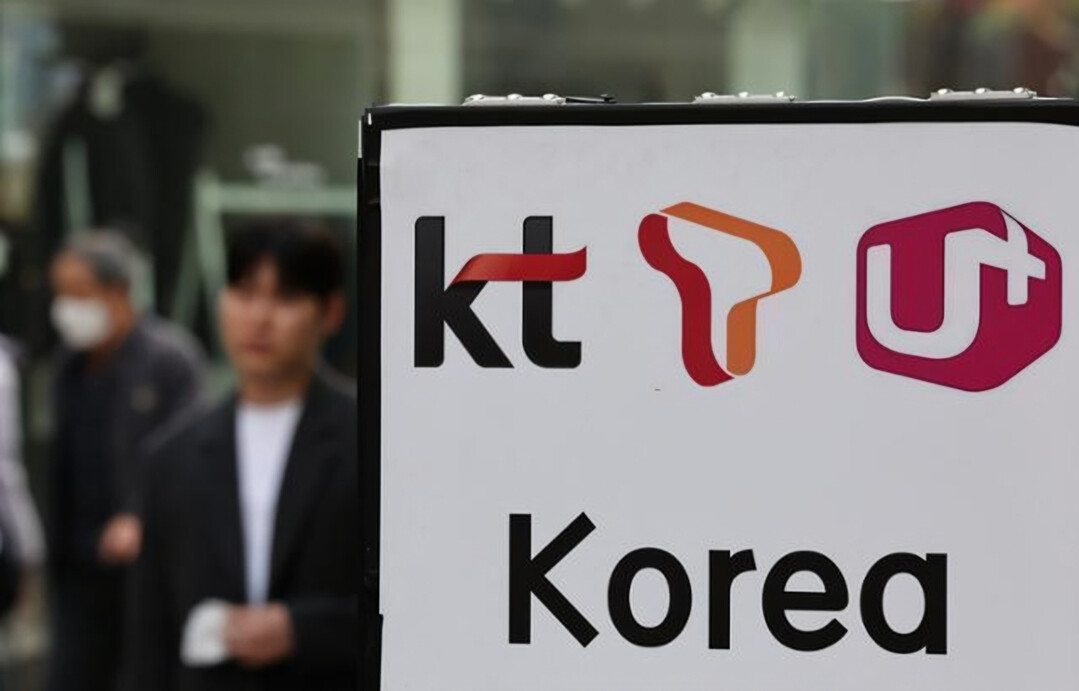
South Korea’s top three telecommunication providers—SK Telecom, KT, and LG Uplus—have reported mixed financial outcomes for the third quarter. While varying year-over-year base effects created a stark contrast in operating profits across the firms, all three carriers successfully expanded their artificial intelligence (AI) and data center operations. Moving forward, industry watchers note that management faces the delicate task of balancing aggressive infrastructure spending with steady shareholder returns.

According to industry reports, the combined Q3 revenue for the trio reached approximately 15.48 trillion won, with operating profits totaling roughly 1.36 trillion won.

Profit Discrepancies Driven by Base Effects

The dramatic differences in earnings growth largely stemmed from comparisons to last year's unusual expenses. SK Telecom posted a massive multi-fold jump in operating profit, bouncing back from a weak third quarter last year that was impacted by financial hits and customer compensation following a USIM security incident. Similarly, LG Uplus experienced a sharp profit recovery compared to the previous year, when its earnings were weighed down by roughly 150 billion won in voluntary retirement expenses.

In contrast, KT experienced a decline in profitability. The company struggled with lower wireless revenues due to subscriber churn during fee-waiver periods and customer retention programs. Consequently, KT's net income dropped by 17.5%, whereas SK Telecom returned to a net profit and LG Uplus saw a multi-fold increase in net earnings.

Divergent Trends in Mobile Core Businesses

The mobile network sector also revealed contrasting trajectories. SK Telecom reported higher year-over-year mobile revenues primarily due to last year's low base, though its actual handset subscriber count ticked down slightly following administrative purges of long-term inactive accounts. KT similarly registered a minor decline in mobile service revenues and average revenue per user (ARPU).

On the other hand, LG Uplus stood out as the only carrier among the three to achieve a net quarterly increase in total mobile connections, driven by steady growth in both direct mobile and budget MVNO lines.

AI Infrastructure Fuels New Momentum

Despite differing core mobile performances, investments in AI and advanced data centers (AIDCs) paid off uniformly across all three telecommunication leaders.

SK Telecom expanded its AIDC and AI-driven business sectors, reporting steady revenue growth in both enterprise and consumer AI applications.
KT saw solid gains in its broader AI Transformation (AX) portfolio, supported by strong performance from its cloud subsidiary.
LG Uplus posted a substantial spike in AIDC revenues—surging over 27%—propelled by higher demand for facility colocation and customized design-build-operate services.

Balancing Capital Expenditure and Shareholder Value

As the race to dominate the AI infrastructure market accelerates, capital expenditures (CAPEX) have risen notably. LG Uplus ramped up its quarterly investments significantly to expand data center capacity, while SK Telecom and KT continued steady spending on data center subsidiaries and network upgrades.

To maintain investor confidence amid heavier spending, the telecom firms reaffirmed their commitment to shareholder returns. SK Telecom and KT maintained active quarterly dividend policies alongside share buyback programs, while LG Uplus continued executing its multi-year shareholder return roadmap—aiming to return a significant portion of its net income through dividends and treasury stock acquisitions.

[Copyright (c) Global Economic Times. All Rights Reserved.]
  • #Cherry Garden
  • #HalalFood
  • #Halal
  • #Petlife
  • #Halalhorizone
  • #Hormuz Impasse
  • #globaleconomictimes
  • #micorea
  • #mykor
KO YONG-CHUL Reporter
Reporter Page

Popular articles

  • US Pushes to Deploy Special Task Force to the Korean Peninsula—Is It Also Targeting China?

  • HMM Relocates Headquarters to Busan: A New Era for South Korea's Flagship Carrier

  • Samsung Electronics Unveils 'AI Memory' Technologies and Yongin Cluster Roadmap at SEDEX 2026

I like it
Share
  • Facebook
  • X
  • Kakaotalk
  • LINE
  • BAND
  • NAVER
  • https://globaleconomictimes.kr/article/1065585641190255 Copy URL copied.
Comments >

Comments 0

Weekly Hot Issue

  • Samsung Fire & Marine Insures Global Growth with Majority Stake in UK’s Canopius
  • Spicy Korean Ramyeon Under Scrutiny: High Sodium and Saturated Fat Levels Revealed in New Consumer Watchdog Report
  • Bridging the Climate Health Gap: New Study Highlights Disproportionate Heat Risks and Public Insurance Success
  • EU Moves to Curb Winter Energy Pressures as Costs Threaten Households and Industry
  • Denmark Boosts Funding and Risk-Sharing for Cross-Border Hydrogen Pipeline to Germany
  • "Over 90% of 1.5°C Warming Already Reached"... UN Chief Warns of "New Era of Extreme Climate"

Most Viewed

1
Why Can't We Use 'Muse' in Korea?… Zuckerberg Says, "Due to a Lack of Data Centers"
2
US Army Conducts Rare Temporary Burial Drills to Prepare for Worst-Case Large-Scale War Scenarios
3
World Citizens are Flying Directly to Busan... The Era of 4 Million Foreigners is Just Around the Corner
4
Eating 100g of Baechu Kimchi Daily Linked to Lower High-Cholesterol Risks
5
November Shopping Festival Sparks Retail War in South Korea: Where to Find the Best Deals
체리가든 스토리
nutri huevos
로타리
동포저널

Hot Issue

Jensen Huang Faces Shareholder Class Action and Leadership Scrutiny Amid Espionage Allegations Involving Former Associate

Disgraced South Korean Scientist Hwang Woo-suk Becomes UAE Citizen

Is South Korea Heading Toward France's Path? Aging Population and Fiscal Pressures Looming Ahead

Fashion Runway Show 2026

Let’s recycle the old blankets in Jeju Island’s closet instead of incinerating them.

Global Economic Times
korocamia@naver.com
CEO : LEE YEON-SIL
Publisher : KO YONG-CHUL
Registration number : Seoul, A55681
Registration Date : 2024-10-24
Youth Protection Manager: KO YONG-CHUL
Singapore Headquarters
5A Woodlands Road #11-34 The Tennery. S'677728
Korean Branch
Phone : +82(0)10 4724 5264
#304, 6 Nonhyeon-ro 111-gil, Gangnam-gu, Seoul
Copyright © Global Economic Times All Rights Reserved
  • News K
  • 반달곰 프로젝트
  • 광고문의
Search
Category
  • All articles
  • Synthesis
  • World
  • Business
  • Industry
  • ICT
  • Distribution Economy
  • Well+Being 
    • 전체
    • Pet Life
    • Halal Horizon
  • Travel
  • Eco-News
  • Education
  • Korean Wave News
  • Opinion
  • Arts&Culture
  • Sports
  • People & Life 
    • 전체
    • International Student Report
    • With Ambassador
  • Column 
    • 전체
    • Cho Kijo Column
    • Cherry Garden Story
    • Ko Yong-chul Column
    • Kim Bong-seon's Photo Column
    • Kim Seul-Ong Column
    • Lee Yeon-sil Column
  • Photo News
  • New Book Guide
  • Overseas Koreans
  • Multicultural News