• 2026.11.10 (Tue)
  • All articles
  • LOGIN
  • JOIN
Global Economic Times
[등록] 2026-09-01 15:48:31
  • Synthesis
  • World
  • Business
  • Industry
  • ICT
  • Distribution Economy
  • Well+Being
    • Pet Life
    • Halal Horizon
  • Travel
  • Eco-News
  • Education
  • Korean Wave News
  • Opinion
  • Arts&Culture
  • Sports
  • People & Life
    • International Student Report
    • With Ambassador
  • Column
    • Cho Kijo Column
    • Cherry Garden Story
    • Ko Yong-chul Column
    • Kim Bong-seon's Photo Column
    • Kim Seul-Ong Column
    • Lee Yeon-sil Column
  • Photo News
  • New Book Guide
MENU
 
Home > Eco-News

Bridging the Climate Health Gap: New Study Highlights Disproportionate Heat Risks and Public Insurance Success

Desk / Updated : 2026-11-10 12:51:43
  • -
  • +
  • Print

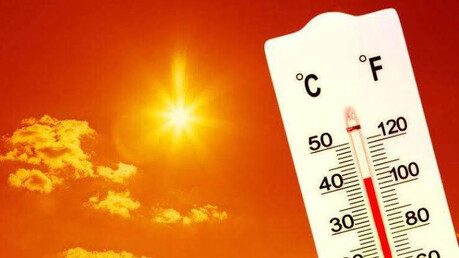
SUWON — As global temperature anomalies intensify, a recent institutional analysis reveals that the health toll of climate change is falling disproportionately on society's most vulnerable, prompting calls for expanded public safety nets.

A comprehensive study released by the Gyeonggi Research Institute evaluates the inaugural operational milestone of the regional "Gyeonggi Climate Insurance" framework, offering a closer look at how climate hazards translate into acute public health disparities.

According to survey data featured in the institute's latest report, an overwhelming 92.2% of local residents perceive direct lifestyle disruptions driven by climate shifts. Health complications stemming from extreme temperatures—such as severe heatwaves and unseasonal cold snaps—were cited as the primary concern by 72.8% of participants. Safety hazards from severe meteorological events like heavy downpours and floods followed at 58.5%, with economic strains like inflated utility costs for climate control cited by 39.1%.

Empirical indicators underscore these anxieties. Over a recent 12-month window, 31.1% of surveyed citizens reported suffering physical symptoms tied to heat exhaustion or heat stroke, with 14.8% requiring professional medical intervention.

Crucially, the findings expose a stark equity gap. Lower-income and high-risk demographic brackets faced a 46.5% incidence rate for heat-related symptoms—outpacing non-vulnerable counterparts by 17.2 percentage points (29.3%). The disparity widened further at clinics and hospitals: 31.9% of vulnerable individuals sought formal medical treatment for heat-related conditions, compared to just 11.8% of non-vulnerable peers.

Public sentiment strongly favors institutional intervention to bridge this divide. Roughly 77.8% of respondents argued that safeguarding citizens from climate-induced hazards is an essential public obligation comparable to national defense or policing, dwarfing the 20.4% who believed private market insurance solutions were sufficient. Furthermore, 70.7% expressed strong approval for the regional climate insurance model.

Operational data from the program's first year highlights its targeting efficiency. Out of 51,766 total claims totaling roughly 1.28 billion won, vulnerable demographics accounted for 96.7% of all approved cases (50,043 claims) and absorbed approximately 78.9% of total financial disbursements (roughly 1.01 billion won).

To sustain and improve these outcomes, research analysts recommend fine-tuning eligibility guidelines. Rather than relying on rigid demographic cutoffs like age or income brackets alone, future policy frameworks should evaluate multi-dimensional variables—including localized climate exposure, underlying health sensitivities, and local infrastructure resilience—while prioritizing high-risk geographic zones.

"Climate change is no longer a distant theoretical threat; it is an active hazard impacting our immediate well-being, hitting disadvantaged populations the hardest," noted Dr. Lee Eun-hwan, Senior Research Fellow at the institute. "While maintaining universal baseline protections for all residents, our public safety frameworks must evolve to deliver targeted, high-impact relief where it is needed most."

[Copyright (c) Global Economic Times. All Rights Reserved.]

  • #Cherry Garden
  • #HalalFood
  • #Halal
  • #Petlife
  • #Halalhorizone
  • #Hormuz Impasse
  • #globaleconomictimes
  • #micorea
  • #mykor
Desk
Desk

Popular articles

  • "Just order bottled water" is all it takes... Kakao embeds agentic AI into KakaoTalk

  • Cheonan City and Chemical Safety Institute Hold Joint Tabletop Exercise for Chemical Accident Response

  • North Korea Test-Fires Cruise Missiles Capable of Carrying Nuclear Warheads from 3,000-Ton Submarine for the First Time

I like it
Share
  • Facebook
  • X
  • Kakaotalk
  • LINE
  • BAND
  • NAVER
  • https://globaleconomictimes.kr/article/1065585025001484 Copy URL copied.
Comments >

Comments 0

Weekly Hot Issue

  • Seoul’s Jeonse Crunch Spills Over to Incheon, Sending Songdo Lease Prices Soaring
  • Samsung Fire & Marine Insures Global Growth with Majority Stake in UK’s Canopius
  • Spicy Korean Ramyeon Under Scrutiny: High Sodium and Saturated Fat Levels Revealed in New Consumer Watchdog Report
  • EU Moves to Curb Winter Energy Pressures as Costs Threaten Households and Industry
  • Denmark Boosts Funding and Risk-Sharing for Cross-Border Hydrogen Pipeline to Germany
  • "Over 90% of 1.5°C Warming Already Reached"... UN Chief Warns of "New Era of Extreme Climate"

Most Viewed

1
Why Can't We Use 'Muse' in Korea?… Zuckerberg Says, "Due to a Lack of Data Centers"
2
US Army Conducts Rare Temporary Burial Drills to Prepare for Worst-Case Large-Scale War Scenarios
3
World Citizens are Flying Directly to Busan... The Era of 4 Million Foreigners is Just Around the Corner
4
Eating 100g of Baechu Kimchi Daily Linked to Lower High-Cholesterol Risks
5
November Shopping Festival Sparks Retail War in South Korea: Where to Find the Best Deals
체리가든 스토리
nutri huevos
로타리
동포저널

Hot Issue

Jensen Huang Faces Shareholder Class Action and Leadership Scrutiny Amid Espionage Allegations Involving Former Associate

Disgraced South Korean Scientist Hwang Woo-suk Becomes UAE Citizen

Is South Korea Heading Toward France's Path? Aging Population and Fiscal Pressures Looming Ahead

Fashion Runway Show 2026

Let’s recycle the old blankets in Jeju Island’s closet instead of incinerating them.

Global Economic Times
korocamia@naver.com
CEO : LEE YEON-SIL
Publisher : KO YONG-CHUL
Registration number : Seoul, A55681
Registration Date : 2024-10-24
Youth Protection Manager: KO YONG-CHUL
Singapore Headquarters
5A Woodlands Road #11-34 The Tennery. S'677728
Korean Branch
Phone : +82(0)10 4724 5264
#304, 6 Nonhyeon-ro 111-gil, Gangnam-gu, Seoul
Copyright © Global Economic Times All Rights Reserved
  • News K
  • 반달곰 프로젝트
  • 광고문의
Search
Category
  • All articles
  • Synthesis
  • World
  • Business
  • Industry
  • ICT
  • Distribution Economy
  • Well+Being 
    • 전체
    • Pet Life
    • Halal Horizon
  • Travel
  • Eco-News
  • Education
  • Korean Wave News
  • Opinion
  • Arts&Culture
  • Sports
  • People & Life 
    • 전체
    • International Student Report
    • With Ambassador
  • Column 
    • 전체
    • Cho Kijo Column
    • Cherry Garden Story
    • Ko Yong-chul Column
    • Kim Bong-seon's Photo Column
    • Kim Seul-Ong Column
    • Lee Yeon-sil Column
  • Photo News
  • New Book Guide
  • Overseas Koreans
  • Multicultural News