![[등록] 2026-09-01 15:48:31](/support/_updata/banner2/tl181982910_6749.png)


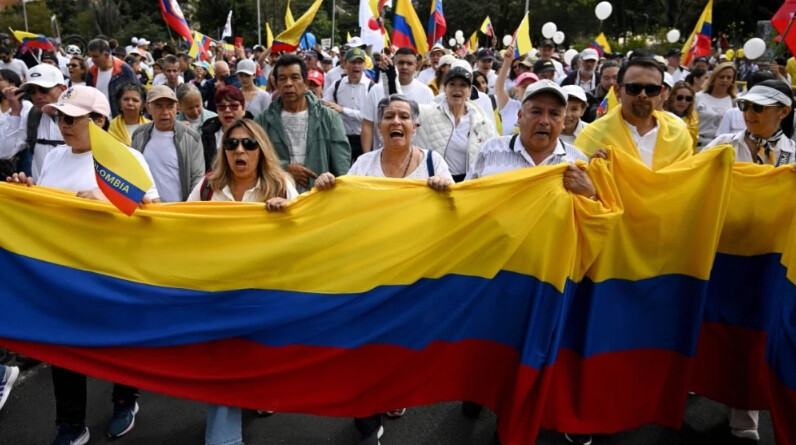
On June 16, 2025, thousands of Colombian citizens took to the streets across the nation, crying out “No to Violence.” This peaceful demonstration expressed support for Senator and presidential pre-candidate Miguel Uribe Turbay, who was gravely injured in a terrorist attack a week prior. This silent march will be remembered as a clear manifestation of public concern over the escalating political tensions and violence in Colombia ahead of the 2026 presidential and legislative elections.
A Wave of Silence Shakes Bogotá
In the capital city of Bogotá, immense crowds filled Bolívar Plaza in the city center. They embarked on a “silent march” starting from the National Park, with people dressed in white or Colombian national football team jerseys gathering like a river to begin the procession. Demonstrators carried placards with slogans such as “We are with you. Be strong, Miguel! We are also the people,” “Raising our voices in silence. Life is sacred,” and “Raising our voices for life, for you, Miguel. Hatred will not block your path to a better country.” Through these messages, they expressed solidarity with the 39-year-old politician from the pro-Uribe Democratic Center party and wished him a swift recovery.
This demonstration was organized in solidarity by politicians from various parties, aiming to represent the voice of the people and urge Colombian President Gustavo Petro to moderate his language so that violence does not become a central theme in the 2026 legislative and presidential campaigns. The attack on Miguel Uribe Turbay, in particular, is seen as more than just a personal assault; it served as a warning that increasingly intense political confrontation and division could lead to extreme violence.
Criticism of the Petro Government and Constitutional Crisis Theory
Hilda García, a retired teacher participating in the protest, voiced her dissatisfaction with the current government, stating, “The situation is serious. The Petro government is going the wrong way, and Congress isn't working, yet they receive salaries far too high compared to working citizens. Insecure public safety means no one can live comfortably. There is no government; it’s anarchy.”
Other demonstrators also held signs criticizing the government, with slogans like “Petro Resign!” This coincides with a period of heightened political tension in Colombia, following President Petro's issuance of a presidential decree last week to call a national referendum on August 7 for a labor reform bill that had already been rejected by the Senate, under the pretext that “the people want it.”
Academics, legal professionals, and various sectors of society have warned that this initiative is unconstitutional and threatens the constitutional order and democracy. This goes beyond a mere legal debate, raising concerns that the president’s attempt to overturn a parliamentary decision through a referendum could undermine the principle of separation of powers. Some interpret this as an authoritarian tendency, diagnosing it as a crisis for Colombian democracy.
In an interview with EFE news agency, retired police major general Eliecer Camacho Jiménez emphasized, “It is the people who are here today. We are the people,” arguing that the attack on Senator Uribe Turbay was a result of the government’s “hate speech,” which, he claimed, results in “us being murdered.” These remarks reflect a critical view that the Petro government's populist rhetoric deepens social division and conflict, ultimately inciting violent acts.
Anti-Violence Protests Spread Nationwide, and the Tragedy of Cali
The “silent march” took place in over 20 cities across Colombia, not just Bogotá, with significant resonance particularly in Cali, the capital of Valle del Cauca department. Last Tuesday in Cali, a tragic incident involving three terrorist attacks resulted in two deaths and 42 injuries. Cali is one of Colombia's regions where complex political and social conflicts intersect, and these attacks left deep scars on the local residents. Against this backdrop, citizens of Cali expressed their firm rejection of violence through the silent march, contributing to the spread of anti-violence sentiment throughout Colombia.
Colombia has a long history of internal conflict, and despite peace negotiations between the government and guerrilla groups, it continues to suffer from various forms of violence. With political polarization intensifying ahead of the 2026 presidential elections, the situation regarding these violent incidents is even more concerning. This silent march is a significant event that demonstrates the strong desire of the Colombian people to no longer remain silent in the face of violence and to express their voices peacefully. It also sends a powerful message to the Petro government that it must make more active and concrete efforts to achieve social integration and an end to violence.
Ultimately, this large-scale protest can be seen as more than just a political rally; it is an expression of national resistance to the problems of violence, political division, and constitutional crisis facing Colombian society. Colombia's future will depend on how it can mend these conflicts, build a society free from violence, and uphold the principles of democracy.
[Copyright (c) Global Economic Times. All Rights Reserved.]