• 2026.11.03 (Tue)
  • All articles
  • LOGIN
  • JOIN
Global Economic Times
[등록] 2026-09-01 15:48:31
  • Synthesis
  • World
  • Business
  • Industry
  • ICT
  • Distribution Economy
  • Well+Being
    • Pet Life
    • Halal Horizon
  • Travel
  • Eco-News
  • Education
  • Korean Wave News
  • Opinion
  • Arts&Culture
  • Sports
  • People & Life
    • International Student Report
    • With Ambassador
  • Column
    • Cho Kijo Column
    • Cherry Garden Story
    • Ko Yong-chul Column
    • Kim Seul-Ong Column
    • Lee Yeon-sil Column
  • Photo News
  • New Book Guide
MENU
 
Home > Industry

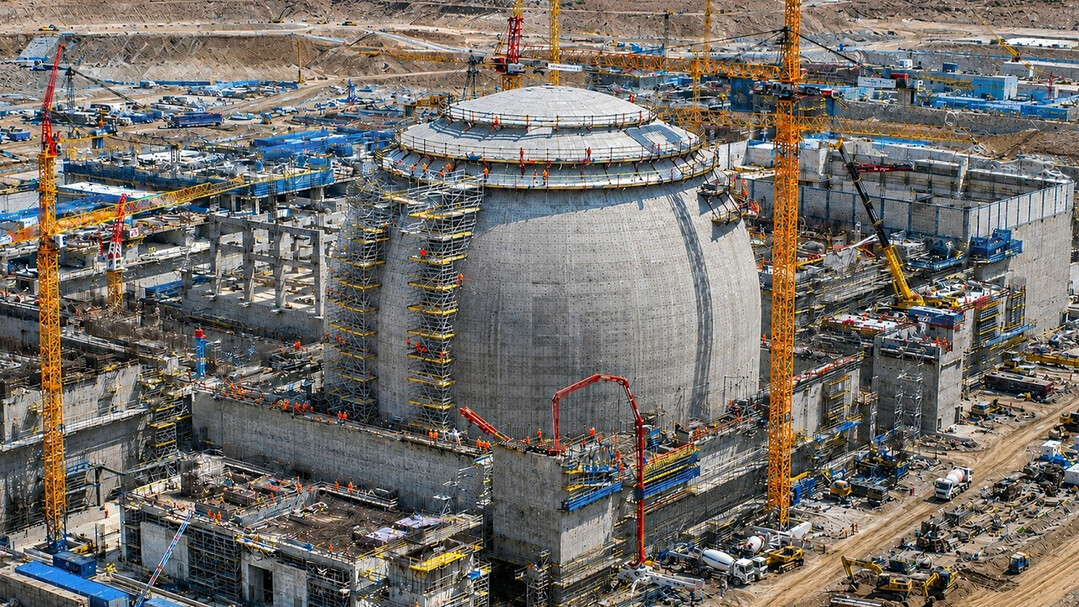
New Nuclear Projects to Generate Roughly 18,000 Additional Spent Fuel Assemblies

Kim Young Min Reporter / Updated : 2026-11-03 12:34:09
  • -
  • +
  • Print


South Korea is projected to produce approximately 17,958 additional high-level radioactive waste assemblies from two newly planned large-scale nuclear power plants and one small modular reactor (SMR) whose sites were finalized this year.

According to officials, on-site wet storage facilities—used to temporarily store spent nuclear fuel before permanent intermediate storage or disposal sites are established—are expected to reach full capacity starting with the Hanbit Nuclear Power Plant in 2030.

The High-Level Radioactive Waste Management Committee announced on the 3rd that it has initiated a public review period for the draft of the 3rd Basic Plan for High-Level Radioactive Waste Management, running from the 4th through the 23rd. The draft is accessible via the official gazette and the committee’s website.

Growing Volume of Radioactive Waste and Storage Capacity Concerns
Data in the draft indicates that as of the third quarter of this year, commercial nuclear reactors have generated 552,478 assemblies of high-level waste, with an additional 584 assemblies coming from the "HANARO" research reactor.

High-level radioactive waste is defined as waste containing alpha-emitting nuclides (with a half-life of 20 years or more) at radioactivity concentrations of 4,000 becquerels (Bq) or higher per gram, and a heat generation rate of 2 kilowatts (kW) or more per cubic meter, with spent nuclear fuel being the primary example.

Under the 11th Basic Plan for Long-Term Electricity Supply and Demand, an estimated 210,000 additional assemblies are expected to be generated across 35 nuclear units. Of this total, the newly planned developments—two large reactors and one SMR designated in June—will account for 10,482 and 7,476 assemblies, respectively.

Current saturation rates for on-site wet storage facilities stand at:

*Kori: 93.4%
*Hanbit: 86.0%
*Wolsong: 84.3%
*Hanul: 76.1%

Shin-Kori (Shin-Hanul/Shin-Kori variations): Shin-Wolsong at 41.3%, and Saeul at 17.5%
On-site wet storage is projected to reach maximum capacity sequentially: Hanbit in 2030, Hanul in 2031, Kori in 2032, Wolsong in 2037, Shin-Wolsong in 2041, and Saeul by 2066.

Goals, Incentives, and Next Steps
In compliance with the High-Level Radioactive Waste Management Act, the 3rd Basic Plan aims to operate an intermediate storage facility before 2050 and a permanent disposal facility by 2060.

The strategy focuses on four primary tasks:

*Democratic site selection
*Construction and operation of secure management facilities
*Securing public acceptance through active communication and mutual prosperity
*Building an organic management ecosystem

To support local governments hosting disposal facilities—for which site-exclusion screening is currently underway—a pan-governmental support program will be implemented. Host communities will receive a "special support grant" exceeding the amount given to low- and intermediate-level waste disposal sites (which was 300 billion KRW), with the exact sum finalized prior to a local referendum and disbursed within 30 days of notification. In addition to the special grant, host regions will receive waste-handling fees.

The total cost for the high-level waste management project is estimated at approximately 72.85 trillion KRW (as of 2024), with an investment of at least 2.495 trillion KRW required over the next five years to execute the 3rd Basic Plan.

To gather public feedback, explanatory sessions will be held on the 16th at the Daegu-Gyeongbuk Design Center in Daegu, the 17th at the Kyowon Challenge Hall in Busan, and the 18th at the Kim Dae-jung Convention Center in Gwangju/South Jeolla. Following the public consultation and briefing sessions, the committee plans to finalize the master plan after review and resolution by the Atomic Energy Promotion Commission and a report to the National Assembly's standing committee.

[Copyright (c) Global Economic Times. All Rights Reserved.]
  • #Cherry Garden
  • #HalalFood
  • #Halal
  • #Petlife
  • #Halalhorizone
  • #Hormuz Impasse
  • #globaleconomictimes
  • #micorea
  • #mykor
Kim Young Min Reporter

Popular articles

  • Deploying Drones to Inspect Sites and Support Administrative Tasks

  • Chungnam Delegation Aims for 3rd Overall Place at National Sports Festival

  • Government Unveils 1,000 Trillion Won "K-GX" Initiative to Drive Decarbonization and Green Tech

I like it
Share
  • Facebook
  • X
  • Kakaotalk
  • LINE
  • BAND
  • NAVER
  • https://globaleconomictimes.kr/article/1065583945333144 Copy URL copied.
Comments >

Comments 0

Weekly Hot Issue

  • South Korea to Showcase Digital Government Expertise at Digital Nations and OECD Forums
  • South Korea Deploys Rapid R&D Funding to Tackle Urgent National Crises, From Rogue Websites to Wildfire Recovery
  • Pope to Continue 'Shepherd One' Tradition of Humility Ahead of South American Tour
  • The Great Divergence: Why Democrats Are Blanketing Airwaves with Trump While Republicans Go Quiet
  • "Trump’s Fate on the Line" US Midterms Kick Off: Will Democrats Recapture the House?
  • Strategic Diversification and High-Yield VC Investments Propel Wonlim's Growth

Most Viewed

1
Why Can't We Use 'Muse' in Korea?… Zuckerberg Says, "Due to a Lack of Data Centers"
2
US Army Conducts Rare Temporary Burial Drills to Prepare for Worst-Case Large-Scale War Scenarios
3
Bucheon City Holds ‘2026 Webtoon Convergence Contest’… Accepting Submissions Until November 11
4
"Germany’s Nuclear Exit Should Serve as a Warning… Let's Solve the Power Crisis in AI & Advanced Industries through SMR Commercialization"
5
Bank Stocks Hold Firm Amid KOSPI Slump... "Defensive Appeal Strong, but Continued Rally Unlikely"
체리가든 스토리
nutri huevos
로타리
동포저널

Hot Issue

"Trump’s Fate on the Line" US Midterms Kick Off: Will Democrats Recapture the House?

Apple Surges Past Wall Street Estimates in Q4 Despite Semiconductor Headwinds

South Korea’s "Coin Exodus": Strict Regulations and Tax Gaps Drive Local Crypto Capital Overseas

Fashion Runway Show 2026

Let’s recycle the old blankets in Jeju Island’s closet instead of incinerating them.

Global Economic Times
korocamia@naver.com
CEO : LEE YEON-SIL
Publisher : KO YONG-CHUL
Registration number : Seoul, A55681
Registration Date : 2024-10-24
Youth Protection Manager: KO YONG-CHUL
Singapore Headquarters
5A Woodlands Road #11-34 The Tennery. S'677728
Korean Branch
Phone : +82(0)10 4724 5264
#304, 6 Nonhyeon-ro 111-gil, Gangnam-gu, Seoul
Copyright © Global Economic Times All Rights Reserved
  • 향기네무료급식
  • APEC2025
  • 반달곰 프로젝트
Search
Category
  • All articles
  • Synthesis
  • World
  • Business
  • Industry
  • ICT
  • Distribution Economy
  • Well+Being 
    • 전체
    • Pet Life
    • Halal Horizon
  • Travel
  • Eco-News
  • Education
  • Korean Wave News
  • Opinion
  • Arts&Culture
  • Sports
  • People & Life 
    • 전체
    • International Student Report
    • With Ambassador
  • Column 
    • 전체
    • Cho Kijo Column
    • Cherry Garden Story
    • Ko Yong-chul Column
    • Kim Seul-Ong Column
    • Lee Yeon-sil Column
  • Photo News
  • New Book Guide
  • Overseas Koreans
  • Multicultural News