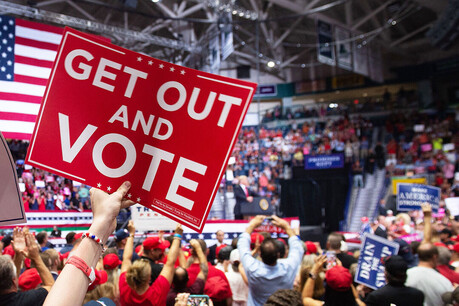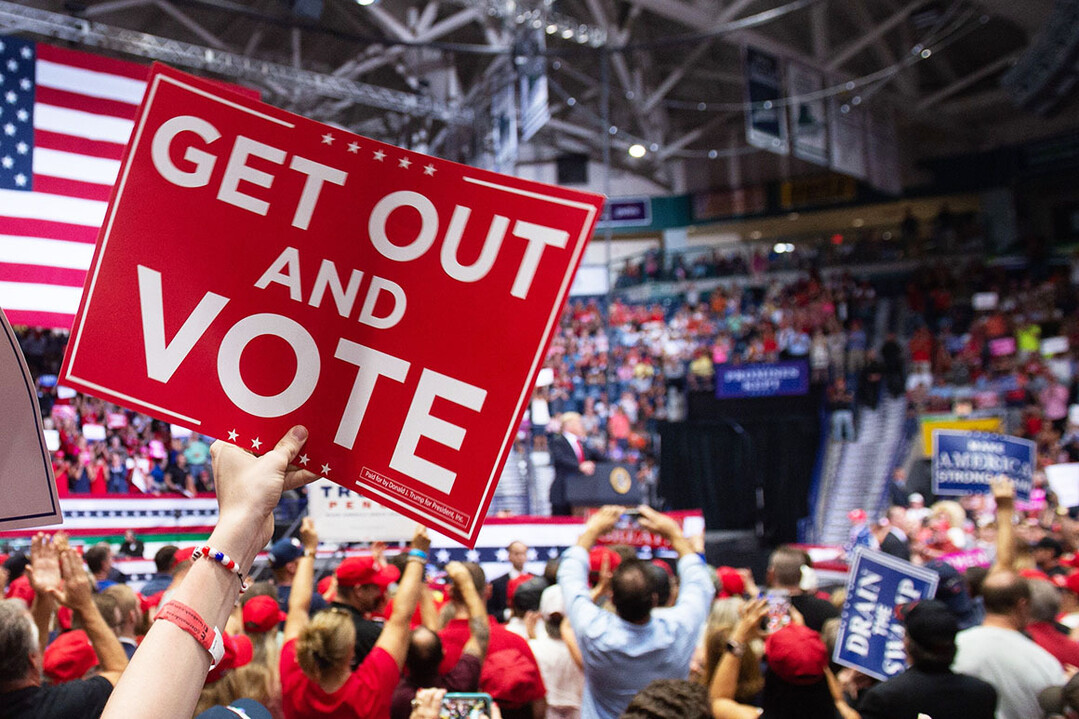
WASHINGTON — The United States is holding its crucial midterm elections today, setting the stage for the second half of Donald Trump’s presidency. Polls are opening sequentially across the country, beginning with Vermont at 5:00 a.m. Eastern Time (7:00 p.m. KST), followed by New York, New Jersey, and Virginia at 6:00 a.m.
Voting closing times vary by state. Indiana and Kentucky will close their polls the earliest at 6:00 p.m., while the final ballots will be cast in western Alaska early tomorrow morning.
At stake are all 435 seats in the House of Representatives (2-year terms), 35 of the 100 seats in the Senate (6-year terms), as well as 36 governorships and numerous state legislative seats. Because midterms occur midway through a presidential term, they serve as a direct referendum on the incumbent administration, and the stakes could not be higher for President Trump's political future.
House Shift and Senate Showdown
Current projections strongly favor the Democrats to retake the House of Representatives, with estimates pointing to a projected win of 230 to 240 seats. A Democratic-controlled House would empower the party to aggressively check the Trump administration, paving the way for not just legislative blockades but also heavy congressional oversight, subpoenas, and compulsory testimony.
Meanwhile, the battle for the Senate remains fiercely contested. Currently holding a 53–47 Republican majority, the Senate race involves 35 seats up for grabs (22 currently held by Republicans, 13 by Democrats). Democrats need a net gain of 17 seats to secure a majority.
Key battlegrounds—including Maine, Michigan, Ohio, Iowa, Kansas, Texas, and Alaska—will determine the final outcome. While major media outlets and forecasting models indicate that Democratic challengers are leading within the margin of error in several toss-up states, political analysts caution that these states are traditionally Republican strongholds, leaving room for polling discrepancies.
Veto Threats and Divided Government
If Republicans manage to secure at least 50 seats—leveraging Vice President’s tie-breaking vote as Senate President—President Trump can narrowly avert the worst-case scenario. Using the Senate as a legislative shield, he is expected to press forward with his unilateral domestic and foreign policy agenda.
However, if Democrats manage to capture both chambers, Trump could face an early lame-duck phase, burdened by responsibility for the ongoing economic strains, high inflation, and controversial foreign conflicts that shaped the campaign trail.
When recently asked how he would respond to a Democratic takeover of Congress, President Trump remarked, "I’ll probably be Mr. Veto," signaling an imminent clash between the executive branch and a Democrat-led legislature.
Extended Uncertainty and Korean-American Candidates
Due to the unpredictable nature of the battlegrounds, the final balance of power in the Senate may take days to crystallize, especially given potential delays from mail-in ballot processing and close contests. States like Alaska and Maine, which utilize Ranked-Choice Voting (RCV), could take even longer to finalize their tallies.
Meanwhile, attention is also focused on several Korean-American candidates running for federal and state offices, including Dave Min (D-CA), Marilyn Strickland (D-WA), Dan Koh (D-MA), and Young Kim (R-CA). Additionally, Cindy Munson is running for Governor of Oklahoma as a Democrat, bidding to become the first Korean-American governor in U.S. history.
[Copyright (c) Global Economic Times. All Rights Reserved.]