• 2025.12.07 (Sun)
  • All articles
  • LOGIN
  • JOIN
Global Economic Times
APEC2025KOREA가이드북
  • Synthesis
  • World
  • Business
  • Industry
  • ICT
  • Distribution Economy
  • Well+Being
  • Travel
  • Eco-News
  • Education
  • Korean Wave News
  • Opinion
  • Arts&Culture
  • Sports
  • People & Life
  • Column
    • Cho Kijo Column
    • Lee Yeon-sil Column
    • Ko Yong-chul Column
    • Cherry Garden Story
  • Photo News
  • New Book Guide
MENU
 
Home > Business

Three Years On: Russia's War in Ukraine and Japan's Shifting Trade Landscape

Graciela Maria Reporter / Updated : 2025-02-25 12:33:09
  • -
  • +
  • Print

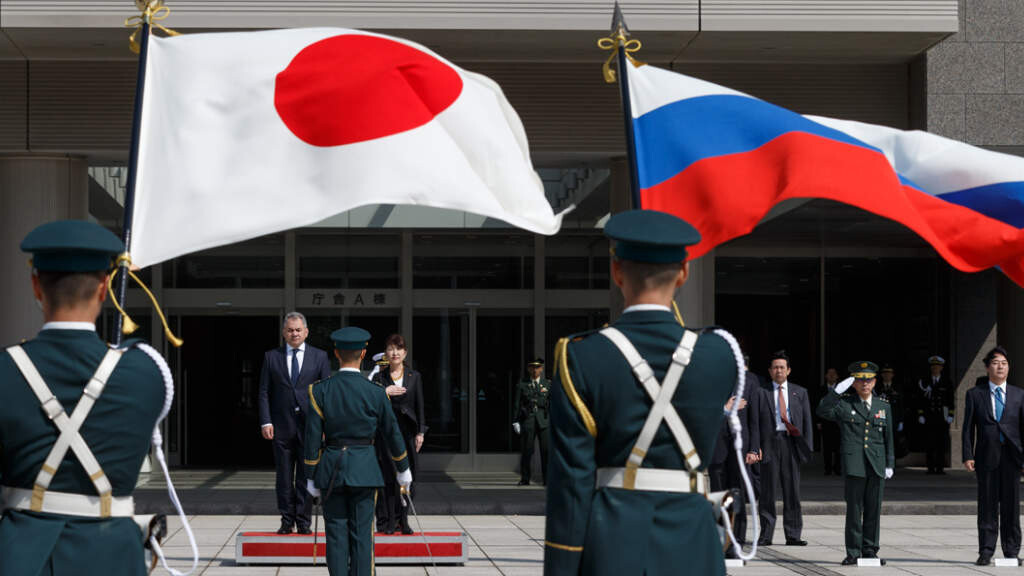
Three years have passed since Russia launched its invasion of Ukraine, triggering a wave of economic sanctions, primarily led by the Group of Seven (G7) nations. While Japan's trade with Russia has significantly decreased, some crucial economic ties remain, notably in the energy sector. Meanwhile, the global repercussions of the conflict, including rising prices, continue to impact Japan.   

According to 2024 trade statistics released by the Japanese Finance Ministry, exports to Russia have fallen by 17% year-on-year to ¥327.6 billion, and imports have also decreased by 17% to ¥860.3 billion. Compared to 2021, the year before the invasion, exports have plummeted by approximately 40%, and imports by around 60%.   

The G7-led trade embargo has virtually halted Japan's exports of key items such as semiconductor manufacturing equipment, electronic components, and aircraft. New car exports, which peaked at approximately 450,000 units in 2008, have dwindled to zero in both 2023 and 2024. Major Japanese automakers like Toyota have withdrawn from Russian operations.   

However, a notable exception exists in the export of used compact cars, which are exempt from sanctions. Exports of these vehicles to Russia reached approximately 200,000 in 2024, a roughly one-third increase from the 150,000 units exported in 2021. This surge raises concerns about potential loopholes in the sanctions regime, as these popular Japanese cars might be re-exported to Russia through third-party countries.   

LNG Reliance Shifts Towards the US

Liquefied natural gas (LNG) remains Japan's most significant import from Russia, valued at ¥548 billion. Seafood, including crab, cod, and salmon, also constitutes a substantial import at ¥130.2 billion. Prior to the invasion, Russia supplied approximately 10% of Japan's LNG needs.   

The Sakhalin-2 project, in which Japanese companies hold stakes, is currently exempt from sanctions, allowing Russia to continue LNG exports from its Far East region. A major trading company executive noted, "With the short transport distance and stable production, the importance of the Sakhalin-2 project has not changed."   

Nevertheless, Japan is increasingly diversifying its LNG sources, with imports from the United States, a growing LNG producer, on the rise. In 2024, the US supplied 9.6% of Japan's LNG imports, surpassing Russia's share of 8.6%. The recent Japan-U.S. summit underscored the two nations' commitment to expanding U.S. LNG imports, suggesting a potential decline in Japan's reliance on Russian energy.   

Russia Seeks Alternatives to SWIFT

The United States, Europe, and other nations continue to restrict Russian financial institutions' access to SWIFT (Society for Worldwide Interbank Financial Telecommunication), a crucial international payment network, complicating trade settlements with Moscow. The European Union is reportedly poised to impose further sanctions on several Russian banks.   

In response, Russia has been developing its own payment system, SPFS (Financial Messaging System of the Bank of Russia), and strengthening trade ties with China and India. According to Anatoly Aksakov, head of the State Duma Committee on Financial Markets, new settlement methods have been developed. "SWIFT is dying, it is already a backward technology," Aksakov recently told Russia's TASS news agency, highlighting Russia's push to circumvent Western financial restrictions. 

[Copyright (c) Global Economic Times. All Rights Reserved.]

  • #globaleconomictimes
  • #글로벌이코노믹타임즈
  • #한국
  • #중기청
  • #재외동포청
  • #외교부
  • #micorea
  • #mykorea
  • #newsk
  • #nammidonganews
  • #singaporenewsk
Graciela Maria Reporter

Popular articles

  • Mother Suspected of Trafficking 12-Year-Old Daughter for Sexual Exploitation in Japan

  • Japan Pioneers External Airbags for Cyclist Safety, Revolutionizing Auto Industry Protection

  • "Louvre" Was the Password: State Audit Slams Museum's Security Gaps, Full Upgrade Not Expected Until 2032

I like it
Share
  • Facebook
  • X
  • Kakaotalk
  • LINE
  • BAND
  • NAVER
  • https://globaleconomictimes.kr/article/1065583907748341 Copy URL copied.
Comments >

Comments 0

Weekly Hot Issue

  • JAPAN’S RISING PREDICAMENT: RECORD BEAR ATTACKS STRIKE FEAR ACROSS NATION
  • Trump NSS Declares Europe Faces 'Civilizational Erasure,' Vows to Aid Anti-Immigration Right-Wing Parties
  • Meta's Strategic U-Turn: The AI Race Re-Elevates Real-Time News
  • Gapyeong's Petit France and Italian Village Illuminate Winter with 'Starlight Festival'
  • Grand Opening: Gwangju Museum's Ceramics Culture Center Offers Comprehensive Look at Ceramic History
  • Choi Bun-do, Chairman of PTV Group, Assumes Presidency of the Korean Chamber of Commerce and Industry in South Central Vietnam

Most Viewed

1
Korean War Ally, Reborn as an 'Economic Alliance' Across 70 Years: Chuncheon's 'Path of Reciprocity,' a Strategic
2
A Garden Where the City's Rhythm Stops: Dongdaemun's 'Cherry Garden', Cooking Consideration and Diversity
3
The Sudden Halt of Ayumi Hamasaki's Shanghai Concert: Unpacking the Rising Sino-Japanese Tensions
4
Farewell to a Legend: South Korea Mourns the Passing of Esteemed Actor Lee Soon-jae
5
China’s Anti-Starlink Strategy: Simulation Suggests 2,000 Drones Needed for Taiwan Disruption
광고문의
임시1
임시3
임시2

Hot Issue

EU Unveils €90 Billion Ukraine Aid Plan Backed by Frozen Russian Assets

Seoul's 'Insane Rent' Warning: Why $30,000 Monthly Rent is a Looming Threat Residential Crisis Deepens as Tourist Housing Conversion Hits Supply

Seo Min-kyu Wins Gold at Junior Grand Prix Final... First Korean Since Kim Yuna 20 Years Ago

2026 Overseas Koreans Agency Budget Confirmed at 112.7 Billion Won... 5.3% Increase Year-on-Year

Let’s recycle the old blankets in Jeju Island’s closet instead of incinerating them.

Global Economic Times
korocamia@naver.com
CEO : LEE YEON-SIL
Publisher : KO YONG-CHUL
Registration number : Seoul, A55681
Registration Date : 2024-10-24
Youth Protection Manager: KO YONG-CHUL
Singapore Headquarters
5A Woodlands Road #11-34 The Tennery. S'677728
Korean Branch
Phone : +82(0)10 4724 5264
#304, 6 Nonhyeon-ro 111-gil, Gangnam-gu, Seoul
Copyright © Global Economic Times All Rights Reserved
  • 에이펙2025
  • APEC2025가이드북TV
  • 세종시
Search
Category
  • All articles
  • Synthesis
  • World
  • Business
  • Industry
  • ICT
  • Distribution Economy
  • Well+Being
  • Travel
  • Eco-News
  • Education
  • Korean Wave News
  • Opinion
  • Arts&Culture
  • Sports
  • People & Life
  • Column 
    • 전체
    • Cho Kijo Column
    • Lee Yeon-sil Column
    • Ko Yong-chul Column
    • Cherry Garden Story
  • Photo News
  • New Book Guide
  • Multicultural News
  • Jobs & Workers