• 2025.12.13 (Sat)
  • All articles
  • LOGIN
  • JOIN
Global Economic Times
APEC2025KOREA가이드북
  • Synthesis
  • World
  • Business
  • Industry
  • ICT
  • Distribution Economy
  • Well+Being
  • Travel
  • Eco-News
  • Education
  • Korean Wave News
  • Opinion
  • Arts&Culture
  • Sports
  • People & Life
  • Column
    • Cho Kijo Column
    • Lee Yeon-sil Column
    • Ko Yong-chul Column
    • Cherry Garden Story
  • Photo News
  • New Book Guide
MENU
 
Home > Synthesis

South Koreans’ Vegetable Intake Plummets, Blaming 'Mushy' Eggplant

Shin Yeju Intern Reporter / Updated : 2025-09-13 11:59:37
  • -
  • +
  • Print


SEOUL – South Korea's reputation as a nation of vegetable lovers is now a thing of the past. The country, once the world's leading consumer of vegetables, has fallen to 12th place globally, a stark decline fueled by a 20% drop in average daily consumption over the last decade.

According to a report by the Korea Rural Economic Institute, the average person consumed 187.6 kg of vegetables annually in 2000, placing Korea first. However, a steady shift towards Westernized diets has seen that number plummet to 164 kg as of 2020. This decline also highlights a significant nutritional imbalance, with experts noting a particular lack of "purple foods" in the average Korean diet, which is heavily skewed toward white and green vegetables like cabbage and spinach.

 
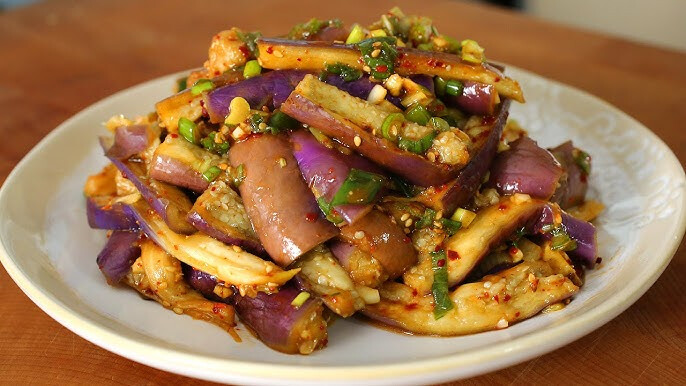
The most reviled of all purple foods for Koreans is the eggplant. A 2021 survey of nearly 40,000 people found eggplant to be the most disliked vegetable, with participants citing its "bizarre purple color" and "squishy, mushy texture" as the primary reasons. This aversion is unique to Korea; surveys show that Americans dislike beets and kale the most, while Japanese prefer to avoid celery.

The reason for the unique texture is often the cooking method. In contrast to Western dishes like "Eggplant Parmesan," which involves frying or baking, Koreans commonly steam eggplant, a process that makes the vegetable soft and gelatinous.

To overcome this dislike and reap the vegetable's health benefits, U.S.-certified nutritionist Kim Min-jung suggests changing preparation methods. "The anthocyanin in eggplant is water-soluble, so it can easily be lost when boiling or steaming for a long time," she said. "For better nutrient absorption, it's more beneficial to grill or stir-fry it in a healthy oil for a short time."

Kim noted that eggplant is a superfood rich in anthocyanin, an antioxidant that helps slow cellular aging, strengthens blood vessel walls, and is beneficial for preventing cardiovascular disease. Other nutrient-rich purple foods include beets, red onions, purple sweet potatoes, blueberries, and grapes.

[Copyright (c) Global Economic Times. All Rights Reserved.]

  • #globaleconomictimes
  • #micorea
  • #mykorea
  • #Lifeplaza
  • #nammidonganews
  • #singaporenewsk
  • #Samsung
  • #Daewoo
  • #Hyosung
  • #A
Shin Yeju Intern Reporter
Shin Yeju Intern Reporter Social Intern Reporter

Popular articles

  • KAIST Deep Tech Startup Secures $10 Million Investment for MRI-Quality Ultrasound Diagnosis 

  • K-Pop Takes Center Stage: 'K-Pop Demon Hunters' Dominates Google's US 'Year in Search 2025'

  • Origami Prodigy, 14, Wins $25,000 for Merging Paper Folding with Physics

I like it
Share
  • Facebook
  • X
  • Kakaotalk
  • LINE
  • BAND
  • NAVER
  • https://globaleconomictimes.kr/article/1065581931850955 Copy URL copied.
Comments >

Comments 0

Weekly Hot Issue

  • International Organizations Raise China's Growth Forecasts, Citing Stimulus and Exports
  • US-Japan Counteract Sino-Russian Drills with Joint Bomber Exercise in East Sea Airspace
  • Thailand-Cambodia Conflict Escalates: 22 Dead, Over 100 Injured as Border Clashes Spread
  • Swiss Economy Minister Guy Parmelin Poised to Lead as President in 2026
  • Russia Claims Downing Record 278 Ukrainian Drones Overnight, 40 Targeting Moscow Region
  • ZTE Faces Massive US Fine Over Alleged Foreign Bribery; Potential Settlement Could Exceed $2 Billion

Most Viewed

1
A Garden Where the City's Rhythm Stops: Dongdaemun's 'Cherry Garden', Cooking Consideration and Diversity
2
The Sudden Halt of Ayumi Hamasaki's Shanghai Concert: Unpacking the Rising Sino-Japanese Tensions
3
Choi Bun-do, Chairman of PTV Group, Assumes Presidency of the Korean Chamber of Commerce and Industry in South Central Vietnam
4
The Paradox of the 'Juvenile Offender' (Chokbeop Sonyeon): Impunity or Unfinished Rehabilitation?
5
South Korea Unveils 'K-Med': A Gigantic leap in Medical AI, Challenging Global Tech Giants
광고문의
임시1
임시3
임시2

Hot Issue

Mexico Hikes Tariffs on 'Strategic Goods' from South Korea, China, and Other Non-FTA Nations

Tech Tensions Flare: DeepSeek Allegedly Smuggles Banned NVIDIA Blackwell Chips for New AI Model

Netflix Stock Plummets 10% on Credit Downgrade Fears Following Blockbuster Warner Bros. Acquisition

LG Innotek Develops Eco-Friendly Next-Gen Smart IC Substrate, Reducing Carbon Emissions by Half

Let’s recycle the old blankets in Jeju Island’s closet instead of incinerating them.

Global Economic Times
korocamia@naver.com
CEO : LEE YEON-SIL
Publisher : KO YONG-CHUL
Registration number : Seoul, A55681
Registration Date : 2024-10-24
Youth Protection Manager: KO YONG-CHUL
Singapore Headquarters
5A Woodlands Road #11-34 The Tennery. S'677728
Korean Branch
Phone : +82(0)10 4724 5264
#304, 6 Nonhyeon-ro 111-gil, Gangnam-gu, Seoul
Copyright © Global Economic Times All Rights Reserved
  • 에이펙2025
  • APEC2025가이드북TV
  • 독도는우리땅
Search
Category
  • All articles
  • Synthesis
  • World
  • Business
  • Industry
  • ICT
  • Distribution Economy
  • Well+Being
  • Travel
  • Eco-News
  • Education
  • Korean Wave News
  • Opinion
  • Arts&Culture
  • Sports
  • People & Life
  • Column 
    • 전체
    • Cho Kijo Column
    • Lee Yeon-sil Column
    • Ko Yong-chul Column
    • Cherry Garden Story
  • Photo News
  • New Book Guide
  • Multicultural News
  • Jobs & Workers