As artificial intelligence (AI) makes exam cheating increasingly sophisticated, governments worldwide are deploying cutting-edge technology to protect academic integrity. From signal jamming to AI-powered monitoring, an ongoing battle between security measures and illicit tactics continues to unfold.
According to major foreign media reports on the 17th, the recent generation-AI cheating scandal involving the top scorer of South Korea's Certified Tax Accountant exam is not an isolated incident. In 2024, a test-taker was caught using smart glasses during the general admission screening at Waseda University's Faculty of Science and Engineering in Japan, while another candidate was arrested in Turkey for utilizing AI during a university entrance examination.
In response, nations have long been implementing diverse countermeasures to block AI-driven cheating. China has emerged as one of the most proactive countries. During the Gaokao (China's national college entrance examination), candidates must pass at least three security checks before entering the exam hall, including two metal detector screenings and intelligent security gates. Test-takers wearing glasses are subjected to additional inspections by proctors, with some regions even deploying dedicated devices to detect smart glasses.
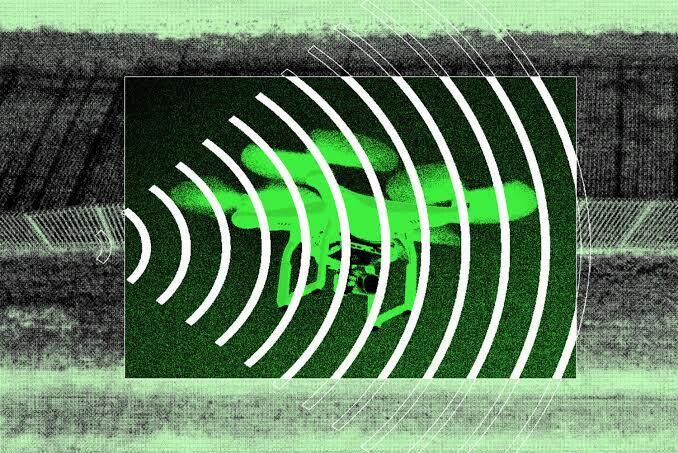
Anti-cheating measures are enforced both inside and outside the testing centers. According to China's state-run Xinhua News Agency, during last June’s Gaokao, the Chinese government operated signal jammers inside exam rooms and even restrooms to simultaneously block 2G to 5G mobile networks, Wi-Fi, Bluetooth, and Ultra-High Frequency (UHF) signals. Jamming vehicles were stationed around the testing sites, and public security authorities even introduced anti-jamming "drone sniper rifles" to shoot down illegal drones relaying wireless signals.
During the Gaokao period, Chinese AI services are also restricted. Major Chinese AI platforms—including DeepSeek, Tencent, Alibaba, and ByteDance—have blocked problem-solving services during exam hours since last year. Because American AI services like ChatGPT are restricted in China, cooperation from domestic tech companies alone has proven effective in curbing cheating.
In India, where university admissions are widely seen as a pathway to upward social mobility, rigorous anti-cheating protocols are equally prominent. The National Testing Agency (NTA) under India's Ministry of Education re-administered the medical entrance exam after a prior question paper leak, installing over 50,000 mobile phone signal jammers across test centers. For the retake, approximately 140,000 closed-circuit television (CCTV) cameras were installed across 5,000 testing venues nationwide, paired with an AI system designed to detect abnormal behaviors in CCTV footage and alert a central control room in real time.
Japan, which has repeatedly uncovered cheating cases involving smart devices, explicitly added smart glasses to its list of prohibited electronics for examinees. Proctors may also instruct candidates to lift their faces or inspect their glasses and hats.
The French Ministry of Education equipped all regional education offices with mobile phone detectors during the Baccalauréat written exams, deploying them randomly across testing sites. Meanwhile, Spain’s Catalonia region utilized detectors capable of catching signals from miniature earphones and smart glasses during university entrance exams held from June 9 to 11.
Despite these global efforts, cheating via smart devices and AI persists. Last year, out of 833 cases referred to the French Baccalauréat disciplinary committee, 55.04% involved smartphones or smartwatches, while 8.5% involved AI. Consequently, penalties are becoming harsher. France now imposes a disciplinary ban preventing confirmed cheaters from taking any Baccalauréat-related exams for up to five years.
Beyond academic entrance exams, unconventional methods are sometimes deployed to prevent malpractice. In 2016, roughly 1,150 candidates taking a military recruitment test in Muzaffarpur, Bihar, India, were forced to take the exam sitting outdoors in their underwear. Authorities ordered applicants to strip down to their undergarments to prevent them from hiding cheat sheets inside their clothing during the test.
Countries with fierce educational competition, such as China and India, also enforce much heavier legal penalties for cheating than South Korea. Following a 2015 criminal law amendment, individuals caught cheating in national exams in China can face up to seven years in prison. In India, individuals caught cheating face 5 to 10 years in prison and fines of up to 5 million rupees (approx. 71 million KRW)—amounting to roughly 25 years of India's per capita income. Furthermore, organized cheating schemes involving collusion between criminal syndicates and testing authorities carry mandatory minimum sentences of seven years in prison, minimum fines of 100 million rupees (approx. 1.42 billion KRW), and the immediate confiscation of related institutional assets.
[Copyright (c) Global Economic Times. All Rights Reserved.]