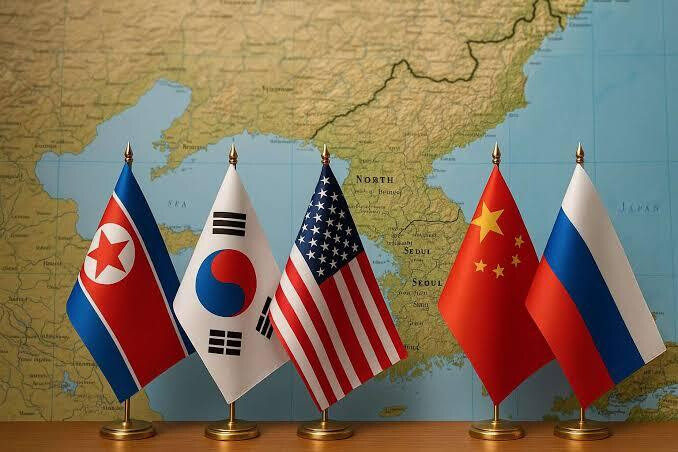
As the "new Cold War" solidifies through deepening alignment between North Korea, China, and Russia, and the unpredictability of U.S. leadership grows under Donald Trump, South Korea faces a critical juncture. The old binary choice between the U.S. and China is no longer viable. Instead, scholars and experts are proposing bold new paradigms for the Korean Peninsula—transforming from a passive bystander caught between superpowers into a nation that actively constructs regional and global order.
1. The Renaissance Model: Florence as a "Border Country"
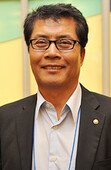
At an international conference hosted by the Yonsei Center for Human Peace, Professor Emeritus Kim Sang-keun of Yonsei University proposed 15th-century Florence as a blueprint for South Korea’s geopolitical future. Despite being politically "weak" in material terms, Florence became a cultural powerhouse that produced Leonardo da Vinci and Michelangelo, as well as a diplomatic titan that warded off war by weaving neighboring superpowers and the Papacy into a mutual-guarantee system.
Kim argues that rather than pursuing an ambiguous neutrality, South Korea must patiently build an order where neighbors become partners and no stakeholder benefits from conflict. By championing civic freedom and cultural synthesis, Korea can become a "fusion state" that embraces and revitalizes diverse cultures.
2. The Economic-Security Nexus: The "Strategic Nodal State"
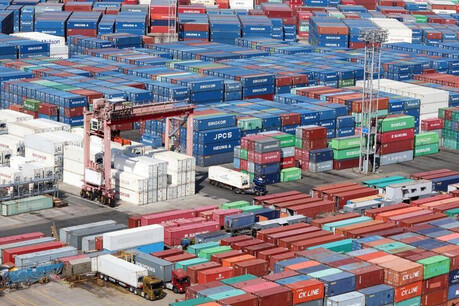
Professor Kim Yang-hee of Daegu University has long championed the concept of the "Strategic Nodal State." Rather than separating security and economics—the outdated notion of "security with the U.S., economy with China"—she emphasizes an integrated economic-security approach. As a powerhouse in manufacturing, nuclear power, shipbuilding, and semiconductors, South Korea holds irreplaceable leverage in global supply chains.
Because it is a non-hegemonic player, it can trade globally without severe geopolitical fallout. Kim suggests that by joining multilateral frameworks like the Comprehensive and Progressive Agreement for Trans-Pacific Partnership (CPTPP) and strengthening middle-power solidarity, Korea can convert its structural nodal position into genuine strategic autonomy.
3. Grassroots Diplomacy: The Power of Track II Networks
When state-to-state diplomacy is paralyzed by superpower friction, civil society offers a vital breakthrough through Track II diplomacy. Involving academics, former diplomats, think tanks, and civic organizations, these unofficial forums allow for candid discussions and conflict mediation unconstrained by official government stances. Experts emphasize that such informal networks foster mutual understanding and serve as a crucial diplomatic safety valve during times of high regional tension.
4. The "Common Home of Northeast Asia" and Inclusive Regionalism
At a symposium celebrating the 60th anniversary of Changbi, Professor Emerita Tessa Morris-Suzuki of the Australian National University revisited the "Common Home of Northeast Asia" concept first proposed by Japanese historian Wada Haruki in 1995. Moving beyond mere economic cooperation, this vision calls for resolving historical grievances to build a genuine regional community.
Morris-Suzuki argues that rather than pinning excessive hopes on high-level summits, governments and civil society must utilize regional dialogue platforms—such as the Jeju Forum for Peace and Prosperity—as scaffolding for sustainable peace. She notes that beyond the traditional actors (the two Koreas, Japan, China, the U.S., and Russia), rising middle powers like Vietnam and Mongolia must also be integrated into this framework.
5. Prophet Isaiah's "Active Peace" and Moral Leadership
Professor Emeritus Kim Hoe-kwon of Soongsil University drew on the radical peace philosophy of the biblical prophet Isaiah, who lived between ancient Egypt and Assyria. Criticizing royal courts that relied on dangerous diplomatic acrobatics, Isaiah advocated for a proactive, justice-based peace—turning "swords into plowshares."
Highlighting the historical roles played by churches in German reunification and Poland's democratization, Kim argues that Korean peace discourse must transcend "negative peace" (the mere absence of war) to embrace "positive peace" that dismantles structural violence. He contends that peace is a vision that poets and prophets—and ultimately South Korea—must pioneer to transform the nation into a central mediator of East Asian stability.
6. From Borderland to Universal State
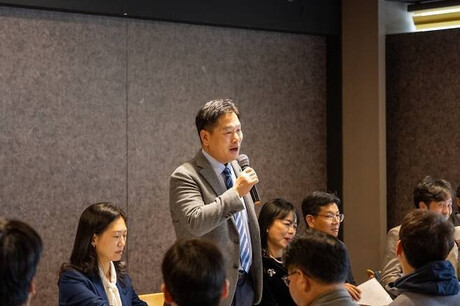
Reflecting on these diverse perspectives, Professor Park Myung-lim, director of the Yonsei Center for Human Peace, notes that humanity's greatest civilizational leaps have always occurred in borderlands where diverse empires, religions, and ideologies intersect.
"South Korea sits at the exact boundary between continental and maritime powers, having deeply internalized Eastern traditions alongside Western values and systems," Park observed. Given this unique internal synthesis, he asserts that South Korea must now look beyond being merely a border country and evolve into a "world state" and a "universal state" capable of shaping the next chapter of human civilization.
[Copyright (c) Global Economic Times. All Rights Reserved.]