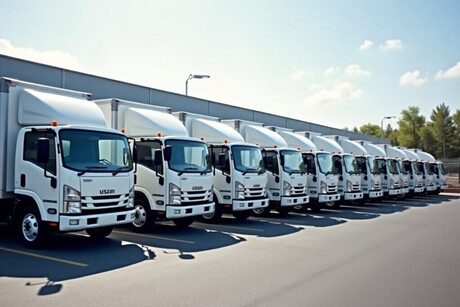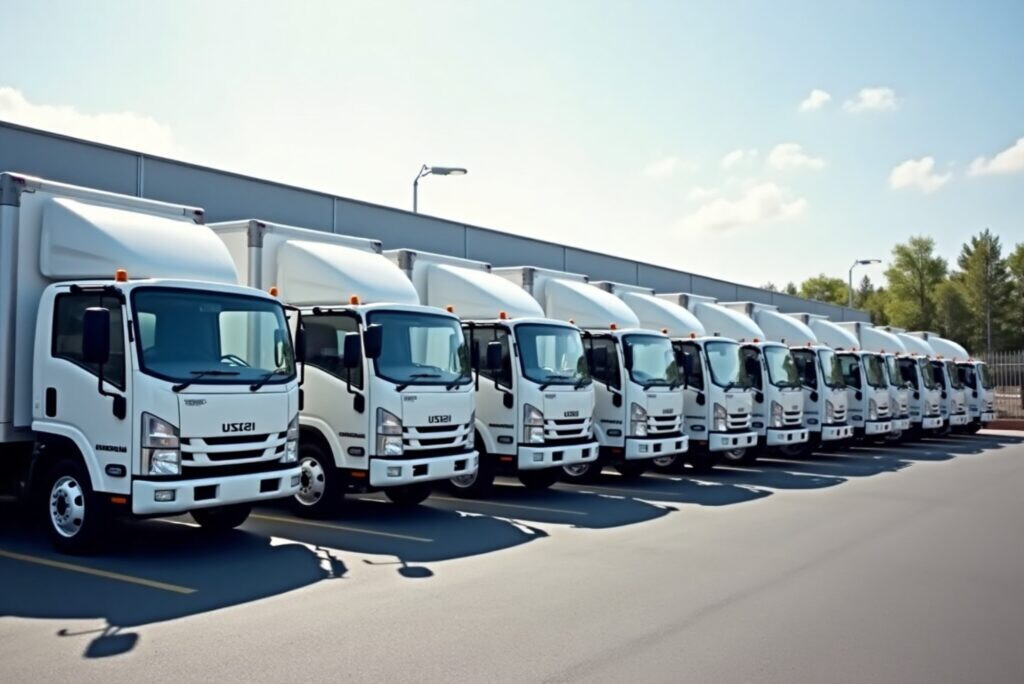
SEOUL — While passenger robotaxis have long dominated headlines in the autonomous vehicle sector, a quieter revolution is unfolding on the highways: self-driving heavy-duty trucks. Operating at Level 4 autonomy—capable of navigating everything from logistics hub docking and complex city streets to tollbooths and expressways without human intervention—these "AI drivers" are rapidly transitioning from experimental pilots to commercial freight solutions.
A Demographic and Financial Squeeze
The push toward freight automation is driven by an acute labor shortage. According to data from the Korea Transport Institute (KOTI) and the International Road Transport Union (IRU), the average age of a heavy truck driver in South Korea reached 58.7 last year. Nearly 80% of the workforce is aged 50 or older, while drivers under 40 account for just over 3%. High upfront vehicle costs—often reaching hundreds of millions of won—combined with grueling overnight schedules have deterred younger generations from entering the field. Projections warn that by 2035, South Korea could face a 32.9% shortfall in freight drivers, effectively leaving three out of every ten trucks without an operator.
Simultaneously, logistics companies operating on razor-thin margins of 2% to 4% are struggling under rising fuel prices and labor expenses, which represent roughly 35.8% of total transportation costs. Industry analysts point to "middle-mile" (hub-to-hub) freight as the ideal proving ground for autonomy. Unlike unpredictable urban traffic filled with pedestrians and cyclists, repetitive highway routes between fixed distribution centers allow AI systems to accumulate data rapidly, optimize fuel efficiency through steady cruising, and eliminate human error—the root cause of 92% of traffic accidents.
Domestic Innovators and Automakers Lead the Charge
South Korean startups and legacy automakers are aggressively commercializing autonomous freight technology:
RideFlux: Having secured South Korea’s first permits for urban heavy-truck operation and paid autonomous cargo transport, RideFlux began commercial runs in July. The company operates hub-to-hub routes for Lotte Global Logistics (a 224 km round trip between Seoul and Jincheon) and Hanjin (a 116 km route connecting Gunsan Port to Jeonju and Daejeon), and is currently in talks with roughly ten global logistics and manufacturing firms to expand adoption.
Mars Auto: Teaming up with Hyundai Mobis, Lotte Global Logistics, and LX Pantos under a "Team Korea" alliance, Mars Auto is targeting the U.S. market. The startup is currently executing commercial freight runs along a 3,379 km fixed route from the Port of Long Beach, California, to Alabama and Georgia—the longest fixed-route autonomous operation globally. By utilizing an end-to-end (E2E) AI system powered by seven cameras and a single radar instead of expensive LiDAR sensors and high-definition maps, Mars Auto retrofits existing trucks for roughly 10 million won per unit and has logged over 20 million kilometers in real-world driving data.
Hyundai Motor Company: Hyundai is accelerating the development of mass-producible "robotrucks" by integrating Level 4 autonomy with its Software-Defined Vehicle (SDV) platform. Following North American proof-of-concept trials with its XCIENT hydrogen fuel-cell trucks in 2023 and the completion of system redundancy development last year, Hyundai is expanding domestic testing this year while shifting its business model toward integrated software and fleet control ecosystems.
Local governments are also fostering testbeds. Daegu Metropolitan City and the Korea Intelligent Automotive Parts Promotion Institute are operating a 133.25 km autonomous pilot zone linking industrial complexes with logistics hubs, testing everything from heavy middle-mile trucks to demand-responsive local delivery vans.
Regulatory Hurdles Remain
Despite technological breakthroughs, industry leaders emphasize that nationwide commercialization hinges on regulatory reform. Currently, while expressways are designated as nationwide pilot zones, the urban roads connecting highways to logistics centers remain tightly restricted. Companies must undergo route-by-route preliminary driving and performance evaluations to obtain paid transport permits, hindering seamless door-to-door logistics.
Legal frameworks clarifying accident liability, specialized autonomous insurance policies, and licensing standards for "1:N remote operators"—a single specialist monitoring multiple trucks simultaneously—are also urgently needed.
In response, the Ministry of Land, Infrastructure and Transport has pledged comprehensive regulatory overhauls, including permitting the use of raw video data for AI training, establishing unmanned safety guidelines, and granting local governors greater authority to designate pilot zones. Through these measures, the government aims to usher in an era of fully driverless freight by 2029.
Rather than displacing workers, industry insiders view the transition as an opportunity to upskill veteran drivers into remote fleet controllers—provided it is backed by robust retraining programs, adoption subsidies, and sustained investment in AI computing infrastructure.
[Copyright (c) Global Economic Times. All Rights Reserved.]