![[등록] 2026-09-01 15:48:31](/support/_updata/banner2/tl181982910_6749.png)


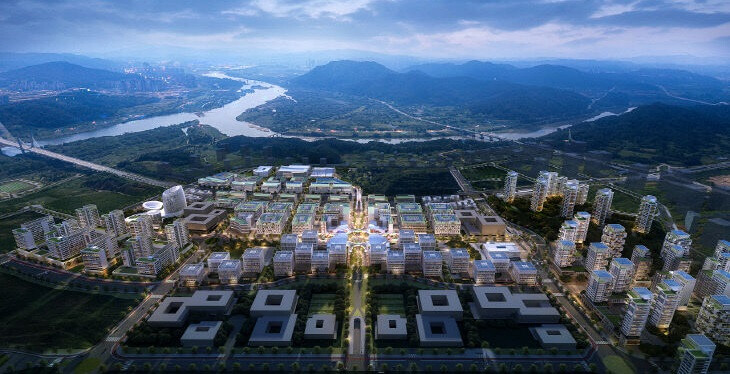
Sejong City, South Korea – The development of Sejong National Pilot Smart City, a cornerstone project for South Korea's urban innovation, is set to accelerate significantly through 2025. This ambitious endeavor, first initiated under a previous administration, is now poised for full-scale implementation as the city's strategic vision aligns with the current government's broader smart city agenda.
The project, centered in the Hapgang-dong (5-1 Life Zone) area of Sejong, faced initial delays due to various internal and external factors since its conception. However, the Happy City Construction Agency (Happy City Agency), in collaboration with key public and private entities, announced on July 3rd a renewed push to formalize the city's future through a detailed implementation roadmap. By the second half of 2025, a comprehensive execution plan for the national pilot city's construction is expected to be finalized. This plan will leverage the cooperative efforts of Sejong Smart City Co., Ltd. (SPC), the private sector operator, and the Korea Land and Housing Corporation (LH), the public sector counterpart.
A Blueprint for Future Urban Living
The overarching goal for Sejong Smart City is to transform a "blank slate" site into a world-class living space. This will be achieved by integrating cutting-edge smart technologies with infrastructure designed to enhance citizen happiness and quality of life. The recently approved "Happy City Smart Plan" by the Ministry of Land, Infrastructure and Transport in April serves as the foundational blueprint, outlining the deployment of a total of 39 smart services. These services are meticulously divided, with 21 provided by the private sector and 18 by the public sector, creating a comprehensive ecosystem for urban living.
The vision for Sejong encompasses a wide array of innovative services tailored for its future residents:
Revolutionary Mobility: Residents will benefit from innovative mobility services, including shared car-based autonomous driving systems and AI-powered smart transportation networks. Sejong's unique design even features a dedicated shared car-only district, aiming to reduce private vehicle ownership, with Bus Rapid Transit (BRT) serving as a central mode of external transport. Services such as Mobility on Demand (MOD) and Smart Parking will optimize urban movement.
Advanced Education and Healthcare: The city will feature smart schools integrated with digital learning platforms, offering a forward-looking educational environment. Personalized health management systems and specialized healthcare zones for the elderly will cater to residents' well-being, complemented by remote health services and air quality monitoring.
Sustainable and Safe Environment: Initiatives to mitigate environmental challenges include advanced fine dust reduction and fog prediction systems. The focus on eco-friendly living is evident in the adoption of Passive Houses and Zero Energy Buildings (ZEB), promoting sustainable residential environments. Public safety will be enhanced through multipurpose intelligent CCTV systems and real-time accident response.
Efficient Urban Management: Smart energy solutions like Smart Grid, renewable energy integration, and smart street lighting will ensure efficient resource management. Waste management will be modernized with advanced disposal systems for food waste and integrated incineration plants. E-Government services will include digital tax payment and AI-based interactive legal support.
South Korea's Broader Smart City Ambition
Sejong National Pilot Smart City is a prime example of South Korea's strategic commitment to smart city development. The nation views smart cities as a critical component of its economic policy, leveraging Fourth Industrial Revolution technologies such as AI, IoT, blockchain, and data analytics to drive economic competitiveness and urban sustainability. Over 70 smart city projects are currently underway nationwide, with the government providing substantial support through legal frameworks and grant programs, encouraging strong public-private partnerships.
While the original article highlighted an anticipated acceleration under a new government, the broader context of South Korea's smart city initiatives indicates a continuous, evolving commitment. As of 2024, many initial residents have already moved into Sejong, with infrastructure development ongoing. This reflects the nation's steadfast push to establish cities that not only adopt advanced technology but also prioritize citizen happiness and create a sustainable, innovative urban platform.
The progress in Sejong is also mirrored in other pilot cities like Busan Eco Delta City. Busan has shown remarkable advancements, climbing significantly in global smart city rankings, currently standing at 14th as of June 2024. Its Smart Village, operational since December 2021, serves as a living lab testing over 40 innovative technologies, demonstrating the practical application of smart city concepts.
Cheon Cheon-kyu, head of the National Pilot City Team at Happy City Agency, emphasized the collaborative spirit driving Sejong's development: "Sejong National Pilot City will be a leading model for future-oriented smart cities that realize cutting-edge services through close cooperation between the public and private sectors. We are committed to providing smart services that citizens can truly experience, encompassing innovative mobility, safety, culture, leisure, and AI-based solutions."
With the 2025 implementation plan on the horizon, Sejong Smart City is poised to solidify its position as a global exemplar, demonstrating how advanced technology, thoughtful planning, and citizen-centric design can converge to create the cities of tomorrow.
[Copyright (c) Global Economic Times. All Rights Reserved.]