![[등록] 2026-09-01 15:48:31](/support/_updata/banner2/tl181982910_6749.png)


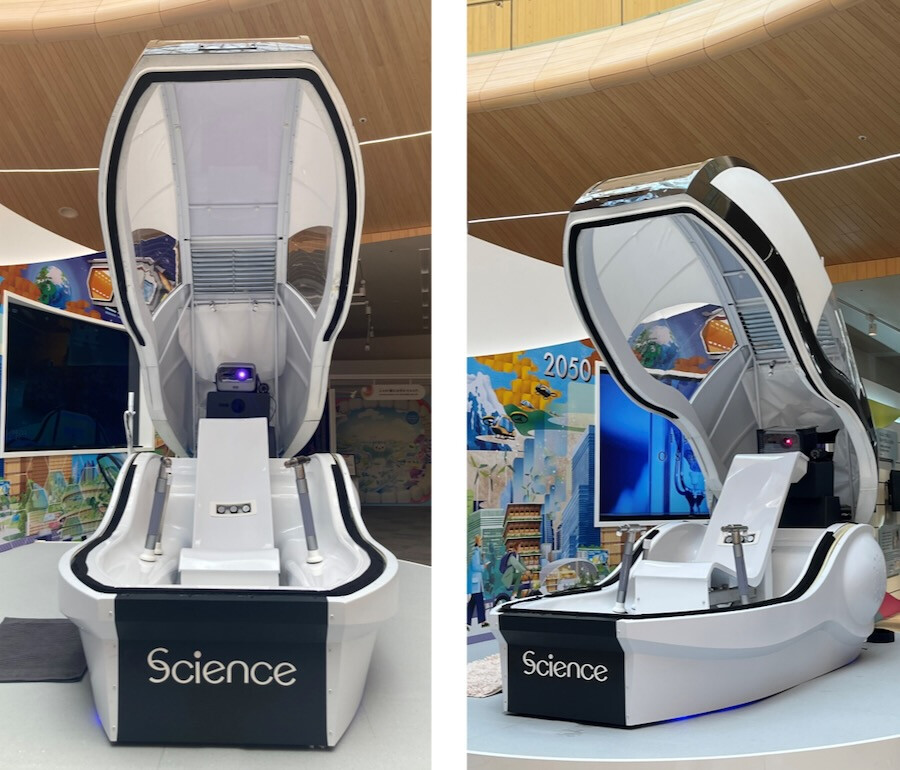
(C) Spoon & Tamago
The 'Human Washing Machine,' once presented as a blueprint for the future society half a century ago, has finally crossed the threshold of commercialization. This revolutionary device, which automates the entire bathing process from full-body cleansing to drying in just 15 minutes by simply lying down, goes beyond a mere home appliance, signaling a change in the future lifestyle. Attention is focused on the announcement by Japan's Yamada Holdings (HD) that they will publicly display and promote the sale of the 'Mirai Human Washing Machine'—which drew explosive interest at the Osaka Expo—at major consumer electronics specialty stores in Tokyo.
A Drama of Revival Spanning Half a Century
The history of the 'Human Washing Machine' dates back to the 1970 Osaka Expo. The conceptual product unveiled by Matsushita Electric Industrial (now Panasonic) at the time was an icon imagining future living, but due to technical limitations and economic feasibility issues, it never reached commercialization and remained only a dream. However, over 50 years later, in the 2020s, this dream was reawakened by SCIENCE (or I-feel-SCIENCE), a specialized shower component manufacturer based in Osaka, Japan.
The 'Mirai Human Washing Machine' developed by SCIENCE caused an unexpectedly large sensation when it was exhibited at the 'Osaka Healthcare Pavilion' during the Osaka-Kansai Expo this April. Beyond simple curiosity, over 40,000 applications poured in from visitors eager to experience it, proving the technology's potential. This explosive response became the crucial factor in deciding the product's commercial launch.
Core Technology: Micro-Bubbles and the Magic of 15 Minutes
The 'Mirai Human Washing Machine' features a capsule-shaped structure approximately 2.3m long. The core technology involves the machine generating ultra-fine micro-bubbles, less than 0.001mm in diameter, to cleanse the entire body once the user lies down inside the capsule. These micro-bubbles are known to effectively remove waste and impurities deep within the pores.
The bathing process goes through three stages: cleaning → rinsing → drying. All of these steps are completed automatically in just 15 minutes. It is a perfectly automated system where the user only needs to lie still. Furthermore, beyond simple cleaning, it incorporates elements of rest and healing. Sensors inside the capsule (on the back section) monitor the user's health status in real-time, detecting changes in heart rate and posture, while comfortable video and music content are provided during operation to help soothe the user's mind and body.
In particular, this technology is highly valued for its potential usefulness for the elderly or disabled individuals with mobility issues. This is due to its high potential as an innovative healthcare device that can reduce the burden of caregiving and help users independently manage their hygiene.
The Reality of Commercialization: High Barriers and Future Prospects
The Mirai Human Washing Machine is scheduled to be displayed at the consumer electronics specialty store 'LABI Ikebukuro Main Store' in Toshima-ku, Tokyo, starting December 25, 2025, where a corner for customer experience will be set up. However, owning this dream technology requires a substantial cost.
The expected selling price is set at 60 million yen (approximately 560 million KRW or $400,000+ USD). This price far exceeds the level easily accessible to general households. Currently, it is expected to be primarily manufactured and sold for commercial use, such as hotels, hot springs and bathing facilities, and leisure centers. Yamada Holdings and SCIENCE plan to observe consumer reactions through the in-store exhibition before discussing the official launch date, which has not yet been confirmed.
While the high price acts as the biggest barrier to commercialization, the manufacturer views the long-term outlook positively. They mention the possibility of a more affordable home model emerging if the technology further evolves and mass production systems are established, raising anticipation that ordinary households might also be able to experience this 'future-type bathing' in the future.
The emergence of the 'Human Washing Machine' is a symbolic event demonstrating how deeply technology can penetrate human daily life, particularly the most private and essential act of 'bathing.' It presents the potential for a future-type healthcare device that goes beyond mere time-saving convenience, addressing care issues in an aging society and improving the quality of individual life.
[Copyright (c) Global Economic Times. All Rights Reserved.]