![[등록] 2026-09-01 15:48:31](/support/_updata/banner2/tl181982910_6749.png)


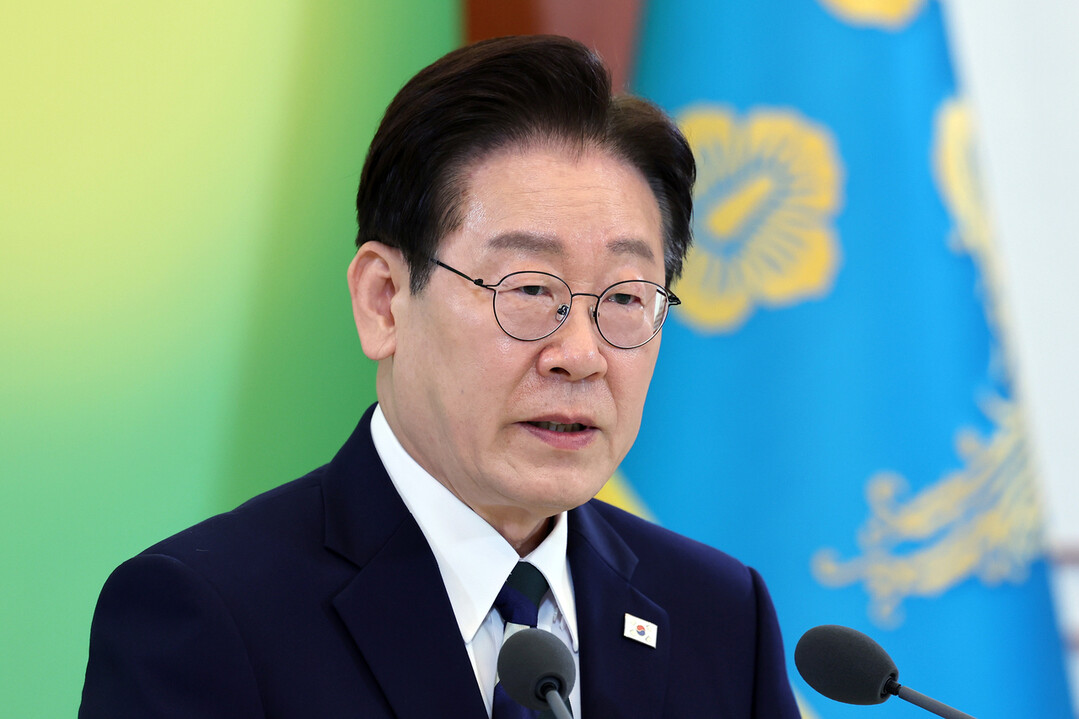
Seoul – President Lee Jae-myung has ignited a significant political debate by proposing a “one-point constitutional amendment” to overhaul the National Election Commission (NEC), citing a lack of oversight and accountability within the constitutional body.
During a briefing at the Blue House on June 19th, following his return from a G7 summit and a European tour, President Lee addressed growing public concerns regarding the NEC’s administrative failures. He described the current situation within the commission as "absurd," suggesting that if consensus is reached between the ruling and opposition parties, a targeted constitutional change is necessary to ensure greater transparency.
The Core of the Problem: "Unchecked Power"
The President’s criticism centers on the NEC’s structural autonomy, which, according to Lee, has crossed the line from independence into "freedom bordering on dissipation."
"We have no authority to control, monitor, or check them. We do not even hold the formal right to appoint the Chairperson of the NEC," Lee remarked. He expressed disappointment that despite the expectation that the NEC would operate with integrity—traditionally led by a Supreme Court Justice—it has instead become a source of controversy.
The President highlighted several key grievances:
Lack of Institutional Oversight: He argued that the constitutional status of the NEC has effectively shielded it from necessary external audits and checks.
Misuse of Autonomy: While the government has provided sufficient budgetary support, Lee asserted that the commission has failed to uphold the responsibilities that accompany such independence.
Appointment Structures: Lee questioned the current practice where the Chief Justice of the Supreme Court effectively designates the NEC Chairperson, suggesting a need for institutional reform to allow for more external oversight and a more balanced appointment process.
The Path to Reform: A Presidential Initiative?
President Lee did not rule out the possibility of taking direct action to break the political deadlock surrounding this issue. "If necessary, even if it means the President must propose the amendment directly, we should do it," he stated, signaling his willingness to leverage his executive authority to initiate the constitutional process.
The President emphasized that while he is prepared to act, he intends to observe the trajectory of discussions within the National Assembly. "The government will finalize its stance by monitoring the deliberations of the political circles," he added.
Context and Implications
The NEC, defined by the Constitution of the Republic of Korea, has long been a sacred pillar of democratic integrity. However, recent administrative controversies and internal management issues have sparked public demand for reform.
Political analysts suggest that a "one-point" amendment—a rare move targeting a specific article of the constitution rather than a broad revision—is a high-stakes strategy. Proposing a constitutional amendment requires a two-thirds majority in the National Assembly followed by a national referendum, making it a formidable legislative hurdle.
Opposition parties are expected to weigh the proposal carefully. While many agree that the NEC requires improved governance, there is inherent suspicion that such reforms could be interpreted as an attempt by the executive branch to undermine the independence of election oversight.
As the political discourse intensifies, the central question remains: Can the government and the opposition find a middle ground to reform the institution responsible for the country’s democratic process without compromising its neutrality? President Lee’s bold proposal has effectively set the stage for a critical debate on the balance between independence and accountability in Korea’s constitutional framework.
[Copyright (c) Global Economic Times. All Rights Reserved.]