• 2026.11.19 (Thu)
  • All articles
  • LOGIN
  • JOIN
Global Economic Times
한인동포뉴스(상단)
  • Synthesis
  • World
  • Business
  • Industry
  • ICT
  • Distribution Economy
  • Well+Being
    • Pet Life
    • Halal Horizon
  • Travel
  • Eco-News
  • Education
  • Korean Wave News
  • Opinion
  • Arts&Culture
  • Sports
  • People & Life
    • International Student Report
    • With Ambassador
  • Column
    • Cho Kijo Column
    • Cherry Garden Story
    • Ko Yong-chul Column
    • Kim Bong-seon's Photo Column
    • Kim Seul-Ong Column
    • Lee Yeon-sil Column
    • Professor Lee Soo-young’s Life Essays
  • Photo News
  • New Book Guide
MENU
 
Home > Synthesis

From Pocket Money to Precious Stones: Why Japanese Kids Are Obsessed With Mineral Collecting

Ana Fernanda Reporter / Updated : 2026-11-18 10:08:46
  • -
  • +
  • Print


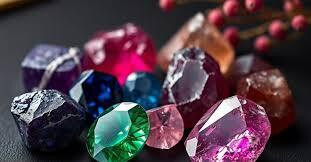
TOKYO — What starts as a simple pocket-money hobby for some children in Japan has blossomed into a full-scale craze: collecting and trading natural minerals, crystals, and raw gemstones.

According to recent reports by Japanese media outlet TBS, elementary school students across the country are increasingly fascinated by the world of geology and lapidary arts. Rather than just buying finished jewelry, kids are actively hunting for unique specimens, swapping rare stones with classmates much like trading cards, and curating collections based on the specific colors of their favorite pop idols.

The trend is highly visible at major industry events like "Mineral Marche," a nationwide expo featuring over 120 vendors and roughly 200,000 specimens. Amidst adult collectors and enthusiasts, young children can frequently be seen carefully browsing tables to find budget-friendly raw stones.

"Gems are like lucky charms to me," shares one 5th-grade boy, who saves up his allowance earned from household chores to buy new additions. Another student, a 4th-grader, focuses exclusively on collecting turquoise, her birthstone. Peer-to-peer exchanges have also become common on school playgrounds, where children trade items like rose quartz and obsidian.

Industry analysts attribute this sudden surge in interest to multiple cultural touchpoints. Some children are introduced to the hobby through video games and illustrated field guides, while others become inspired by popular media. For instance, fluorite saw a massive spike in demand after being prominently featured as a key plot element in a hit Japanese television drama. Event organizers note that young fans frequently visit exhibitions specifically seeking out fluorite mined from locations tied to their favorite TV shows.

Capitalizing on this youthful demographic, publishers and retailers have launched innovative, low-cost entry products. Japanese publisher Takarajimasha released a "Shining Gem Collection Book" priced at 990 yen (roughly $6.50 USD). Designed like a blind box within a book format, buyers receive a random natural stone out of 15 possibilities—ranging from rubies and emeralds to a rare 1-in-33 chance of finding a miniature diamond. The series became an instant runaway success, surpassing 550,000 copies sold, with a follow-up edition planned for December.

Subscription models have also found a thriving young audience. A "Discarded Gem Subscription Service" delivers three imperfect or minor-flaw stones—otherwise slated to be discarded—to subscribers every month for 1,100 yen. One young participant proudly noted they have accumulated over 130 stones through the program alone.

Furthermore, the collecting trend heavily intersects with oshikatsu—the Japanese fandom culture of supporting specific pop idols. Because group members are often assigned distinct brand colors, young fans enthusiastically collect stones matching their "bias's" signature hue. Products like "Favorite Color Small Bottles," which allow buyers to curate custom-colored gemstone collections, sold out instantly upon release.

As childhood exposure to natural science and curation turns into a widespread social phenomenon, market experts believe this early engagement is successfully cultivating a dedicated new generation of long-term consumers.

[Copyright (c) Global Economic Times. All Rights Reserved.]

  • #Cherry Garden
  • #HalalFood
  • #Halal
  • #Petlife
  • #Halalhorizone
  • #Hormuz Impasse
  • #Joseon
  • #globaleconomictimes
  • #micore
Ana Fernanda Reporter

Popular articles

  • US Army Conducts Rare Temporary Burial Drills to Prepare for Worst-Case Large-Scale War Scenarios

  • Saudi Aramco’s Astonishing Resilience: Crude Oil Transportation Resumes Days After Houthi Attacks

  • Ito En Enters Non-Alcoholic Market with Hop-Infused Tea Beverages

I like it
Share
  • Facebook
  • X
  • Kakaotalk
  • LINE
  • BAND
  • NAVER
  • https://globaleconomictimes.kr/article/1065575273283322 Copy URL copied.
Comments >

Comments 0

Weekly Hot Issue

  • AI Music Tops Melon Chart: Is the K-Pop Production Formula Changing?
  • Beyond the Crossroads: How South Korea Can Forge a New Order in an Age of Global Upheaval
  • Pohang Struggles to Safeguard Its Hanji Heritage Amid Aging Artisans and Shifting Markets
  • KOGAS Chief Calls for Gas Price Adjustments to Clear Massive Backlog of Unpaid Bills
  • South Korea and China Reach Landmark Service and Investment FTA Agreement Translation
  • KDI Forecasts "Nearing 4% Growth" Next Year Despite Export Slowdown—Here’s Why

Most Viewed

1
South Korea and Ethiopia Sign Trilateral MOU to Introduce Liquid-Based Cytology (LBC) Technology for Cervical Cancer Diagnosis
2
Meeting Christmas Early!… Busan Dessert Sales Event "Daldal The Market" Held
3
World Citizens are Flying Directly to Busan... The Era of 4 Million Foreigners is Just Around the Corner
4
Eating 100g of Baechu Kimchi Daily Linked to Lower High-Cholesterol Risks
5
First Snow and Freeze Hit Korea as Winter Officially Begins on 'Ipdeong'
체리가든 스토리
nutri huevos
로타리
동포저널

Hot Issue

ASEAN Summit Wraps Up: Trump Holds Back-to-Back Talks with Quad and Southeast Asian Leaders

"Chilean Wine is More Than Just Cabernet Sauvignon"… Cono Sur Bets Big on Pinot Noir

"Semiconductor Boom Drives Exceptional Growth": IMF Lifts South Korea’s 2026 Growth Outlook to 3.9%

Fashion Runway Show 2026

Let’s recycle the old blankets in Jeju Island’s closet instead of incinerating them.

Global Economic Times
korocamia@naver.com
CEO : LEE YEON-SIL
Publisher & Editor : KO YONG-CHUL
Registration number : Seoul, A55681
Registration Date : 2024-10-24
Youth Protection Manager: KO YONG-CHUL
Singapore Headquarters
5A Woodlands Road #11-34 The Tennery. S'677728
Korean Branch
Phone : +82(0)10 4724 5264
#304, 6 Nonhyeon-ro 111-gil, Gangnam-gu, Seoul
Copyright © Global Economic Times All Rights Reserved
  • News K
  • 반달곰 프로젝트
  • 광고문의
Search
Category
  • All articles
  • Synthesis
  • World
  • Business
  • Industry
  • ICT
  • Distribution Economy
  • Well+Being 
    • 전체
    • Pet Life
    • Halal Horizon
  • Travel
  • Eco-News
  • Education
  • Korean Wave News
  • Opinion
  • Arts&Culture
  • Sports
  • People & Life 
    • 전체
    • International Student Report
    • With Ambassador
  • Column 
    • 전체
    • Cho Kijo Column
    • Cherry Garden Story
    • Ko Yong-chul Column
    • Kim Bong-seon's Photo Column
    • Kim Seul-Ong Column
    • Lee Yeon-sil Column
    • Professor Lee Soo-young’s Life Essays
  • Photo News
  • New Book Guide
  • Overseas Koreans
  • Multicultural News