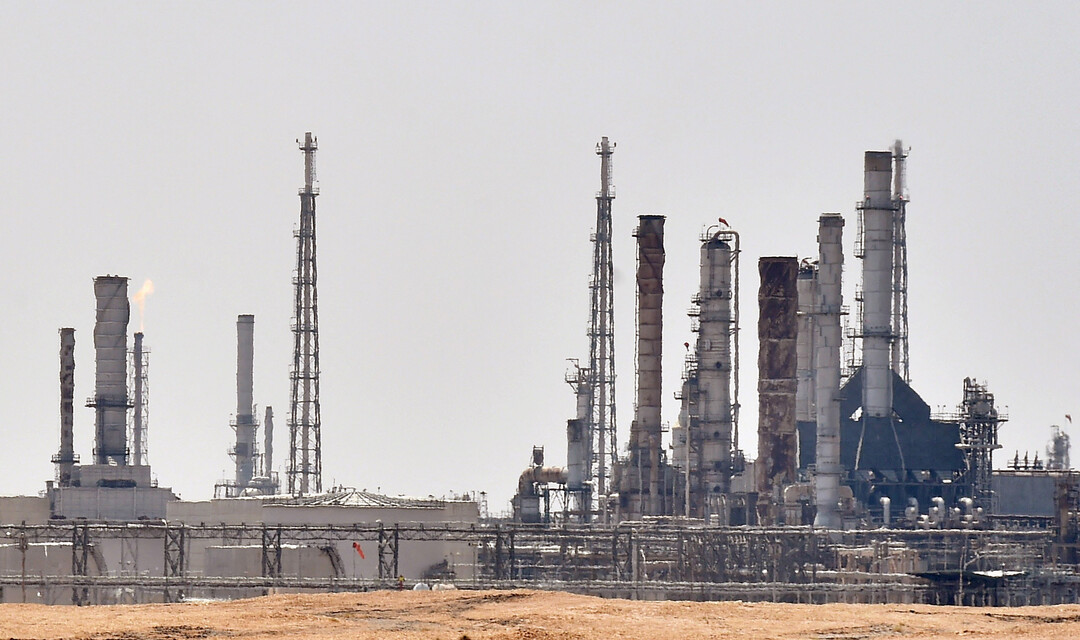
When satellite images captured one of Saudi Aramco’s pumping stations reduced to ashes following a drone strike on its pipeline last month, the global energy community held its breath.
However, by the very next day, satellite photos revealed dozens of bulldozers already at work constructing a new pipeline. Just days later, the transportation of crude oil was fully resumed.
The world’s attention is once again focused on Aramco’s "rapid resilience," a capability honed through years of enduring attacks targeting its energy infrastructure. Yemen’s Iran-backed Houthi rebels launched a coordinated strike on the 13th (local time), utilizing ballistic missiles, cruise missiles, and drones to target and damage Aramco facilities along with the international airport in the capital city of Riyadh.
According to industry sources on the 21st, Amin Nasser, CEO of Saudi Aramco, recently stated in an interview with Reuters, "Our response teams are capable of handling multiple simultaneous incidents, and we are continuously strengthening this capacity."
The critical turning point that enabled Aramco to develop its crisis-hardened operational know-how dates back to 2019. At the time, Aramco’s core oil processing facility in Abqaiq suffered drone and missile attacks, resulting in the temporary suspension of half of the company's total production.
"Following the Abqaiq incident in 2019, we established a dedicated emergency response unit called the 'Zero-Hour Response Team,'" Nasser explained. He added that the company began preparing not just for single-facility strikes, but for worst-case scenarios involving simultaneous attacks across multiple sites.
This robust crisis management capability has proven invaluable amid heightened military tensions in the Middle East, as Aramco’s headquarters complex and major infrastructure continue to face assaults from groups like the Houthi rebels.
Aramco's secret to swift recovery lies in two key pillars: advanced technology adoption and supply chain localization.
While typical energy companies wait until fires and accidents are completely cleared before entering a site to assess damage, Aramco immediately deploys reconnaissance and inspection drones while incidents are still unfolding.
"Our inspection drones provide an unrivaled level of visibility and detail," Nasser emphasized. "By the time the situation is brought under control, we are already fully prepared to launch immediate recovery operations." Aramco’s incident response and restart speed is currently known to be more than six times faster than the petrochemical industry average.
Pre-establishing a localized supply chain has also played a crucial role. Approximately 90% of the materials required for repairs are produced locally in Saudi Arabia or stored in Aramco’s regional emergency warehouses, ready for immediate dispatch. This system ensures that necessary materials arrive at the site even before the recovery teams touch down.
Despite consecutive attacks and blockade threats in strategic choke points like the Strait of Hormuz, Saudi Arabia's daily crude oil production—which once plummeted below 7 million barrels—has rebounded to around 8 million barrels as of September this year.
Nonetheless, the instability of maritime export routes remains a pressing challenge. Aramco is reportedly reviewing multiple alternative land and sea bypass routes to circumvent the Strait of Hormuz, Bab el-Mandeb, and the Suez Canal. Nasser noted, "Once a final decision is made, the details will be made public."
[Copyright (c) Global Economic Times. All Rights Reserved.]