![[등록] 2026-09-01 15:48:31](/support/_updata/banner2/tl181982910_6749.png)


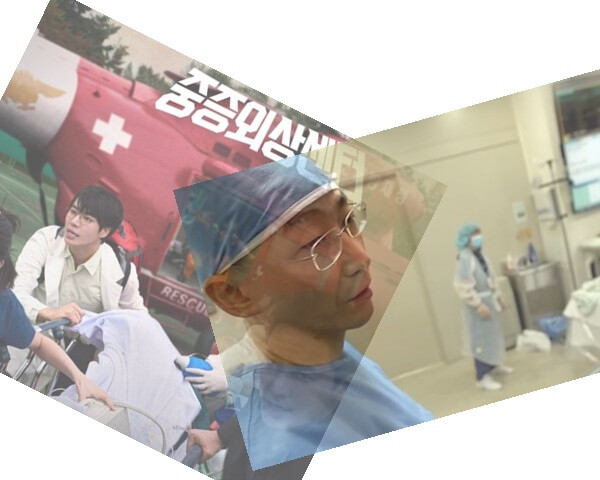
The recent news of the suspension of the severe trauma specialist training center has sparked concerns within the medical community. The situation has drawn particular attention due to the reported reason being government budget cuts.
Fortunately, the Seoul Metropolitan Government's decision to inject 500 million won from the disaster management fund has enabled the Korea University Guro Hospital's severe trauma specialist training center to continue its operation.
However, the head of the Korean Trauma Society, Cho Hang-joo, pointed out that while the budget cut was the direct cause, the underlying issue was the low effectiveness of the national support system, including the low number of applicants for the national scholarship program.
National Scholarship Program with Limited Conditions Leads to Low Application Rate
There are currently 27 trauma centers across the country that train specialists to treat trauma patients. Among them, four are designated as severe trauma specialist training centers: Korea University Guro Hospital, Gil Medical Center, Ajou University Hospital, and Uijeongbu St. Mary's Hospital.
These centers receive trainees through two main channels: the government-supported national scholarship program and the hospital-funded program.
Cho Hang-joo stated that while the national scholarship program was originally intended to foster severe trauma specialists, it has seen a low number of applicants due to the significant differences between the two programs.
For instance, trainees under the national scholarship program are required to work at a trauma center for two years after completing their training.
Cho explained that while some trainees may decide to continue working at the trauma center after experiencing it during their training, others may wish to pursue their careers elsewhere, which limits their options.
In some cases, trainees who received support through the national scholarship program and later moved to emergency medical centers or private hospitals after their training were required to repay the financial support they had received.
On the other hand, trainees under the hospital-funded program receive benefits such as a salary increase when they are appointed as full-time specialists after one year of training at a trauma center, which is not the case with the national scholarship program.
These systemic limitations have led to a decline in the preference for the national scholarship program.
Cho criticized the current situation, saying that while it would be meaningful to increase the number of trainees through the national scholarship program if there were enough applicants, the program with limited conditions is bound to be overlooked in the current situation where there are few applicants.
He added that he understands that the government and related ministries have faced difficulties in budget allocation due to the low number of applicants and dropouts.
He emphasized the need to revamp the national scholarship program by providing incentives such as overseas training and improving its practical appeal to attract more applicants.
Concerns about Negative Perceptions among Future Trauma Specialists
While the training center faced a crisis due to the suspension of government support, Cho Hang-joo stated that most trauma centers are not experiencing financial difficulties.
He mentioned that some trauma centers receive government support and generate profits by treating 3,000 to 4,000 patients annually.
However, he expressed concerns that the recent incident could negatively impact young medical professionals who aspire to become trauma specialists.
He worried that this case might be perceived as the government losing interest in the severe trauma field and that the lack of government support and system improvement could negatively affect the long-term supply of trauma specialists.
He also emphasized that trauma is a field that requires continuous government support.
He stressed that government support is essential to enhance the competitiveness of the trauma field, considering that young doctors consider their quality of life and economic value when choosing their specialty.
He also urged hospitals to create an environment where doctors in the trauma field can work with pride, despite the challenges they face.
[Copyright (c) Global Economic Times. All Rights Reserved.]