![[등록] 2026-09-01 15:48:31](/support/_updata/banner2/tl181982910_6749.png)


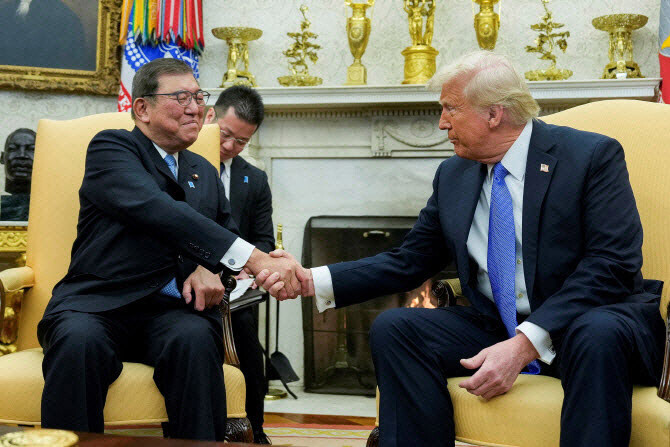
After intense negotiations, the United States and Japan have abruptly reached an agreement to lower their reciprocal tariff rates from the existing 25% to 15%. On July 22nd (local time), US President Donald Trump officially announced the conclusion of the negotiations via Truth Social, stating, "We have completed a massive deal with Japan. It's probably the biggest agreement we've ever made." This figure is 10 percentage points lower than the 25% tariff that President Trump notified Japan of on July 7th, and it is expected to be a significant turning point in the long-standing trade dispute between the two nations.
The agreement was dramatically reached after the 8th face-to-face negotiation in Washington D.C., just ahead of Japan's tariffs taking effect on August 1st. It is reported that President Trump himself met with Japan's Minister of Economic Revitalization, Ryosei Akazawa, for the final talks.
US Gains and Japanese Concessions
President Trump cited Japan's expanded investment in the US and market opening as key achievements of this agreement. He emphasized, "Japan will invest $550 billion (approximately 759 trillion Korean Won) in the United States, which will create hundreds of thousands of jobs." Furthermore, President Trump reaffirmed expanded access for US products to the Japanese market, stating, "Perhaps most importantly, Japan will open its market to our automobiles, trucks, rice, and some agricultural products."
Additionally, President Trump announced at an event inviting Republican members of Congress to the White House that Japan would establish a joint venture with the US to promote the Alaska liquefied natural gas (LNG) project. This is related to the US-driven project to build a 1,300 km long Alaska LNG pipeline and is expected to strengthen energy cooperation between the two countries.
Prime Minister Ishiba Seeks Political Turnaround
The sudden agreement on US-Japan tariffs is expected to be a crucial turning point for Japanese Prime Minister Shigeru Ishiba and the ruling Liberal Democratic Party, who were in crisis following a crushing defeat in the recent House of Councillors election. According to a Kyodo News poll conducted from July 21st to 22nd, 51.6% of respondents believed Prime Minister Ishiba "should resign," and his cabinet's approval rating hit an all-time low of 22.9%, leading to significant pressure for his resignation.
In this situation, by achieving a successful trade agreement, Prime Minister Ishiba has gained momentum to solidify his domestic political standing and attempt a rebound in approval ratings. Especially regarding the sensitive issue of agricultural market opening for the Japanese public, he is expected to try and quell critical public opinion by emphasizing that the negotiations were concluded with minimal damage. However, some are raising concerns about potential pressure for further concessions in major industrial sectors, such as automobiles.
Future Challenges and Outlook
Despite this agreement, US-Japan trade relations still face complex challenges. The US will continue to demand a resolution to its persistent trade deficit with Japan, while Japan faces the task of protecting its domestic industries while effectively responding to US pressure. Furthermore, it remains to be seen what impact the agreed-upon terms will have on the economies of both countries, and what precedent this agreement will set for trade negotiations with other nations.
This US-Japan tariff agreement is not only expected to have a profound impact on the economies of both countries but also to serve as an important litmus test for the direction of the international trade order amidst the spread of protectionism.
[Copyright (c) Global Economic Times. All Rights Reserved.]