• 2026.01.20 (Tue)
  • All articles
  • LOGIN
  • JOIN
Global Economic Times
APEC2025KOREA가이드북
  • Synthesis
  • World
  • Business
  • Industry
  • ICT
  • Distribution Economy
  • Well+Being
  • Travel
  • Eco-News
  • Education
  • Korean Wave News
  • Opinion
  • Arts&Culture
  • Sports
  • People & Life
  • Column
    • Cho Kijo Column
    • Lee Yeon-sil Column
    • Ko Yong-chul Column
    • Cherry Garden Story
  • Photo News
  • New Book Guide
MENU
 
Home > Synthesis

California Coastline Sees Marine Life Distress Amidst Toxic Algal Bloom

Eunsil Ju Reporter / Updated : 2025-04-11 09:52:39
  • -
  • +
  • Print

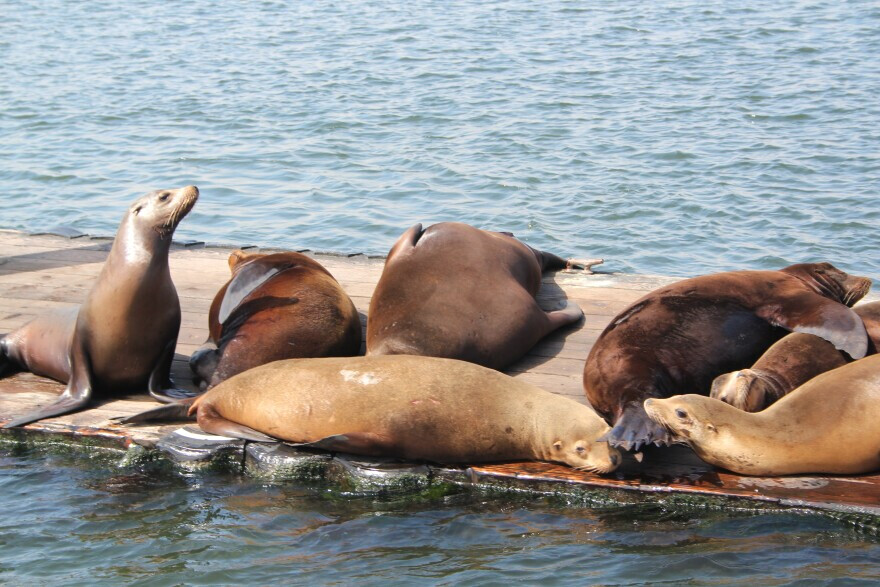
San Diego, California – A troubling surge in harmful algal blooms (HABs) along the California coast is leading to alarming behavioral changes in marine mammals, particularly California sea lions, sparking growing concerns among marine ecologists.

Researchers suspect that the unusual behavior stems from domoic acid poisoning, a potent neurotoxin produced by the blooming algae. Sea lions become exposed when they ingest fish contaminated with the toxin, which then disrupts their neurological functions. The Marine Mammal Care Center has issued warnings that domoic acid can trigger Amnesic Shellfish Poisoning (ASP) in both humans and marine wildlife.   

Jenni Smith, the rescue director at SeaWorld San Diego, highlighted the erratic nature of the affected animals in a recent interview with KGTV. "We're seeing a spectrum of symptoms," she explained, "Some are displaying heightened aggression, while others are profoundly lethargic." She also noted a particularly disturbing behavior: a sea lion observed in a fixed, upward gaze, a phenomenon dubbed "star-gazing."

The National Oceanic and Atmospheric Administration (NOAA) defines HABs as events where algal populations explode under specific environmental conditions, often releasing toxins or causing detrimental effects. These blooms can produce toxins lethal to fish, marine mammals, and birds, and pose a serious health risk to humans in severe cases.   

Experts at the Centers for Disease Control and Prevention (CDC) suggest that the frequency and intensity of these naturally occurring algal blooms, which typically cycle every 4 to 7 years, could be exacerbated by the increasing pressures of global warming and pollution. Southern California marine researchers have indeed noted a worrying trend of recurring HAB events in recent years.

Dave Bader, the chief operating and education officer at the Marine Mammal Care Center in San Pedro, revealed to KGTV that their facility has already rescued approximately 150 sea lions since February. Adding to the concern, illnesses have also been reported in dolphins and seabirds, raising fears that this episode could surpass the severity of the 2023 bloom, which resulted in the deaths of an estimated 1,000 sea lions.   

The impact is even being felt by ocean enthusiasts. Surfer RJ Raminfard recounted a terrifying encounter on his Facebook page, describing an attack by a "demonic" sea lion at Oxnard State Beach in Ventura County that dragged him off his surfboard. He described the animal as "feral and almost demonic," a stark contrast to the typically curious and playful nature of sea lions he is accustomed to. "This is not normal sea lion behavior," Raminfard wrote. "This is something darker and more dangerous." He stated he would be staying out of the water for the foreseeable future.   

Smith urged the public to take responsibility for protecting the marine environment and mitigating pollution. "Simple actions like properly disposing of trash and preventing toxic substances from entering storm drains can make a significant difference," she emphasized.

The current harmful algal bloom along the California coast and its distressing effects on marine life serve as a stark reminder of the vulnerability of marine ecosystems to the impacts of climate change and environmental pollution, underscoring the urgent need for sustained attention and proactive conservation efforts.

[Copyright (c) Global Economic Times. All Rights Reserved.]
  • #globaleconomictimes
  • #한국
  • #중기청
  • #재외동포청
  • #외교부
  • #micorea
  • #mykorea
  • #newsk
  • #nammidonganews
  • #singaporenewsk
  • #타이완포스트
  • #김포공항
Eunsil Ju Reporter
Eunsil Ju Reporter

Popular articles

  • U.S. Residential Electricity Rates Set to Surge Further in 2026, Emerging as Key Midterm Election Variable

  • OpenAI Sets New Record with $1.5 Million Stock Compensation Per Employee

  • FDA Approves First Oral Version of 'Blockbuster' Weight-Loss Drug Wegovy

I like it
Share
  • Facebook
  • X
  • Kakaotalk
  • LINE
  • BAND
  • NAVER
  • https://globaleconomictimes.kr/article/1065574320010708 Copy URL copied.
Comments >

Comments 0

Weekly Hot Issue

  • “$3.20 for Coffee, 15 Cents for the Cup”: New Pricing Policy Leaves Café Owners Exhausted
  • “HBM Semiconductor Tech Stolen”: China Remains Top Destination for South Korea’s Leaked Technology
  • KOSPI Hits Historic 4,900 Mark After 12-Day Rally; Hyundai Motor Soars to 3rd in Market Cap
  • S. Korea Braces for Longest, Most Intense Cold Wave of the Season: Feels-like Temps to Plummet to -20°C
  • Trump Escalates Atlantic Tensions with ‘Greenland Tariffs’ Targeting European Allies
  • Wealthy Individuals Value Time Over Money: Insights into the "Rich Mindset"

Most Viewed

1
“The Answer Lies in the Field”... Incheon Superintendent Do Seong-hun Bets on ‘Educational Innovation’ for 2026
2
Territorial Plundering in the 21st Century: The Catastrophe Awaited by Trump’s ‘Order Through Force’
3
From 'Maduro Gray' to 'Hwang Hana Parka': Why Negative News Drives Fashion Consumption
4
Actress Goo Hye-sun Fast-tracks Master’s Degree at KAIST, Eyes Doctorate Next
5
South Korean Rebar Defies 50% Tariffs: A Strategic Pivot to the U.S. Amid Domestic Stagnation
광고문의
임시1
임시3
임시2

Hot Issue

KOSPI Hits Historic 4,900 Mark After 12-Day Rally; Hyundai Motor Soars to 3rd in Market Cap

“HBM Semiconductor Tech Stolen”: China Remains Top Destination for South Korea’s Leaked Technology

Hyundai’s ‘Atlas’ Shakes Up CES 2026: A Formidable Rival to Tesla’s Optimus

Long Queues in Sub-zero Temperatures: Hello Kitty Meets Jisoo as MZ Generation Flocks to Pop-up Store

Let’s recycle the old blankets in Jeju Island’s closet instead of incinerating them.

Global Economic Times
korocamia@naver.com
CEO : LEE YEON-SIL
Publisher : KO YONG-CHUL
Registration number : Seoul, A55681
Registration Date : 2024-10-24
Youth Protection Manager: KO YONG-CHUL
Singapore Headquarters
5A Woodlands Road #11-34 The Tennery. S'677728
Korean Branch
Phone : +82(0)10 4724 5264
#304, 6 Nonhyeon-ro 111-gil, Gangnam-gu, Seoul
Copyright © Global Economic Times All Rights Reserved
  • 에이펙2025
  • APEC2025가이드북TV
  • 독도는우리땅
Search
Category
  • All articles
  • Synthesis
  • World
  • Business
  • Industry
  • ICT
  • Distribution Economy
  • Well+Being
  • Travel
  • Eco-News
  • Education
  • Korean Wave News
  • Opinion
  • Arts&Culture
  • Sports
  • People & Life
  • Column 
    • 전체
    • Cho Kijo Column
    • Lee Yeon-sil Column
    • Ko Yong-chul Column
    • Cherry Garden Story
  • Photo News
  • New Book Guide
  • Multicultural News
  • Jobs & Workers