![[등록] 2026-09-01 15:48:31](/support/_updata/banner2/tl181982910_6749.png)


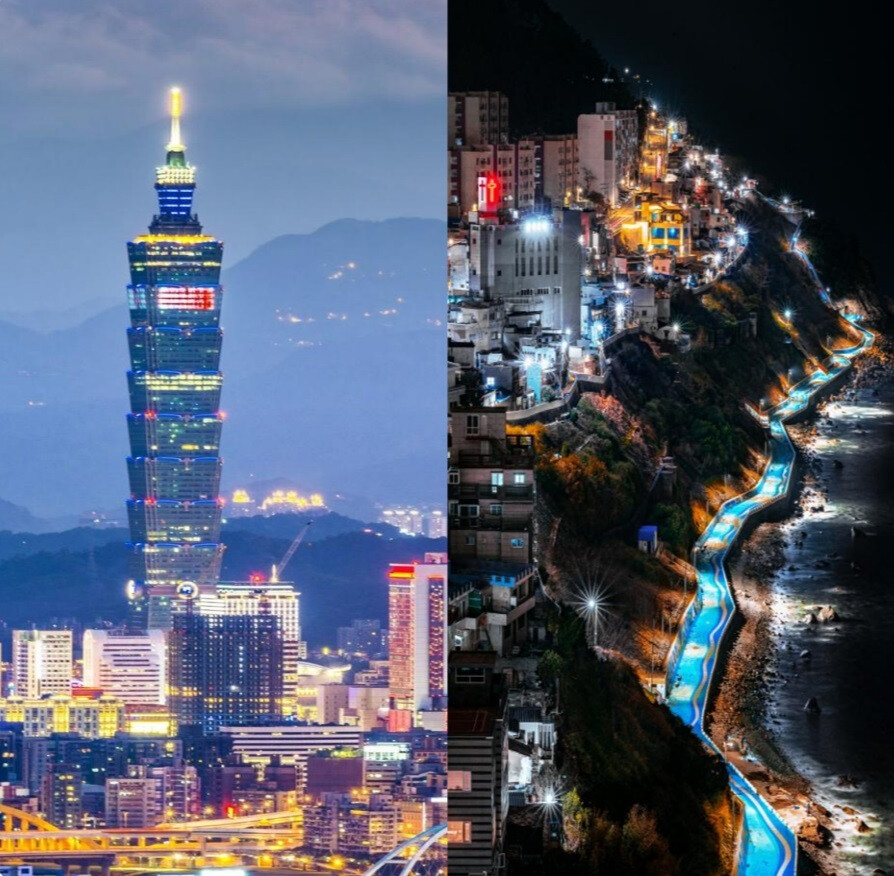
(C) Korea Tourism Organization
The Korea Tourism Organization (President Park Sung-hyuk) held the "2nd Lately, Korean Tourism Data Seminar" at The Plaza Hotel Seoul on the 27th, closely examining changes in the regional tourism market and on-site response measures based on data. Attended by some 500 people, including representatives from local governments nationwide, the Ministry of Culture, Sports and Tourism, the tourism industry, and academia, the event drew intense interest to the point that application registration closed early, prompting the organization to significantly expand the venue capacity.
In his welcoming remarks, President Park presented major trends in the inbound tourism market for the first half of this year using data. The number of foreign tourists visiting South Korea through July reached 12.8 million, a 21.3% increase compared to the same period last year. Notably, an upward trend in both regional airport arrivals and foreign tourist spending was prominently observed.
In the first session, regional airports garnered focused attention as new gateways driving regional tourism revitalization. In the first half of 2026, the proportion of inbound foreign tourists utilizing regional airports such as Cheongju, Daegu, and Gimhae hit a record high of 20.7%. In particular, Cheongju Airport saw arrivals surge by 109.1% year-on-year—the most remarkable growth rate—driven by the expansion of low-cost carrier (LCC) flight supplies and an increase in Taiwanese tourists.
The case of attracting Taiwanese tourists was highlighted as a representative success model of regional tourism revitalization utilizing regional airports. KTO’s Taipei Office progressively expanded marketing from a Busan-centric approach to the southern region, achieving a 157.5% increase in Taiwanese arrivals via Gimhae Airport in 2025 compared to 2023. Last year, in connection with the "Year of Southern Region Tourism" project, the office collaborated with seven local governments in the southern region to develop 360 travel packages and attract about 70,000 tourists. This was evaluated as a exemplary case where close inter-regional collaboration translated into practical tourism demand. In April, the organization launched a task force (TF) involving 29 departments to comprehensively pursue the discovery of tourism content, attraction of airline routes, and improvement of tourism infrastructure centered around Cheongju and Daegu airports.
The subsequent second session analyzed structural shifts in the domestic accommodation market under the theme of "Recent Accommodation Trends." The domestic accommodation market has maintained steady growth over the past three years, fueled by explosive demand from foreign tourists. Data verified that diverse activities such as performances and sporting events act as a powerful "reason for a one-night stay" that induces travelers to prolong their visits. A special session featuring Studio Dragon shared concrete measures to directly connect K-drama content with regional tourism demand. Detailed analytical data and the 2nd issue of the "Lately, Korean Tourism Report" released at this seminar are available on the Korea Tourism Data Lab starting August 28.
President Park emphasized, "New tourism touchpoints such as regional airports, regions, and K-contents are translating into actual demand," adding, "It is crucial to accurately read market changes through data and prepare practical solutions that help the field." He further stated, "We will faithfully serve as a tourism policy partner that brings practical help to the regions by expanding opportunities to produce high-quality data and share on-site voices together with the tourism industry and academia."
Meanwhile, the Korea Tourism Organization plans to host the 3rd Data Seminar in November, where it will focus on major pending issues and response directions for the rapidly growing medical tourism market driven by K-beauty and wellness trends.
The inbound tourism market led by the Ministry of Culture, Sports and Tourism and the Korea Tourism Organization has entered an unprecedented turning point. As the footsteps of inbound foreign visitors, once concentrated in the capital area, spread to non-capital regional airports and every corner of the regions, the map of Korean tourism is undergoing a fundamental reorganization. In particular, changes in travelers' information-seeking and consumption behaviors based on generative artificial intelligence (AI) and big data present both new challenges and solutions for regional tourism policies.
In the first half of 2026, the total number of inbound visitors increased by 21.3% compared to the previous year, and the number of visitors entering via airports also rose by 21.7%. Among them, the number of inbound visitors entering through regional airports jumped 42.1% year-on-year, accounting for 20.7% of total arrivals—breaking historical records. This marks the first time that the proportion of capital area airports has fallen below 50%, a non-capital dispersion effect evaluated as rare in any country worldwide.
Examining growth rates by airport, Cheongju Airport's rapid advancement stands out. With LCC flights increasing by 44.7%, Cheongju Airport recorded a 109.1% surge in visitor growth, showing steep expansion. Gimhae Airport also exhibited balanced growth in both inbound and outbound travel, showing a visitor increase rate of 46.6%. In contrast, Daegu Airport remained at a 2.6% increase as foreign arrivals stagnated relative to outbound domestic departures, creating a stark contrast. Jeju Airport maintained a 37.3% growth rate centered around independent travelers from Greater China, including China and Taiwan.
Regional stay and movement patterns of tourists entering through regional airports also varied according to airport characteristics. While 50.2% of arrivals through Gimhae Airport stayed within Busan, serving as an ideal decentralized gateway, 93.8% of arrivals via Jeju Airport stayed on Jeju Island, showing a stay-specialized structure. In the case of Cheongju Airport, while the movement share within Chungbuk stood at 40.5%, the proportion moving to the capital area reached 34.5%, pointing to an urgent need to formulate measures to extend stays in the Chungcheong region. Daegu Airport formed a region-friendly consumption structure, with movement within Daegu reaching 53.8% and combining Daegu and Gyeongbuk to 73.8%.
Distinct characteristics were also confirmed in terms of consumption. Driven by the overall increase in visitors, Cheongju Airport arrivals recorded a 29.2% increase in total tourism consumption within North Chungcheong Province, reaching 3.79 billion KRW, but average daily spending per person dropped 38.2% year-on-year to 60,238 KRW. This is because consumption was concentrated on food, beverage, and shopping during short schedules. Conversely, Daegu Airport arrivals centered on high-value medical tourism consumption such as dermatology and plastic surgery, driving a 9.9% increase in average spending per person to 255,355 KRW, while total tourism consumption within Daegu also rose to 14.57 billion KRW.
The accommodation travel market is also undergoing clear structural changes. Over the past three years, domestic accommodation volume has maintained stability with domestic residents accounting for 85.4%, while foreign accommodation volume has accelerated growth with a sharp 29.0% surge. In particular, the proportion of foreign accommodations in non-capital regions has steadily risen, expanding its scope to small cities endowed with local historical and cultural resources, such as Andong and Gyeongju.
Criteria for choosing accommodations have also shifted. Moving away from traditional facility-centric preferences like spas or breakfast within accommodations, travelers increasingly favor properties offering proximity to large leisure facilities or pre- and post-trip conveniences such as airport shuttles and private lockers. Furthermore, "experiences outside of accommodations," such as K-pop concerts or professional baseball games, serve as powerful motives for a one-night stay. During performance weeks of top billboard artists, foreign accommodation reservations have increased explosively, and accommodation bookings rose 20.5% on non-capital professional baseball game days, establishing sports and cultural content as core driving forces encouraging regional stays.
Foreign tourists' information-seeking and behavioral patterns have evolved in tune with the AI era. A clear tendency is observed to check restaurants and travel routes in advance using generative AI during the trip preparation stage, and to modify schedules in real-time upon arrival through map apps and portal searches. This suggests that tourism information must seamlessly connect to actual visits and consumption rather than remaining mere guidance.
Based on these data analysis results, the Korea Tourism Organization has launched an all-out effort to revitalize regional airports and attract 30 million foreign visitors. Centered around the Cheongju and Daegu Airport Revitalization Consultative Bodies, the organization is cooperating with airlines to expand irregular routes and direct flights, while discovering region-specific tourism content linked with K-drama filming locations. Moreover, it is promoting the appeal of regional tourism worldwide through customized product development targeting key markets like Taiwan and large-scale fair marketing.
The rapid growth of regional airports and the diversification of accommodation trends present a golden opportunity for Korean tourism to break away from its capital-centric concentration and achieve balanced regional development. If each region's inherent killer content, sophisticated transportation infrastructure, and digital-based customized services combine, a qualitative leap in inbound tourism is projected to succeed smoothly. Precise data-driven strategies and field-oriented execution capabilities are expected to serve as core keys determining the success or failure of the upcoming tourism paradigm shift.
[Copyright (c) Global Economic Times. All Rights Reserved.]