• 2026.03.08 (Sun)
  • All articles
  • LOGIN
  • JOIN
Global Economic Times
fashionrunwayshow2026
  • Synthesis
  • World
  • Business
  • Industry
  • ICT
  • Distribution Economy
  • Well+Being
  • Travel
  • Eco-News
  • Education
  • Korean Wave News
  • Opinion
  • Arts&Culture
  • Sports
  • People & Life
    • International Student Report
    • With Ambassador
  • Column
    • Cho Kijo Column
    • Cherry Garden Story
    • Ko Yong-chul Column
    • Kim Seul-Ong Column
    • Lee Yeon-sil Column
  • Photo News
  • New Book Guide
MENU
 
Home > Synthesis

Korean Football Fields Under Scrutiny Amidst Grass Quality Concerns

ONLINE TEAM / Updated : 2024-12-04 09:27:42
  • -
  • +
  • Print


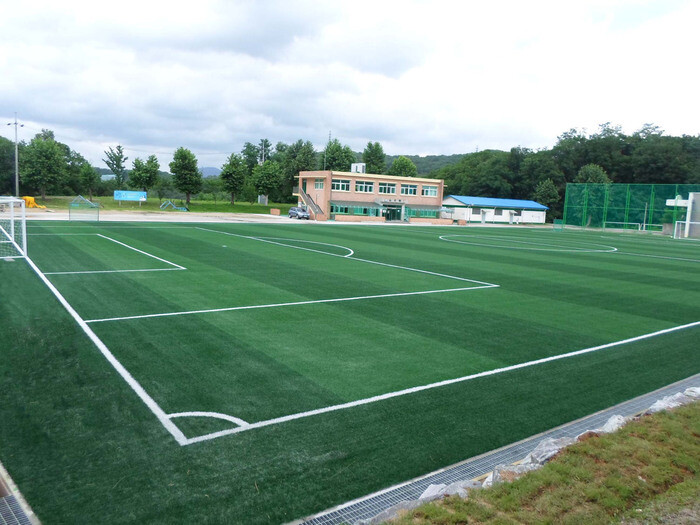
Seoul, South Korea – The state of football fields in South Korea has come under intense scrutiny following widespread complaints about poor grass quality. Experts from various sectors recently gathered to discuss the underlying issues and potential solutions.

The roundtable discussion revealed a complex interplay of factors contributing to the deteriorating condition of football pitches. Extreme weather conditions, particularly heavy rainfall and scorching heat, have taken a significant toll on the grass, especially the cool-season grasses commonly used in Korean stadiums. Overuse of fields, combined with inadequate maintenance practices, has further exacerbated the problem.

Participants stressed the need for a more collaborative approach to field management. Football clubs, local governments, and field maintenance companies must work together to ensure optimal conditions for players. A standardized evaluation system, similar to FIFA's, was proposed to provide a more objective assessment of field quality. This would allow for better allocation of resources and the implementation of stricter quality standards.

The use of artificial turf was also discussed as a potential solution, particularly in areas prone to extreme weather. While there are concerns about the impact of artificial turf on player injuries, experts argued that advancements in technology have made modern artificial turf safer and more realistic.

"The quality of our football fields directly impacts the performance of our players," said [Name of footballer], who has played on both natural and artificial grass. "It's time we invest in better facilities and adopt international standards."

[Name of researcher] from the Korea Construction and Living Environment Institute emphasized the importance of scientific data in assessing field quality. "We need to move beyond subjective evaluations and establish objective criteria for field maintenance," he said.

As Korean football continues to grow in popularity, the demand for high-quality playing surfaces is expected to increase. By implementing the recommendations put forth by experts, South Korea can create world-class football facilities that meet the needs of both players and fans.

[Copyright (c) Global Economic Times. All Rights Reserved.]

  • #globaleconomictimes
  • #koyongchul
  • #cherrylee
  • #seoulkorea
  • #periodicoeconomico
  • #글로벌이코노믹타임즈
  • #GET
  • #GETtv
  • #liderdel
ONLINE TEAM
ONLINE TEAM
Reporter Page

Popular articles

  • Samsung Electronics Hits Historic High of 180,000 Won, Securing Market Leadership with World’s First HBM4 Mass Production

  • The Great Digital Divide: Average YouTuber Earnings Hit ₩71 Million as Top 1% Soar to ₩1.3 Billion

  • The South Korean AI Basic Act: A Boon for Innovation or a Gift to Global Big Tech?

I like it
Share
  • Facebook
  • X
  • Kakaotalk
  • LINE
  • BAND
  • NAVER
  • https://globaleconomictimes.kr/article/1065572825881237 Copy URL copied.
Comments >

Comments 0

Weekly Hot Issue

  • L’Oréal Korea and Naver Forge Strategic Partnership to Revolutionize AI-Driven Beauty Commerce
  • Domino’s Korea Embraces "Authentic Stateside Flavors" with New American Classic Pizza Duo
  • K-Inner Beauty Dominates Japan: Sales Surge 90% on Qoo10 Japan
  • Sempio and KFRI Join Forces to Pioneer High-Value Food Technologies
  • LG H&H Expands Japanese Footprint: Vegan Brand 'Freshian' Debuts at Biople by CosmeKitchen
  • 29CM’s '29HOME WEEK' Shatters Records: Home & Interior Sales Triple in 10 Days

Most Viewed

1
Adwa’s Echo in Korea: A Shared Story of Dignity and Freedom
2
2026, The Grand Year of Hangeul Celebration — The River of History Where Five Streams Converge
3
A New Milestone for Ukraine’s Post-War Reconstruction: The Birth of ISVP
4
Mexican currency and the powerful history behind its designs
5
Revised and Expanded Edition of ‘Failure of Negotiations with North Korea: Truth and Solutions’ Published
광고문의
임시1
임시3
임시2

Hot Issue

Hanwha Aerospace Solidifies Baltic Stronghold with $330M Defense Investment in Estonia

From $20 to $400: The Explosive "Vintage Digicam" Craze Gripping Korea’s Gen Z and Millennials

Yujin Robot Evolves Industrial Automation: Integrating Autonomous Mobility and Collaborative Robotics

SK On Slashes 37% of US Workforce Amid Global EV Slowdown

Let’s recycle the old blankets in Jeju Island’s closet instead of incinerating them.

Global Economic Times
korocamia@naver.com
CEO : LEE YEON-SIL
Publisher : KO YONG-CHUL
Registration number : Seoul, A55681
Registration Date : 2024-10-24
Youth Protection Manager: KO YONG-CHUL
Singapore Headquarters
5A Woodlands Road #11-34 The Tennery. S'677728
Korean Branch
Phone : +82(0)10 4724 5264
#304, 6 Nonhyeon-ro 111-gil, Gangnam-gu, Seoul
Copyright © Global Economic Times All Rights Reserved
  • 에이펙2025
  • APEC2025가이드북TV
  • 독도는우리땅
Search
Category
  • All articles
  • Synthesis
  • World
  • Business
  • Industry
  • ICT
  • Distribution Economy
  • Well+Being
  • Travel
  • Eco-News
  • Education
  • Korean Wave News
  • Opinion
  • Arts&Culture
  • Sports
  • People & Life 
    • 전체
    • International Student Report
    • With Ambassador
  • Column 
    • 전체
    • Cho Kijo Column
    • Cherry Garden Story
    • Ko Yong-chul Column
    • Kim Seul-Ong Column
    • Lee Yeon-sil Column
  • Photo News
  • New Book Guide
  • Multicultural News
  • Jobs & Workers