![[등록] 2026-09-01 15:48:31](/support/_updata/banner2/tl181982910_6749.png)


(C) Daejeon City
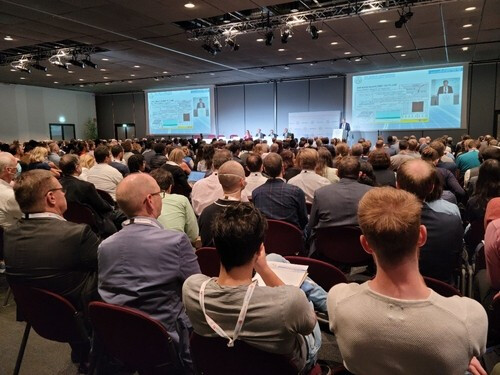
DAEJEON, South Korea – With exactly one year remaining until the grand event, Daejeon Metropolitan City, in collaboration with the Ministry of Climate, Energy, and Environment and the Korean Photovoltaic Society, hosted a successful ceremony today at the Daejeon Convention Center (DCC) to commemorate and ensure the success of the upcoming 2026 World Photovoltaic Conference (WPC).
The World Photovoltaic Conference is the most significant international event in the solar energy sector, combining the three major global solar academic conferences held in the Americas, Europe, and Asia. It takes place once every four years and is set to be held in Daejeon from November 15 to 20, 2026, spanning six intensive days at the DCC.
Daejeon secured the bid to host this prestigious event in 2022, marking only the third time an Asian city—following Osaka and Kyoto, Japan—has earned the right to organize the conference. This achievement underscores South Korea's growing prominence and technological advancements in the global renewable energy landscape.
A Year to Go: Ceremony and Next-Generation Technology
The ceremony, held precisely one year before the conference's opening, brought together key figures, including Daejeon Administrative Vice Mayor Yoo Deuk-won, the President of the Korean Photovoltaic Society, and representatives from the Photovoltaic Industry Association, Photovoltaic Construction Association, and various civic groups. The event featured opening addresses, a successful-hosting prayer performance, celebratory performances, and the screening of promotional videos highlighting Daejeon's capabilities as a hub for science and technology.
A crucial component of today’s event was the co-located "Tandem Solar Special Forum." This dedicated session focused on sharing the latest research findings in the field of tandem solar cells—a next-generation solar battery technology constructed by stacking two or more different types of solar cells. Tandem technology is highly regarded for its potential to dramatically increase efficiency beyond the limits of conventional single-junction cells.
Daejeon: A Hub for Solar Innovation
In his opening remarks, Vice Mayor Yoo Deuk-won emphasized the city's commitment to capitalizing on this opportunity. “We will prepare meticulously to use this academic exchange and exhibition, particularly focusing on next-generation solar technologies like tandem, to showcase the diverse future growth potential of the Daejeon region’s solar industry,” Yoo stated.
Daejeon is already a significant contributor to South Korea's renewable energy profile. Approximately 37% of the city's annual electricity generation is derived from renewable sources. Furthermore, Daejeon-based companies specializing in Building-Integrated Photovoltaics (BIPV)—solar materials that replace conventional building materials—account for over 70% of the entire national BIPV market sales. This strong foundation in BIPV, coupled with its focus on cutting-edge research through the WPC, positions Daejeon to solidify its role as a global center for sustainable urban development and solar technology innovation.
The 2026 World Photovoltaic Conference is expected to attract thousands of researchers, engineers, policymakers, and industry leaders from around the world, making it a critical platform for shaping the future direction of solar power research and commercialization. The successful one-year-out event has effectively signaled Daejeon’s readiness to host a truly world-class gathering.
[Copyright (c) Global Economic Times. All Rights Reserved.]