• 2025.12.06 (Sat)
  • All articles
  • LOGIN
  • JOIN
Global Economic Times
APEC2025KOREA가이드북
  • Synthesis
  • World
  • Business
  • Industry
  • ICT
  • Distribution Economy
  • Well+Being
  • Travel
  • Eco-News
  • Education
  • Korean Wave News
  • Opinion
  • Arts&Culture
  • Sports
  • People & Life
  • Column
    • Cho Kijo Column
    • Lee Yeon-sil Column
    • Ko Yong-chul Column
    • Cherry Garden Story
  • Photo News
  • New Book Guide
MENU
 
Home > World

Singapore to Mandate Reporting of Supply Chain Greenhouse Gas Emissions…Impact Expected on New Zealand Exporters

Graciela Maria Reporter / Updated : 2025-03-28 09:19:31
  • -
  • +
  • Print

New Zealand exporters are likely to face potential impacts as Singaporean importers listed on the stock exchange are expected to implement mandatory reporting on greenhouse gas emissions from their supply chains starting next year.

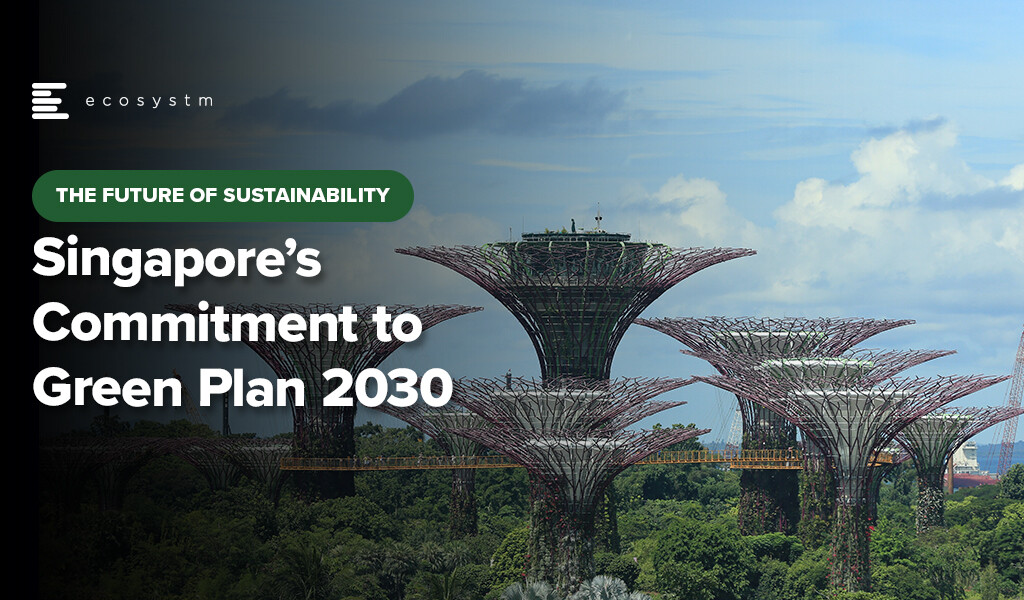
This is part of Singapore's 'Green Plan 2030', which is itself part of a larger goal to achieve carbon neutrality by 2050. These new regulations suggest that exporters may need to reduce their own emissions to help Singaporean importers meet the reporting requirements.

The two-way trade between New Zealand and Singapore amounted to $6.5 billion NZD in 2024.

Rebecca Sharpe, a director at Better Earth Ventures, which focuses on climate change and sustainability and supports the technological advancement and initiatives of agritech startups, recently emphasized to New Zealand agricultural business leaders that while Singapore is business-friendly and encouraging, it will not sacrifice its climate change and environmental commitments.   

It is calculated that a 4°C rise in average global temperatures will cause sea-level rise that will submerge a significant portion of Singapore's land. To counter this threat, the Singaporean government has set targets for 2030, including reducing the amount of waste sent to landfills by 30% per capita per day, doubling the annual planting of trees to one million, reducing water consumption per capita per day to 130 liters, and achieving a 75% public transport modal share.

Sharpe explained that a carbon tax of $58 NZD per tonne of carbon equivalent (approximately 47,000 KRW) is expected to be implemented in 2026, and listed companies will be required to report their Scope 1 and 2 emissions by the end of this year, and Scope 3 emissions from their supply chains starting next year.

Singapore, with a population of 6 million, 200 farms, an area slightly larger than Lake Taupo, and a GDP per capita twice that of New Zealand, aims to achieve 30% nutritional self-sufficiency by 2030. A delegation of 26 New Zealand agricultural business leaders is currently on a week-long visit to Singapore. Their goal is to learn from Singapore, a major global business and trade hub, the world's fourth-largest financial center, and the world's second-busiest port operator.   

Singapore relies on imports for approximately 90% of its food and its entire supply of natural gas, and uses oil to meet its electricity needs.

Explaining the government's approach to business, Sharpe used the analogy of Singapore attracting pop star Taylor Swift. The Singaporean government recently paid her approximately $4 million NZD (about 3.2 billion KRW) per night for six concerts, totaling $24 million NZD (about 19.4 billion KRW). It is estimated that the resulting influx of tourists generated approximately $650 million NZD (about 526 billion KRW) in consumer spending.  

To address energy issues, the Singaporean government has allocated $6.5 billion NZD (approximately 5.26 trillion KRW) to renewable energy development in each of the last two budgets, and Sharpe stated that Singapore is open to new and innovative solutions.

She added that Singaporean companies excel at communicating and collaborating with each other to find solutions. This is supported by the government, which consistently looks ahead and plans, including setting goals that garner public support.

[Copyright (c) Global Economic Times. All Rights Reserved.]

  • #globaleconomictimes
  • #글로벌이코노믹타임즈
  • #한국
  • #중기청
  • #재외동포청
  • #외교부
  • #micorea
  • #mykorea
  • #newsk
  • #nammidonganews
  • #singaporenewsk
Graciela Maria Reporter

Popular articles

  • Mother Suspected of Trafficking 12-Year-Old Daughter for Sexual Exploitation in Japan

  • Japan Pioneers External Airbags for Cyclist Safety, Revolutionizing Auto Industry Protection

  • "Louvre" Was the Password: State Audit Slams Museum's Security Gaps, Full Upgrade Not Expected Until 2032

I like it
Share
  • Facebook
  • X
  • Kakaotalk
  • LINE
  • BAND
  • NAVER
  • https://globaleconomictimes.kr/article/1065572334630293 Copy URL copied.
Comments >

Comments 0

Weekly Hot Issue

  • JAPAN’S RISING PREDICAMENT: RECORD BEAR ATTACKS STRIKE FEAR ACROSS NATION
  • Trump NSS Declares Europe Faces 'Civilizational Erasure,' Vows to Aid Anti-Immigration Right-Wing Parties
  • Meta's Strategic U-Turn: The AI Race Re-Elevates Real-Time News
  • Gapyeong's Petit France and Italian Village Illuminate Winter with 'Starlight Festival'
  • Grand Opening: Gwangju Museum's Ceramics Culture Center Offers Comprehensive Look at Ceramic History
  • Choi Bun-do, Chairman of PTV Group, Assumes Presidency of the Korean Chamber of Commerce and Industry in South Central Vietnam

Most Viewed

1
Korean War Ally, Reborn as an 'Economic Alliance' Across 70 Years: Chuncheon's 'Path of Reciprocity,' a Strategic
2
A Garden Where the City's Rhythm Stops: Dongdaemun's 'Cherry Garden', Cooking Consideration and Diversity
3
The Sudden Halt of Ayumi Hamasaki's Shanghai Concert: Unpacking the Rising Sino-Japanese Tensions
4
Farewell to a Legend: South Korea Mourns the Passing of Esteemed Actor Lee Soon-jae
5
China’s Anti-Starlink Strategy: Simulation Suggests 2,000 Drones Needed for Taiwan Disruption
광고문의
임시1
임시3
임시2

Hot Issue

EU Unveils €90 Billion Ukraine Aid Plan Backed by Frozen Russian Assets

Seoul's 'Insane Rent' Warning: Why $30,000 Monthly Rent is a Looming Threat Residential Crisis Deepens as Tourist Housing Conversion Hits Supply

Seo Min-kyu Wins Gold at Junior Grand Prix Final... First Korean Since Kim Yuna 20 Years Ago

2026 Overseas Koreans Agency Budget Confirmed at 112.7 Billion Won... 5.3% Increase Year-on-Year

Let’s recycle the old blankets in Jeju Island’s closet instead of incinerating them.

Global Economic Times
korocamia@naver.com
CEO : LEE YEON-SIL
Publisher : KO YONG-CHUL
Registration number : Seoul, A55681
Registration Date : 2024-10-24
Youth Protection Manager: KO YONG-CHUL
Singapore Headquarters
5A Woodlands Road #11-34 The Tennery. S'677728
Korean Branch
Phone : +82(0)10 4724 5264
#304, 6 Nonhyeon-ro 111-gil, Gangnam-gu, Seoul
Copyright © Global Economic Times All Rights Reserved
  • 에이펙2025
  • APEC2025가이드북TV
  • 세종시
Search
Category
  • All articles
  • Synthesis
  • World
  • Business
  • Industry
  • ICT
  • Distribution Economy
  • Well+Being
  • Travel
  • Eco-News
  • Education
  • Korean Wave News
  • Opinion
  • Arts&Culture
  • Sports
  • People & Life
  • Column 
    • 전체
    • Cho Kijo Column
    • Lee Yeon-sil Column
    • Ko Yong-chul Column
    • Cherry Garden Story
  • Photo News
  • New Book Guide
  • Multicultural News
  • Jobs & Workers