South Korea’s traditional papermaking heritage, Hanji, is on track to be inscribed on the UNESCO Representative List of the Intangible Cultural Heritage of Humanity. Meanwhile, Taekwondo submitted solely by North Korea is expected to be inscribed as its standalone heritage.
According to the National Heritage Administration (NHA) on November 5, the evaluation body of the UNESCO Intergovernmental Committee for the Safeguarding of the Intangible Cultural Heritage has issued an "recommendation for inscription" for “Traditional knowledge, skills, and cultural practices of Hanji manufacturing.”
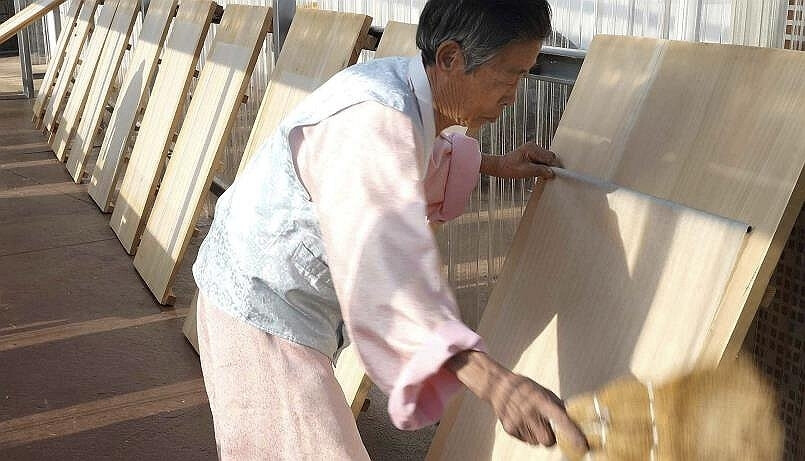
Hanji is handcrafted using paper mulberry and plant-based lye, utilizing a distinctive floating paper-forming technique known as oebalttugi to create uniform sheets. Often referred to as "the paper of a hundred touches" because of the immense manual labor required, the craft relies heavily on traditional cooperation and community sharing (pumasi). Because Hanji has been deeply embedded in everyday Korean life throughout history, preserving and developing this heritage is closely tied to community identity and pride.
Following historical trends where an evaluation body's recommendation leads directly to official inscription, Hanji is widely expected to become South Korea’s 24th intangible cultural heritage during the upcoming 21st session of the Intergovernmental Committee, scheduled to take place in Xiamen, China, from November 30 to December 5. This year, the evaluation body recommended the inscription of all 59 nominated heritage items.

Taekwondo Joint-Listing Bid Falls Through
In contrast, North Korea's traditional martial art application—titled “Traditional Martial Art of the Democratic People's Republic of Korea - Taekwondo”—is virtually certain to secure a standalone inscription.
North Korea independently submitted its nomination file in March 2024. In an effort to pursue a joint inter-Korean listing, the South Korean government submitted its own application in March of this year, but the joint bid ultimately failed.
Back in August 2024, the NHA stated that a mere application does not guarantee a final decision, emphasizing that while the government had not formally discussed joint-listing with the North at the time, it would support future domestic procedures. Although the Seoul government resolved to pursue a joint or expanded listing in January and filed its application by March 31, expanded listings require rigorous screening and bilateral consensus, making feasibility uncertain.
Controversy Surrounding the NHA's Handling
The process has sparked domestic controversy regarding the NHA's administrative approach. On November 2, NHA Administrator Heo Min took to social media to announce the failure of the joint inscription. He wrote that while the administration had strived for a joint listing to expand inter-Korean exchange and cooperation when submitting the nomination in March 2026, prevailing inter-Korean relations and structural constraints made a joint inscription practically unfeasible at this stage.
This marked the first time an NHA head publicly disclosed such outcomes via social media ahead of official UNESCO announcements, drawing criticism for potentially inviting diplomatic controversy. NHA Spokesperson Ahn Ho explained that the move stemmed from a desire to transparently communicate the governmental challenges involved directly to the public.
As criticisms mounted—with some questioning whether South Korea, as the birthplace of Taekwondo, had "lost" the title to North Korea, or if the NHA was slow to respond—the administration released an explanatory statement on November 4.
The World Heritage Policy Division of the NHA stated, "It is regrettable that the previous administration did not take meaningful action or a substantive response when North Korea first filed its standalone application in March 2024." The division added that the process involved rigorous procedures and noted that Administrator Heo Min had proactively coordinated efforts to reach a dramatic consensus.
With this listing, Taekwondo will join North Korea's existing list of UNESCO intangible heritage items, which includes Arirang (2014), kimchi-making (2015), Ssireum (2018, jointly inscribed with South Korea), Pyongyang cold noodles (2022), and traditional Korean clothing customs (Joson-ot) (2024).
Meanwhile, under UNESCO operational guidelines restricting multi-listing nations to one standalone application every two years, South Korea plans to pursue the inscription of ginseng culture in 2028.
[Copyright (c) Global Economic Times. All Rights Reserved.]