![[등록] 2026-09-01 15:48:31](/support/_updata/banner2/tl181982910_6749.png)


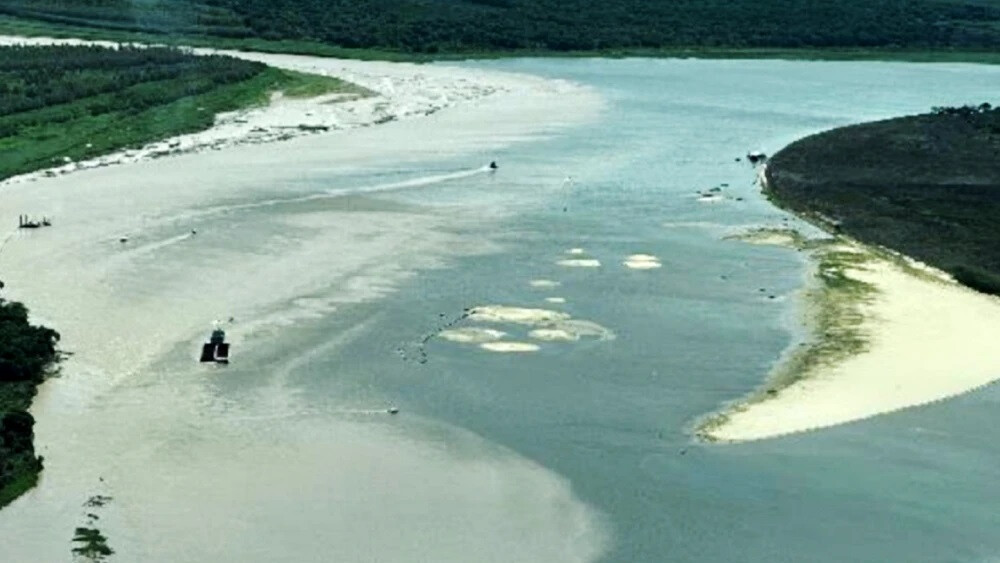
Buenos Aires, Argentina – Commercial navigation on the Paraná-Paraguay Waterway is facing significant disruptions due to a large influx of sediment from the mouth of the Bermejo River.
Increased Sediment Leaves 500 Barges Stranded
According to Benjamín Martínez, head of dredging at Paraguay's Ministry of Public Works and Communications (MOPC), the increased volume of sediment coming from the Bermejo River has left approximately 500 barges stranded at the site.
In an interview with local media, Martínez stated, "The Bermejo River experienced a significant rise in its water level, carrying a large amount of sediment," and "Although we prioritized dredging to secure the navigation channel, this has practically silted up the entire passage." He also added, "Several convoys ran aground yesterday, preventing dredging work, but we improved the situation through night operations."
Paraguay River Level Rise Provides Temporary Relief
Martínez explained that a recent rise of about 30 cm in the Paraguay River's water level provided temporary navigability. He said, "Thanks to the rise in the river level, navigation was possible, but the riverbed was completely silted up again." Navigation has currently resumed, but the resumption of dredging work requires waiting for the convoys that have entered the canal to pass.
Concerns Over Prolonged Navigation Disruptions
It is reported that approximately 500 barges and 36 tugboats were stranded by the sediment inflow until the night of Monday the 24th. Weather forecasts indicate that the Bermejo River will continue to discharge large amounts of water and sediment into the Paraguay River for the next 2-3 weeks.
The latest report from the Center of Shipowners projects that the complete stabilization of the Bermejo passage will not be possible until after May. The report emphasizes that continuous dredging work is essential to secure minimum navigation conditions and prevent the complete closure of the passage.
Complex Crisis Coupled with Paraguay River Level Decline
The Bermejo River is a crucial part of the hydrological system of the Río de la Plata basin and exhibits seasonal characteristics, with a significant increase in sediment transport, especially during spring and summer. The current situation is analyzed to have been further exacerbated by the severe drop in the Paraguay River's water level.
Disruptions in Raw Material Supply for the Steel Industry
The Paraguayan Steel Association (CAPAC) stated in a press release that the navigation delays are causing significant disruptions in the arrival of raw materials and supplies for the steel industry. The association explained, "The drop in the Paraguay River's water level in the Bermejo passage has disrupted industrial supply, leaving 480 barges stranded," and "The KM 1320-1322 section has been closed due to dredging work, and the passage of essential goods is being prioritized."
Furthermore, it added that the crisis in the Bermejo River is limiting the operation of 480 barges heading to the Port of Villeta, and authorities are regulating vessel traffic in the area, prioritizing draft and the transport of essential goods. The steel association stated, "We support the efforts of national authorities for a swift normalization and are aware of the economic and logistical impact."
Future Prospects and Challenges
Experts point out that the inflow of sediment from the Bermejo River and fluctuations in the Paraguay River's water level could occur repeatedly, emphasizing the urgent need to find permanent solutions.
Along with continuous dredging work, it is suggested that long-term plans for waterway management and maintenance be established, and that countermeasures be prepared for changes in river flow due to climate change. Additionally, it is considered an important task to enhance the efficiency of waterway use through cooperation between related countries and to establish a joint response system in the event of similar crises.
[Copyright (c) Global Economic Times. All Rights Reserved.]