• 2026.11.23 (Mon)
  • All articles
  • LOGIN
  • JOIN
Global Economic Times
한인동포뉴스(상단)
  • Synthesis
  • World
  • Business
  • Industry
  • ICT
  • Distribution Economy
  • Well+Being
    • Pet Life
    • Halal Horizon
  • Travel
  • Eco-News
  • Education
  • Korean Wave News
  • Opinion
  • Arts&Culture
  • Sports
  • People & Life
    • International Student Report
    • With Ambassador
  • Column
    • Cho Kijo Column
    • Cherry Garden Story
    • Ko Yong-chul Column
    • Kim Bong-seon's Photo Column
    • Kim Seul-Ong Column
    • Lee Yeon-sil Column
    • Professor Lee Soo-young’s Life Essays
  • Photo News
  • New Book Guide
MENU
 
Home > Education

Beyond the Algorithm: Why Today’s Teens Still Crave the Human Touch in Classrooms

Desk / Updated : 2026-11-23 09:06:14
  • -
  • +
  • Print


While artificial intelligence offers instant answers, South Korean students and educators are discovering that genuine learning—and emotional reassurance—can only come from human connection.

In an era where artificial intelligence can draft essays and solve complex equations in seconds, one might assume that the traditional role of the schoolteacher is fading into obsolescence. Yet, inside South Korean classrooms, a surprising counter-trend is emerging: the deeper teenagers immerse themselves in AI, the more they yearn for the guidance, warmth, and reassurance of a human educator.

For many students, AI is a convenient tool, but an anxiety-inducing one. "AI gives quick responses, but I'm constantly worried that the information might be inaccurate," shared one high school freshman from the Seoul metropolitan area. "When a teacher explains something, it brings a sense of relief."

However, a silent barrier often keeps students from seeking that comfort. According to a recent November survey of nearly 150 middle and high school students conducted by the Seoul branch of the Korean Teachers and Education Workers Union (KTU), over 75% of respondents admitted they hesitate to approach teachers simply because starting a conversation feels intimidating, while nearly 30% cited teachers' heavy workloads. Rather than abandoning teachers for technology, students expressed a desire for educators to set clear boundaries on AI usage, recognize their individual efforts, and create a more approachable environment.

Recognizing this emotional gap, educators across South Korea are experimenting with creative ways to reclaim human connection in the classroom.

Instead of banning technology, some teachers are integrating it to highlight the irreplaceable value of human judgment. In high school social studies classes, for instance, educators are encouraging students to look up legal precedents using AI, only to step in afterward to dissect the nuanced social contexts that algorithms fail to grasp. Similarly, art educators are countering AI-generated homework not with punitive measures, but with targeted, Socratic questioning—prompting students to explain their creative choices and reclaim ownership of their thought processes.

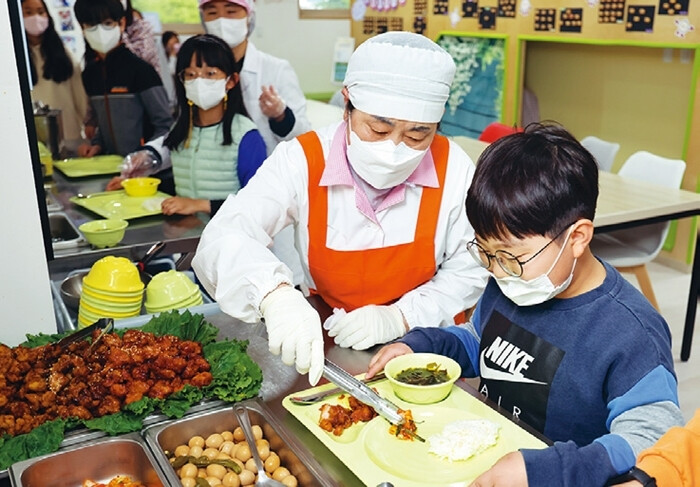
Other teachers are stepping outside the academic curriculum entirely to build trust. At one high school, a Korean language teacher traded textbooks for an apron, hosting after-school cooking sessions in the home economics room. Away from grades and exams, students naturally revealed hidden strengths—from meticulous ingredient prep to natural leadership—fostering a tight-knit community that algorithms could never replicate.

Education specialists warn that without such human-centric spaces, over-reliance on AI could stunt adolescents' emotional and cognitive growth. Because AI chatbots are designed to be agreeable and validating, students risk losing the ability to navigate conflicting viewpoints or build resilience through healthy debate.

"Schools must evolve into emotional learning communities," noted a former senior researcher at the Seoul Education Research & Information Institute. "The pressing question for educators today isn't how intelligent AI has become, but how much wiser our students are growing. Teachers need to act as 'models of thought,' encouraging students to wrestle with complex ideas rather than settling for algorithmic shortcuts."

Ultimately, experts stress that bridging the AI divide cannot rest solely on the shoulders of individual teachers. Structural reforms—such as reducing administrative paperwork and expanding teaching staff—are essential to give educators the time and bandwidth needed to reach students before they become isolated behind their screens.

[Copyright (c) Global Economic Times. All Rights Reserved.]

  • #Cherry Garden
  • #HalalFood
  • #Halal
  • #Petlife
  • #Halalhorizone
  • #Hormuz Impasse
  • #Joseon
  • #globaleconomictimes
  • #micore
Desk
Desk

Popular articles

  • Beijing Demands Washington Deliver on Tariff Cuts to Unlock U.S. Farm Exports

  • AI Semiconductor Stocks Plummet: Philadelphia Index Drops 5.28% and Micron Plunges 7.59% Amid Executive Shakeup and Export Restrictions

  • Samsung Electronics Acquires Additional Building in Silicon Valley, Doubling Headquarters Size

I like it
Share
  • Facebook
  • X
  • Kakaotalk
  • LINE
  • BAND
  • NAVER
  • https://globaleconomictimes.kr/article/1065571469629629 Copy URL copied.
Comments >

Comments 0

Weekly Hot Issue

  • AI Bots Scrape 140,000 Articles in an Hour, Threatening Journalism’s Survival
  • South Korea’s TTA Marks National First with Verified AI Power Efficiency Data on MLPerf
  • G-STAR 2026 Wraps Up in Busan, Highlighting Shift Toward AI and Cross-Industry Convergence
  • Beijing Challenges South Korean Tech Firm Over ‘.HAN’ Internet Domain
  • Calm Over Panic: A Parent’s Practical Guide to Managing Toddler Fevers
  • Rapid Weight Loss on GLP-1 Medications Raises Gallstone Risks, Experts Warn on Liver and Nutritional Care

Most Viewed

1
South Korea and Ethiopia Sign Trilateral MOU to Introduce Liquid-Based Cytology (LBC) Technology for Cervical Cancer Diagnosis
2
South Korean Burger Chain Lotteria Expands Singapore Footprint with Halal Certification and New Teriyaki Lineup
3
AI Semiconductor Stocks Plummet: Philadelphia Index Drops 5.28% and Micron Plunges 7.59% Amid Executive Shakeup and Export Restrictions
4
"Stay Out, Get Paid, or Have Police Stay With You": Shenzhen Imposes Strict Security Ahead of APEC Summit
5
AI Music Tops Melon Chart: Is the K-Pop Production Formula Changing?
체리가든 스토리
nutri huevos
로타리
동포저널

Hot Issue

US-China Trade Truce Teeters as Tech and Telecom Crackdowns Escalate

AI Bots Scrape 140,000 Articles in an Hour, Threatening Journalism’s Survival

Surge in Chinese-Built EVs Pushes South Korea’s Auto Trade Deficit with China to Record $4.23 Billion

Fashion Runway Show 2026

Let’s recycle the old blankets in Jeju Island’s closet instead of incinerating them.

Global Economic Times
korocamia@naver.com
CEO : LEE YEON-SIL
Publisher & Editor : KO YONG-CHUL
Registration number : Seoul, A55681
Registration Date : 2024-10-24
Youth Protection Manager: KO YONG-CHUL
Singapore Headquarters
5A Woodlands Road #11-34 The Tennery. S'677728
Korean Branch
Phone : +82(0)10 4724 5264
#304, 6 Nonhyeon-ro 111-gil, Gangnam-gu, Seoul
Copyright © Global Economic Times All Rights Reserved
  • News K
  • 반달곰 프로젝트
  • 광고문의
Search
Category
  • All articles
  • Synthesis
  • World
  • Business
  • Industry
  • ICT
  • Distribution Economy
  • Well+Being 
    • 전체
    • Pet Life
    • Halal Horizon
  • Travel
  • Eco-News
  • Education
  • Korean Wave News
  • Opinion
  • Arts&Culture
  • Sports
  • People & Life 
    • 전체
    • International Student Report
    • With Ambassador
  • Column 
    • 전체
    • Cho Kijo Column
    • Cherry Garden Story
    • Ko Yong-chul Column
    • Kim Bong-seon's Photo Column
    • Kim Seul-Ong Column
    • Lee Yeon-sil Column
    • Professor Lee Soo-young’s Life Essays
  • Photo News
  • New Book Guide
  • Overseas Koreans
  • Multicultural News