• 2026.01.20 (Tue)
  • All articles
  • LOGIN
  • JOIN
Global Economic Times
APEC2025KOREA가이드북
  • Synthesis
  • World
  • Business
  • Industry
  • ICT
  • Distribution Economy
  • Well+Being
  • Travel
  • Eco-News
  • Education
  • Korean Wave News
  • Opinion
  • Arts&Culture
  • Sports
  • People & Life
  • Column
    • Cho Kijo Column
    • Lee Yeon-sil Column
    • Ko Yong-chul Column
    • Cherry Garden Story
  • Photo News
  • New Book Guide
MENU
 
Home > Synthesis

US Moves to Bar Chinese Airlines from Russian Airspace Amid Trade Tensions

Yim Kwangsoo Correspondent / Updated : 2025-10-12 08:53:16
  • -
  • +
  • Print


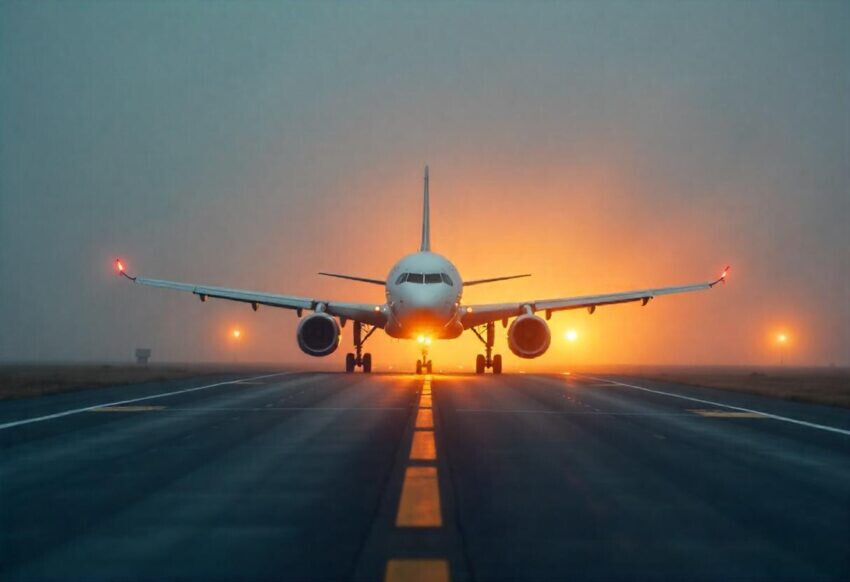
Washington, D.C. — The Donald Trump administration has proposed a measure that would bar Chinese airlines from flying through Russian airspace on routes to and from the United States, escalating trade tensions with Beijing. The U.S. Department of Transportation (DOT) proposed the restriction on Thursday, arguing that the practice grants Chinese carriers an "unfair competitive advantage" over their American counterparts.

The proposed ban comes shortly after China tightened its export controls on rare earth minerals, which are critical for U.S. defense and high-tech semiconductor industries. This tit-for-tat move highlights the increasing economic friction between the two global powers, with some analysts viewing the aviation restriction as retaliation for the rare earths curbs.

Competitive Disparity: Shorter Routes vs. Longer Detours 

The dispute centers on the reciprocal airspace bans put in place following Russia's 2022 invasion of Ukraine. The U.S. prohibited Russian aircraft from its airspace, prompting Moscow to retaliate by blocking U.S. airlines from flying over Russia.

While American carriers, like most Western airlines, must now take longer, more costly routes around Russia, Chinese airlines—which were not subjected to the ban—continue to use the shorter Russian airspace. This allows them to significantly cut flight times, save on fuel costs, and offer more competitive fares, leading to "substantial adverse competitive effects" on U.S. air carriers, according to the DOT.

The proposed order, which would amend the foreign air carrier permits of Chinese airlines, could affect major carriers including Air China, China Eastern, China Southern, and Xiamen Airlines. The restriction would apply only to passenger flights, exempting cargo-only services.

Industry Impact and Geopolitical Context 

The new rule, which the DOT stated could take effect as soon as November, has given Chinese carriers just two days to submit a response.

U.S. airlines have long lobbied Washington to address this competitive imbalance. They contend that the longer routes, particularly for direct flights between the U.S. East Coast and China, are often economically unfeasible without Russian overflight access. These detours force some American carriers to limit passenger seats and cargo to manage fuel loads, further cutting into profitability.

Last year, despite opposition from U.S. airlines and unions, the DOT allowed Chinese airlines to increase their weekly round-trip flights to the U.S. to 50, though this is still only about one-third of the pre-pandemic limit. Earlier efforts to negotiate for Chinese carriers to avoid Russian airspace on new routes had limited success.

The Chinese Foreign Ministry has criticized the proposal, warning that such restrictions would ultimately be detrimental to "international travel and people-to-people exchanges" and advising the Trump administration to consider the negative impact on American businesses.

This aviation flashpoint adds another layer of complexity to the already strained U.S.-China economic relationship, preceding an expected meeting between President Donald Trump and Chinese President Xi Jinping in South Korea later this month.

[Copyright (c) Global Economic Times. All Rights Reserved.]

  • #globaleconomictimes
  • #micorea
  • #mykorea
  • #Lifeplaza
  • #nammidonganews
  • #singaporenewsk
  • #Samsung
  • #Daewoo
  • #Hyosung
  • #A
Yim Kwangsoo Correspondent

Popular articles

  • Samsung Biologics Acquires GSK’s U.S. Plant to Bypass Tariff Barriers

  • Seoul Apartment Prices Hit 19-Year High in 2025, Surpassing Previous Peak

  • Samsung Biologics Employee Indicted for Smuggling 2,800 Secret Blueprints Hidden Under Clothes

I like it
Share
  • Facebook
  • X
  • Kakaotalk
  • LINE
  • BAND
  • NAVER
  • https://globaleconomictimes.kr/article/1065570720653349 Copy URL copied.
Comments >

Comments 0

Weekly Hot Issue

  • “$3.20 for Coffee, 15 Cents for the Cup”: New Pricing Policy Leaves Café Owners Exhausted
  • “HBM Semiconductor Tech Stolen”: China Remains Top Destination for South Korea’s Leaked Technology
  • KOSPI Hits Historic 4,900 Mark After 12-Day Rally; Hyundai Motor Soars to 3rd in Market Cap
  • S. Korea Braces for Longest, Most Intense Cold Wave of the Season: Feels-like Temps to Plummet to -20°C
  • Trump Escalates Atlantic Tensions with ‘Greenland Tariffs’ Targeting European Allies
  • Wealthy Individuals Value Time Over Money: Insights into the "Rich Mindset"

Most Viewed

1
“The Answer Lies in the Field”... Incheon Superintendent Do Seong-hun Bets on ‘Educational Innovation’ for 2026
2
Territorial Plundering in the 21st Century: The Catastrophe Awaited by Trump’s ‘Order Through Force’
3
Actress Goo Hye-sun Fast-tracks Master’s Degree at KAIST, Eyes Doctorate Next
4
From 'Maduro Gray' to 'Hwang Hana Parka': Why Negative News Drives Fashion Consumption
5
South Korean Rebar Defies 50% Tariffs: A Strategic Pivot to the U.S. Amid Domestic Stagnation
광고문의
임시1
임시3
임시2

Hot Issue

KOSPI Hits Historic 4,900 Mark After 12-Day Rally; Hyundai Motor Soars to 3rd in Market Cap

“HBM Semiconductor Tech Stolen”: China Remains Top Destination for South Korea’s Leaked Technology

Hyundai’s ‘Atlas’ Shakes Up CES 2026: A Formidable Rival to Tesla’s Optimus

Long Queues in Sub-zero Temperatures: Hello Kitty Meets Jisoo as MZ Generation Flocks to Pop-up Store

Let’s recycle the old blankets in Jeju Island’s closet instead of incinerating them.

Global Economic Times
korocamia@naver.com
CEO : LEE YEON-SIL
Publisher : KO YONG-CHUL
Registration number : Seoul, A55681
Registration Date : 2024-10-24
Youth Protection Manager: KO YONG-CHUL
Singapore Headquarters
5A Woodlands Road #11-34 The Tennery. S'677728
Korean Branch
Phone : +82(0)10 4724 5264
#304, 6 Nonhyeon-ro 111-gil, Gangnam-gu, Seoul
Copyright © Global Economic Times All Rights Reserved
  • 에이펙2025
  • APEC2025가이드북TV
  • 독도는우리땅
Search
Category
  • All articles
  • Synthesis
  • World
  • Business
  • Industry
  • ICT
  • Distribution Economy
  • Well+Being
  • Travel
  • Eco-News
  • Education
  • Korean Wave News
  • Opinion
  • Arts&Culture
  • Sports
  • People & Life
  • Column 
    • 전체
    • Cho Kijo Column
    • Lee Yeon-sil Column
    • Ko Yong-chul Column
    • Cherry Garden Story
  • Photo News
  • New Book Guide
  • Multicultural News
  • Jobs & Workers