• 2026.03.08 (Sun)
  • All articles
  • LOGIN
  • JOIN
Global Economic Times
fashionrunwayshow2026
  • Synthesis
  • World
  • Business
  • Industry
  • ICT
  • Distribution Economy
  • Well+Being
  • Travel
  • Eco-News
  • Education
  • Korean Wave News
  • Opinion
  • Arts&Culture
  • Sports
  • People & Life
    • International Student Report
    • With Ambassador
  • Column
    • Cho Kijo Column
    • Cherry Garden Story
    • Ko Yong-chul Column
    • Kim Seul-Ong Column
    • Lee Yeon-sil Column
  • Photo News
  • New Book Guide
MENU
 
Home > People & Life

253 Victories, 0 Prisoners: The Valiant Kagnew Battalion

HONG MOON HWA Senior Reporter / Updated : 2025-01-09 08:25:45
  • -
  • +
  • Print


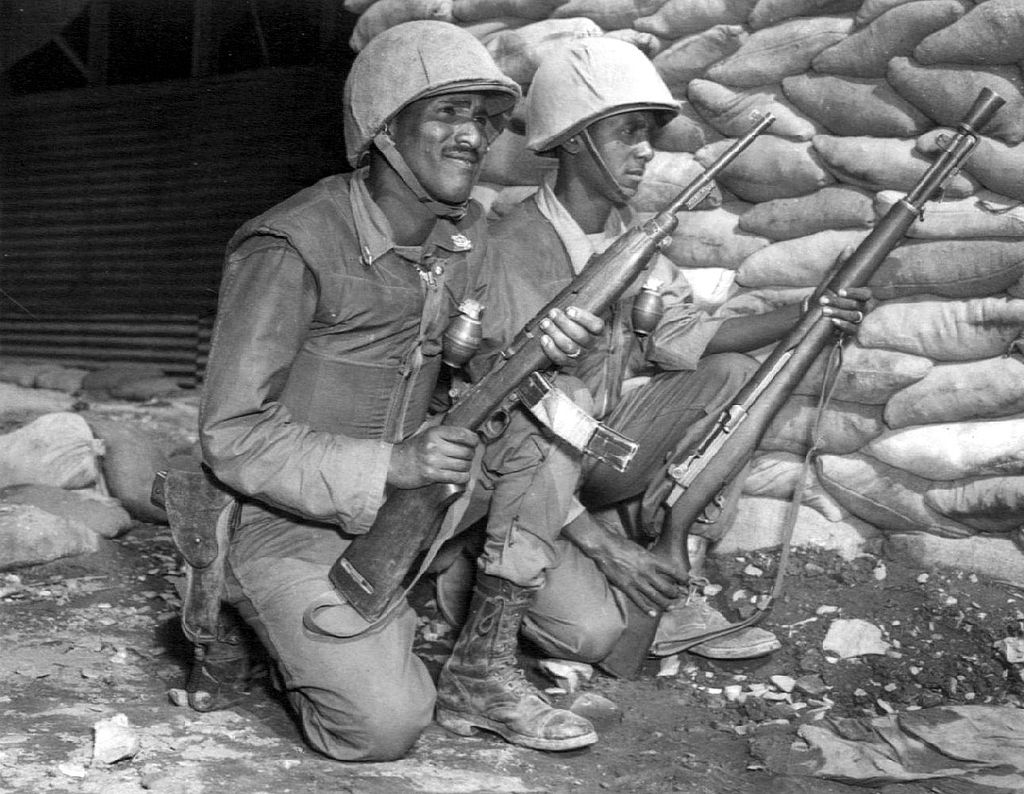
When North Korea invaded South Korea on June 25, 1950, triggering the Korean War, the United Nations decided to send a multinational force to repel the aggression. While most of the combat troops came from Western nations like the United States, the African nation of Ethiopia also sent forces to aid South Korea. These Ethiopian troops achieved a remarkable record of 253 victories without a single soldier captured.

Emperor Haile Selassie I of Ethiopia, upon receiving the UN's request for assistance, formed a battalion primarily composed of his imperial guard, naming it the Kagnew Battalion. "Kagnew" is an Amharic word meaning "to establish order from chaos" or "to defeat." At the battalion's departure ceremony, Selassie declared, "Fight until you win. If not, fight until you die."

Ethiopia's decision to send troops to Korea was deeply rooted in its own history of foreign invasion. In 1935, Italy had invaded and occupied Ethiopia. After years of struggle and sacrifice, Ethiopian exiles, with the support of British forces, had managed to liberate their country in 1941. Selassie came to believe in the importance of collective security in the international community, as evidenced by Ethiopia's own experiences.

Arriving in Busan, South Korea, in May 1951, the Kagnew Battalion was assigned to the US 7th Infantry Division and participated in the Battle of Cheokjinsan in September of the same year. In October 1952, they played a crucial role in the Iron Triangle battles, never yielding an inch of ground. By the time the armistice was signed in July 1953, a total of 3,518 Ethiopian soldiers had served in Korea, with 124 killed and 536 wounded but none captured. Ethiopian soldiers were known for their unwavering loyalty to their comrades, refusing to abandon wounded soldiers or leave the bodies of their fallen comrades behind. This is why there are no Ethiopian graves in the UN Cemetery in Busan.

One of the most famous Kagnew Battalion members is Gurmu Dambova. In 2017, South Korea's Ministry of Patriots and Veterans Affairs named him "Soldier of the Month." Dambova, who had served in the Korean War since 1951, was known for his exceptional skill with recoilless rifles. Despite being wounded twice and returning to Ethiopia, he volunteered to return to Korea for a second tour of duty.

Even after the armistice, the Kagnew Battalion remained in Korea until 1956, contributing to postwar reconstruction efforts. However, the lives of these war veterans took a turn for the worse following a communist coup in Ethiopia in 1974. Emperor Selassie was overthrown, and the veterans, once hailed as heroes, were stigmatized as traitors for having fought against communist forces. Many were forced to sell their war medals to make ends meet.

Since the restoration of diplomatic relations between South Korea and Ethiopia in the 1990s, various organizations, including KOICA and NGOs, have been providing humanitarian aid to Ethiopia, particularly to the Kagnew veterans and their families.

[Copyright (c) Global Economic Times. All Rights Reserved.]
  • #globaleconomictimes
  • #seoulkorea
  • #periodicoeconomico
  • #글로벌이코노믹타임즈
  • #GET
  • #GETtv
  • #대한민국
  • #중기청
  • #재외동포청
  • #외교부
  • #micorea
  • #my
HONG  MOON HWA Senior Reporter
HONG MOON HWA Senior Reporter

Popular articles

  • Seoul to Host Landmark 'Modest Fashion Festival 2026': A Fusion of K-Style and Global Halal Trends

  • Aero K: Redesigning the Nexus of South Korean Aviation

  • Korea to Expand Halal ‘Mutual Recognition’ to Pierce Global Muslim Markets

I like it
Share
  • Facebook
  • X
  • Kakaotalk
  • LINE
  • BAND
  • NAVER
  • https://globaleconomictimes.kr/article/1065568953938442 Copy URL copied.
Comments >

Comments 0

Weekly Hot Issue

  • The Death of the Architect's Draft? New AI Engine 'Nano Banana 2' Turns Rough Sketches into Professional 3D Walk-throughs
  • President Lee Celebrates Milestone for ‘The Man Living with the King,’ Pledges to Bolster Cultural Pride
  • Namyangju Targets Gwacheon Racecourse Relocation: A Vision for a "Blue-Green" Mega-Complex Linked to GTX and 3rd Generation New Towns
  • Korean Air Extends Suspension of Incheon–Dubai Route Through March 15 Amid Ongoing Disruptions
  • Genetic 'Molecular Mirror': Blood Tests Challenge Biopsy Limits in Ovarian Cancer Diagnosis
  • Samsung to Revolutionize Health Tracking: Galaxy Watch to Adopt Contact-Based Temperature Sensors for Enhanced Precision

Most Viewed

1
Adwa’s Echo in Korea: A Shared Story of Dignity and Freedom
2
2026, The Grand Year of Hangeul Celebration — The River of History Where Five Streams Converge
3
A New Milestone for Ukraine’s Post-War Reconstruction: The Birth of ISVP
4
Mexican currency and the powerful history behind its designs
5
Revised and Expanded Edition of ‘Failure of Negotiations with North Korea: Truth and Solutions’ Published
광고문의
임시1
임시3
임시2

Hot Issue

The $100 Oil Threshold: Wall Street Braces for a Paradigm Shift as Middle East Conflict Drags On

The Death of the Architect's Draft? New AI Engine 'Nano Banana 2' Turns Rough Sketches into Professional 3D Walk-throughs

Oppo Bridges the Great Divide: Find X9 to Support AirDrop Connectivity

China’s Strategic Gold Rush: Beijing Amasses Reserves for 16th Straight Month Amid Dollar Uncertainty

Let’s recycle the old blankets in Jeju Island’s closet instead of incinerating them.

Global Economic Times
korocamia@naver.com
CEO : LEE YEON-SIL
Publisher : KO YONG-CHUL
Registration number : Seoul, A55681
Registration Date : 2024-10-24
Youth Protection Manager: KO YONG-CHUL
Singapore Headquarters
5A Woodlands Road #11-34 The Tennery. S'677728
Korean Branch
Phone : +82(0)10 4724 5264
#304, 6 Nonhyeon-ro 111-gil, Gangnam-gu, Seoul
Copyright © Global Economic Times All Rights Reserved
  • 에이펙2025
  • APEC2025가이드북TV
  • 독도는우리땅
Search
Category
  • All articles
  • Synthesis
  • World
  • Business
  • Industry
  • ICT
  • Distribution Economy
  • Well+Being
  • Travel
  • Eco-News
  • Education
  • Korean Wave News
  • Opinion
  • Arts&Culture
  • Sports
  • People & Life 
    • 전체
    • International Student Report
    • With Ambassador
  • Column 
    • 전체
    • Cho Kijo Column
    • Cherry Garden Story
    • Ko Yong-chul Column
    • Kim Seul-Ong Column
    • Lee Yeon-sil Column
  • Photo News
  • New Book Guide
  • Multicultural News
  • Jobs & Workers