• 2025.12.09 (Tue)
  • All articles
  • LOGIN
  • JOIN
Global Economic Times
APEC2025KOREA가이드북
  • Synthesis
  • World
  • Business
  • Industry
  • ICT
  • Distribution Economy
  • Well+Being
  • Travel
  • Eco-News
  • Education
  • Korean Wave News
  • Opinion
  • Arts&Culture
  • Sports
  • People & Life
  • Column
    • Cho Kijo Column
    • Lee Yeon-sil Column
    • Ko Yong-chul Column
    • Cherry Garden Story
  • Photo News
  • New Book Guide
MENU
 
Home > Synthesis

South Korea's Civil Service Sees a Drastic Decline in Popularity

Desk / Updated : 2025-01-03 08:12:15
  • -
  • +
  • Print


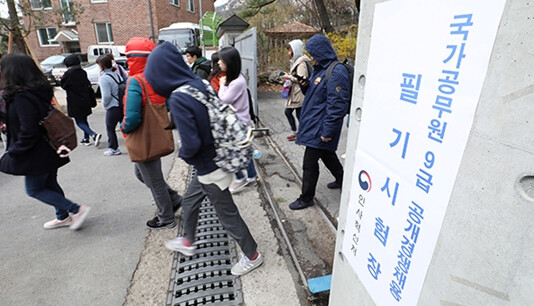
Seoul, South Korea – Despite the South Korean government's efforts to boost the appeal of civil service jobs by increasing the starting salary for Grade 9 civil servants to 2 million won (pre-tax) this year, the popularity of these positions continues to wane. The number of applicants for the Grade 9 national civil service exam has been declining sharply.

According to the Human Resources Management Service, the number of positions available for the 2025 national civil service examination has been reduced to 5,272, a decrease of 479 from the previous year. Over the past five years, the overall number of positions available for the national civil service examination has been steadily decreasing, especially since the Yoon Suk-yeol administration took office in 2023.

The decline in popularity is particularly evident among Grade 9 civil service positions. The number of positions available for Grade 9 civil servants in 2025 has been reduced by 419 compared to the previous year. A closer look at the data reveals that the number of applicants for Grade 9 positions has decreased significantly over the past three years. While the competition rate remained relatively stable between 2023 and 2024, the actual number of applicants dropped by over 17,000. Compared to 2021, when the number of applicants peaked, there has been a decrease of over 90,000.

To address the declining interest in civil service jobs, the government has implemented various measures, including increasing salaries for junior civil servants and raising the starting salary for Grade 9 positions by 6.6% this year. However, these efforts have failed to reverse the trend.

Experts attribute the decline in popularity to various factors, including a more competitive job market, changes in societal values, and a perception that civil service jobs offer limited growth opportunities.

The declining popularity of civil service jobs has also had a significant impact on the private education sector. Megastudy, a major South Korean education company, recently announced its decision to exit the civil service exam preparation market due to declining demand.

[Copyright (c) Global Economic Times. All Rights Reserved.]

  • #globaleconomictimes
  • #seoulkorea
  • #periodicoeconomico
  • #글로벌이코노믹타임즈
  • #GET
  • #GETtv
  • #대한민국
  • #중기청
  • #재외동포청
  • #외교부
  • #micorea
  • #my
Desk
Desk

Popular articles

  • Retirement Age Debate Rages: Youth Employment at Risk as Older Workers' Tenure Lengthens

  • Korean Fashion Brands Set Sights on China: Dunst Opens Pop-up in Shanghai

  • Alliance in a Dilemma: The Fallout of Trump's Advice to Takaichi Not to 'Provoke Taiwan' 

I like it
Share
  • Facebook
  • X
  • Kakaotalk
  • LINE
  • BAND
  • NAVER
  • https://globaleconomictimes.kr/article/1065568247861962 Copy URL copied.
Comments >

Comments 0

Weekly Hot Issue

  • Japan Police Deploy AI to Combat Illegal Job Postings on Social Media, Achieving Sixfold Efficiency
  • NYC Mayor-Elect Mamdani Affirms Immigrants' Right to Refuse Enforcement, Igniting Debate
  • Flare-Up on the Border: Thailand and Cambodia Clash Again Despite Trump-Brokered Truce
  • Sino-Japanese Conflict Escalates to Military Friction, Threatening Northeast Asia Stability
  • Ministry of Foreign Affairs, Ministry of Oceans and Fisheries, and Korea Coast Guard Ensure Flawless Protection of Citizens Even in Foreign Waters
  • U.S. Supreme Court Takes Up Challenge to Trump's Birthright Citizenship Policy

Most Viewed

1
Korean War Ally, Reborn as an 'Economic Alliance' Across 70 Years: Chuncheon's 'Path of Reciprocity,' a Strategic
2
A Garden Where the City's Rhythm Stops: Dongdaemun's 'Cherry Garden', Cooking Consideration and Diversity
3
The Sudden Halt of Ayumi Hamasaki's Shanghai Concert: Unpacking the Rising Sino-Japanese Tensions
4
Farewell to a Legend: South Korea Mourns the Passing of Esteemed Actor Lee Soon-jae
5
The Delivery Wars Intensify: Coupang Eats Triples Users on the Back of 'Free Delivery,' While Baemin and Yogiyo Decline
광고문의
임시1
임시3
임시2

Hot Issue

Musk's SpaceX Valuation Soars to Up to 800 Billion USD, Claiming Title as World's Most Valuable Private Company

Sino-Japanese Conflict Escalates to Military Friction, Threatening Northeast Asia Stability

Louvre Museum Rocked by New Crisis: Leak Damages Hundreds of Rare Egyptian Studies Texts

South Korea to Broaden Espionage Law to Combat Foreign Tech Theft

Let’s recycle the old blankets in Jeju Island’s closet instead of incinerating them.

Global Economic Times
korocamia@naver.com
CEO : LEE YEON-SIL
Publisher : KO YONG-CHUL
Registration number : Seoul, A55681
Registration Date : 2024-10-24
Youth Protection Manager: KO YONG-CHUL
Singapore Headquarters
5A Woodlands Road #11-34 The Tennery. S'677728
Korean Branch
Phone : +82(0)10 4724 5264
#304, 6 Nonhyeon-ro 111-gil, Gangnam-gu, Seoul
Copyright © Global Economic Times All Rights Reserved
  • 에이펙2025
  • APEC2025가이드북TV
  • 세종시
Search
Category
  • All articles
  • Synthesis
  • World
  • Business
  • Industry
  • ICT
  • Distribution Economy
  • Well+Being
  • Travel
  • Eco-News
  • Education
  • Korean Wave News
  • Opinion
  • Arts&Culture
  • Sports
  • People & Life
  • Column 
    • 전체
    • Cho Kijo Column
    • Lee Yeon-sil Column
    • Ko Yong-chul Column
    • Cherry Garden Story
  • Photo News
  • New Book Guide
  • Multicultural News
  • Jobs & Workers