![[등록] 2026-09-01 15:48:31](/support/_updata/banner2/tl181982910_6749.png)


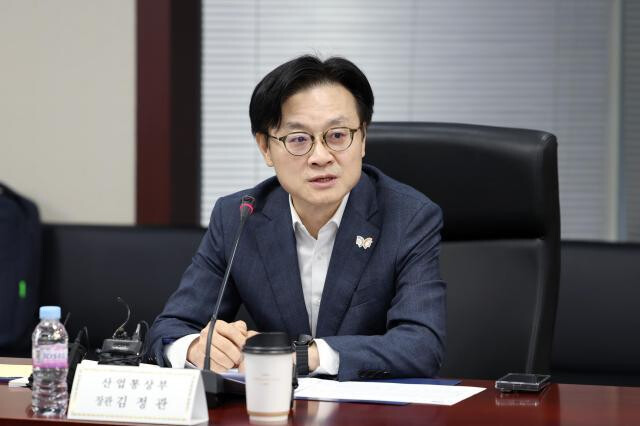
SEJONG – South Korea’s Minister of Trade, Industry and Energy, Kim Jung-kwan, announced on June 22 that the government has reached a "positive consensus" with the European Union (EU) regarding the bloc’s restrictive steel import tariff-rate quota (TRQ) system.
The agreement, which emerged as a key diplomatic achievement following Minister Kim's recent tour of Kazakhstan, Europe, and the Middle East, serves as a critical buffer for South Korean steelmakers facing potential export hurdles.
Avoiding a "46% Cut"
The EU, citing a need to protect its domestic steel industry, had previously planned to reduce the total volume of duty-free steel imports by approximately 46%—from 33.82 million tons to 18.35 million tons—starting July 1. Additionally, the bloc planned to raise tariffs on imports exceeding these quotas from 25% to 50%.
Under the existing arrangement, South Korea’s annual quota stands at approximately 2.58 million tons. Had the 46% reduction been applied universally, Korean exporters would have faced a significant contraction in market access.
"We reached a consensus that Korea’s quota will not be reduced by the full 46% as originally proposed," Minister Kim stated during a press briefing at the Government Complex Sejong. While he declined to provide the exact adjusted figure, he emphasized that Seoul’s robust diplomatic intervention played a decisive role.
Minister Kim revealed that the government took a firm stance during negotiations, formally notifying the EU that such drastic protectionist measures would violate the bilateral Free Trade Agreement (FTA) and could trigger retaliatory trade actions from Seoul. He added that the government plans to finalize and announce a comprehensive support package for the steel industry once the new quota levels are officially codified.
The High-Stakes Canadian Submarine Bid
Minister Kim also addressed the intensifying competition for Canada’s next-generation submarine procurement project—a contract estimated to be worth up to 60 billion Canadian dollars. South Korea’s Hanwha Ocean-led consortium is currently in a final showdown against Germany’s ThyssenKrupp Marine Systems (TKMS).
While industry observers have speculated that the decision, expected by the end of June, might be postponed until July, or potentially lead to a split contract between the two nations, Kim noted that no official word has been received.
"We are waiting with high expectations," Kim said. "While there are concerns that Canada’s priority on NATO interoperability could favor the German bid, we firmly believe that the Korean platform’s operational readiness, proven performance, and the accompanying industrial package are objectively superior."
Navigating Middle East Risks
Regarding business prospects in the Middle East, the Minister shared a cautious outlook. Despite identifying strong interest from Korean firms in regional reconstruction projects, he cited persistent geopolitical and financial risks.
"While our companies are eager to participate, the situation regarding Iran remains complex due to ongoing financial and EU sanctions, as well as stalled negotiations with the U.S.," Kim explained. "We are closely monitoring the landscape and will consider appropriate government-led entry strategies once the risk profile stabilizes."
Adjustment of Oil Price Ceilings
Finally, addressing domestic economic concerns, Minister Kim hinted at a possible reduction in the government-mandated oil price ceilings. "Given the current global oil price trends, which have softened compared to earlier levels, there is valid justification to lower the price caps," he stated. However, he clarified that a final decision is pending, as the normalization of the situation in the Strait of Hormuz remains sluggish.
[Copyright (c) Global Economic Times. All Rights Reserved.]