![[등록] 2026-09-01 15:48:31](/support/_updata/banner2/tl181982910_6749.png)


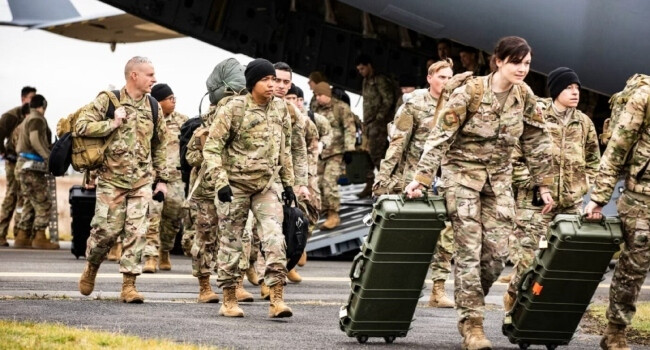
WASHINGTON — The United States Department of Defense is preparing to withdraw approximately 200 military personnel from Nigeria by the end of September, marking a significant shift in a deployment that began earlier this year. Even after the main contingent departs, a small core team of U.S. military trainers and intelligence analysts will remain in the country to maintain ongoing security cooperation.
The American military deployment to northeastern Nigeria commenced in February, following strong directives from U.S. President Donald Trump. President Trump had sharply criticized the Nigerian government, accusing it of failing to adequately protect Christian communities from escalating terrorist violence. However, human rights monitors and subsequent reports emphasized that the victims of extremist violence in the region have included both Christians and Muslims, as insurgent groups target civilians indiscriminately across religious lines.
The initial military mission was launched with specific counterterrorism objectives, notably targeting high-profile threats within the Lake Chad Basin region. In May, joint intelligence and counterterrorism operations yielded notable tactical achievements, including successful raids against key leadership figures within the Islamic State (ISIS) network. U.S. Africa Command (AFRICOM) officials noted that these targeted operations significantly degraded extremist command structures and disrupted regional terror networks.
Despite these targeted tactical successes, the broader mission has yielded limited strategic stability on the ground. Recent security incidents underscore the persistent and volatile threat landscape in Nigeria. Just days prior to the withdrawal announcement, armed gunmen launched a massive assault on a military base in the country’s northeast. Furthermore, separate violent attacks in the northwest resulted in the deaths of over two dozen individuals—including a local Muslim imam—while a brutal raid on a village in central Nigeria left at least 25 residents dead.
These continuous attacks by armed groups, including factions linked to Boko Haram and the Islamic State West Africa Province (ISWAP), highlight the complex nature of Nigeria's internal security crisis. While the presence of American combat forces provided temporary tactical advantages and enhanced intelligence sharing, structural security challenges remain deeply entrenched.
U.S. defense officials stressed that the impending withdrawal of combat forces does not signal an end to bilateral relations. Instead, the partnership is transitioning back toward an emphasis on intelligence collaboration, strategic dialogue, and localized training support, allowing Nigerian security forces to take the lead in combating domestic insurgencies.
[Copyright (c) Global Economic Times. All Rights Reserved.]