![[등록] 2026-09-01 15:48:31](/support/_updata/banner2/tl181982910_6749.png)


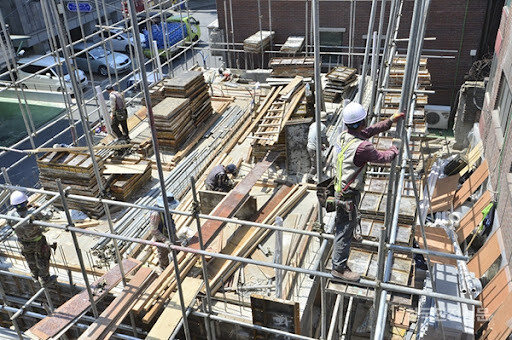
SEOUL – The South Korean construction industry is facing a growing financial crisis due to a combination of factors, including a tightened project financing (PF) market, soaring construction material prices, and a prolonged slump in the real estate market.
Rising Debt Ratios and Liquidity Concerns
One of the most pressing issues is the significant increase in debt ratios across the industry. According to data from the Financial Supervisory Service and the construction industry, the average debt-to-equity ratio of the top 10 construction companies in South Korea was 157% as of the third quarter of last year, a 3% point increase from the previous year. Some companies, such as GS E&C, Lotte E&C, and SK Ecoplant, have debt ratios exceeding 200%.
The situation is even more dire for mid-sized construction firms. Several companies in the top 30 have debt ratios above 200%, including Kye Ryong Construction Industrial, Dongbu Construction, Hanshin Engineering, and HL D&I Halla.
While some of this debt can be attributed to business expansion, much of it is due to rising unsold inventory and unbilled construction costs. Unbilled construction costs for the top 10 builders reached 19.59 trillion won in the third quarter of last year, a 11.68% jump from the same period the previous year. This increase is largely due to the prolonged real estate slump, rising construction costs, and increased sale prices. A debt ratio above 200% is generally considered a negative indicator in the construction industry.
Surging Construction Costs and Unsold Housing
Construction costs have also been on a sharp rise. The Construction Cost Index, compiled by the Korea Institute of Civil Engineering and Building Technology, stood at 130.18 in December, based on 2020 figures. This index has been on a steep climb since September and has surged by 32% over the past five years.
Adding to the industry's woes is the persistent problem of unsold housing. According to the Ministry of Land, Infrastructure and Transport, unsold homes totaled 70,173 units as of December, a 7.7% increase from the previous month. The number of unsold homes after construction completion, considered a particularly bad sign, surged by 15.2% to reach 21,480 units, the highest level in 11 years.
Rising Bankruptcies and Industry Outlook
As a result of these challenges, the number of construction companies going bankrupt has reached a high point since 2019. According to the Construction Industry Knowledge Information System, 29 construction companies went bankrupt last year, the highest number since 2019.
Industry insiders express concerns about the future. An official from a major construction firm said that it will be difficult to improve profitability this year due to prolonged high interest rates and rising raw material and labor costs. An official from a mid-sized firm said that while larger companies with better credit ratings are less affected, the liquidity crisis is severe for mid-sized companies.
Experts are calling for support measures to address the rising costs in the construction industry.
Potential Solutions and Government Intervention
Na Kyung-yeon, head of the Economic Finance and Urban Research Office at the Korea Research Institute for Construction Policy, said that the construction industry is facing a serious crisis due to the prolonged real estate slump, rising raw material prices, and labor costs. She stressed that without guaranteeing appropriate construction costs, the industry cannot be sustainable. She suggested that legal grounds should be established to make the client responsible for calculating appropriate construction costs, and that a system is needed to reflect price fluctuations.
The government is considering various measures to support the construction industry, including easing regulations on project financing and providing financial assistance to struggling companies. However, the effectiveness of these measures remains to be seen.
[Copyright (c) Global Economic Times. All Rights Reserved.]