• 2026.08.28 (Fri)
  • All articles
  • LOGIN
  • JOIN
Global Economic Times
fashionrunwayshow2026
  • Synthesis
  • World
  • Business
  • Industry
  • ICT
  • Distribution Economy
  • Well+Being
  • Travel
  • Eco-News
  • Education
  • Korean Wave News
  • Opinion
  • Arts&Culture
  • Sports
  • People & Life
    • International Student Report
    • With Ambassador
  • Column
    • Cho Kijo Column
    • Cherry Garden Story
    • Ko Yong-chul Column
    • Kim Seul-Ong Column
    • Lee Yeon-sil Column
  • Photo News
  • New Book Guide
MENU
 
Home > World

Catastrophic Flash Floods Strike Nepal and Tibet: Climate-Induced Glacier Collapses Trigger a Humanitarian Crisis

Hannah Yeh Reporter / Updated : 2026-08-28 07:30:45
  • -
  • +
  • Print


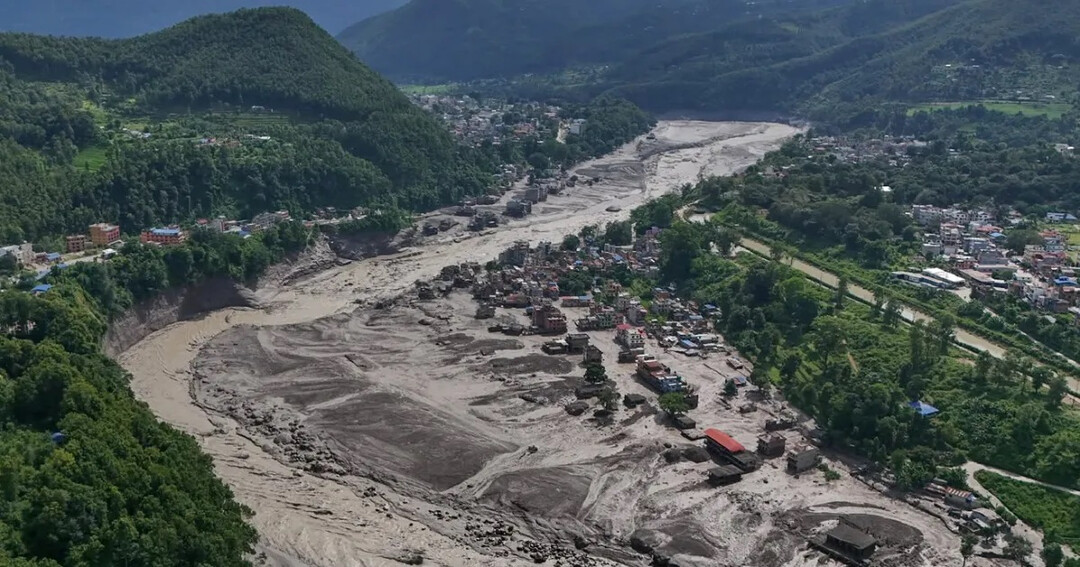
A catastrophic flash flood struck north-central Nepal and the neighboring Tibet Autonomous Region of China, resulting in hundreds of fatalities and widespread devastation. The disaster, which unfolded suddenly under clear skies, has intensified international alarm over the escalating threat of climate-driven disasters in the Himalayan region.

Overview of the Disaster and Casualties

The sudden deluge heavily impacted the Bagmati Province in Nepal—particularly the Rasuwa district and areas along the Langtang Valley gateway—as well as the Gyirong County in Xigaze, Tibet. According to official reports, the combined death toll has risen to at least 362, with over 1,300 individuals remaining unaccounted for.

Foreign nationals constitute a significant portion of the missing persons list, including nine South Korean employees working on the Trishuli River hydroelectric power project for Doosan Enerbility and Korea South-East Power Co. Other missing international travelers originate from over 30 countries, with citizens from India, Italy, Ukraine, the United States, Malaysia, Australia, the United Kingdom, Japan, and Russia affected. The region is a popular hub for Hindu and Buddhist pilgrims and global trekkers heading toward the famous Langtang Valley.

The Mechanics of a "Clear-Sky" Catastrophe

Survivors and eyewitnesses reported that the disaster struck without warning on a clear, sunny day with no preceding rainfall in the area. A massive wall of muddy water, described by local officials as a surging torrent roughly 100 meters wide, instantly obliterated local marketplaces, bridge networks, and residential settlements such as Timure and Syabrubesi.

Preliminary scientific assessments by institutions like the International Centre for Integrated Mountain Development (ICIMOD) and satellite imagery analysis by Planet Labs indicate that the disaster was precipitated by a major ice and rock avalanche. A massive volume of glacier mass and debris detached in the upper reaches of the Lhende River, temporarily damming the waterway. When this natural barrier failed under the accumulated pressure, it unleashed a colossal wave of muddy debris that surged downward into the Bhote Koshi and Trishuli rivers, causing water levels to spike drastically within minutes.

The Underlying Threat: Glacial Melting and GLOF Risks

Experts point to long-term environmental factors, notably global warming and glacial erosion, as the underlying drivers of the catastrophe. Reports from ICIMOD indicate that the rate of Himalayan glacier loss has doubled since 2000, destabilizing high-altitude permafrost and moraines.

Furthermore, Glacial Lake Outburst Floods (GLOFs) remain a persistent and severe hazard across the mountain range. Nepal hosts over 2,300 glacial lakes, with hundreds undergoing active expansion and dozens deemed to be at high risk of sudden structural failure. International monitors have also cautioned that partial blockages remaining along river systems like the Trishuli could pose secondary flood risks, complicating rescue and recovery operations.

Government Response and International Aid

In response to the crisis, South Korean President Lee Jae-myung convened an emergency cabinet meeting, directing authorities to mobilize all available resources under a zero-margin-for-error approach to protect citizens abroad. A joint government rapid response team comprising representatives from the Ministry of Foreign Affairs, the National Fire Agency, and the National Police Agency has been deployed to the disaster zone.

Meanwhile, local emergency services, security forces, and specialized aviation teams in Nepal are engaged in continuous search and rescue operations, hampered severely by damaged communication networks, blocked infrastructure, and unpredictable weather conditions.

[Copyright (c) Global Economic Times. All Rights Reserved.]

  • #\ormuz Impasse
  • #globaleconomictimes
  • #micorea
  • #mykorea
  • #nammidonganews
  • #singaporenewsk
  • #Samsung
  • #Daewoo
  • #Hyos
Hannah Yeh Reporter
Hannah Yeh Reporter

Popular articles

  • LG and NVIDIA Forge "Physical AI" Alliance to Lead Future Robotics and AI Infrastructure

  • Samsung Galaxy Z8 Series Pre-Orders See Surge in Young Buyers Ahead of Official Launch

  • Singer John Park Emphasizes Global Expansion of Indie Music for the Sustainable Future of K-Pop in New York

I like it
Share
  • Facebook
  • X
  • Kakaotalk
  • LINE
  • BAND
  • NAVER
  • https://globaleconomictimes.kr/article/1065565682691295 Copy URL copied.
Comments >

Comments 0

Weekly Hot Issue

  • South Korean National Team Defender Seol Young-woo Completes Dream Transfer to German Bundesliga Side FC Augsburg on a Four-Year Deal
  • "Kim Sang-sik Magic": Vietnam Defeats Thailand to Claim Second Consecutive ASEAN Hyundai Cup Title
  • The Return of the Bunt Era in Major League Baseball: A Strategic Countermeasure to the Velocity Revolution
  • A "Little Red Dot" Spotted in Deep Space: Is It a Black Hole or a Baby Galaxy?
  • Unlocking a Century-Old Venusian Mystery: New Quantitative Clues Shed Light on Venus's Elusive UV Patterns
  • Kim Jae-joong Unveils His Luxury Tokyo Detached House for the First Time: Featuring a 4-Meter High Ceiling and a Private Elevator 

Most Viewed

1
KOSPI Nears 7,000 Milestone with a 2.4% Surge, Riding a Five-Day Winning Streak Market Overview: A Powerful Weekly Rally
2
Samsung Electronics Enters a Strong Recovery Phase, Eyeing a Potential Rebound Past Recent Lows
3
South Korea to Revive Pro-Japanese Asset Recovery: New Law Targets "Disposed" Property
4
Record-Breaking Deluge Batters Chiba: 8 Dead, Thousands Stranded in Night of Chaos
5
"Why Is Coupang Delivering While My Package Is Stuck?"—The 2026 Delivery Shutdown and What You Need to Know
광고문의
임시1
임시3
임시2

Hot Issue

'K-Hydropower' Concentrated in South Asia Faces Rising Risks: Urgent Need for Comprehensive Disaster Response Systems

Samsung Speeds Up 'AI Transformation': Executive Evaluation Expansion Across All Affiliates

The Autonomous Driving Era Approaches: Automotive Industry Fiercely Competes Over "Running Screens"

Beyond China’s Ambition: Will YMTC’s Push to Overtake Samsung and SK Hynix Become Reality?

Fashion Runway Show 2026

Global Economic Times
korocamia@naver.com
CEO : LEE YEON-SIL
Publisher : KO YONG-CHUL
Registration number : Seoul, A55681
Registration Date : 2024-10-24
Youth Protection Manager: KO YONG-CHUL
Singapore Headquarters
5A Woodlands Road #11-34 The Tennery. S'677728
Korean Branch
Phone : +82(0)10 4724 5264
#304, 6 Nonhyeon-ro 111-gil, Gangnam-gu, Seoul
Copyright © Global Economic Times All Rights Reserved
  • 향기네무료급식
  • BCB부천방송
  • 반달곰 프로젝트
Search
Category
  • All articles
  • Synthesis
  • World
  • Business
  • Industry
  • ICT
  • Distribution Economy
  • Well+Being
  • Travel
  • Eco-News
  • Education
  • Korean Wave News
  • Opinion
  • Arts&Culture
  • Sports
  • People & Life 
    • 전체
    • International Student Report
    • With Ambassador
  • Column 
    • 전체
    • Cho Kijo Column
    • Cherry Garden Story
    • Ko Yong-chul Column
    • Kim Seul-Ong Column
    • Lee Yeon-sil Column
  • Photo News
  • New Book Guide
  • Multicultural News
  • Jobs & Workers